
Related videos:
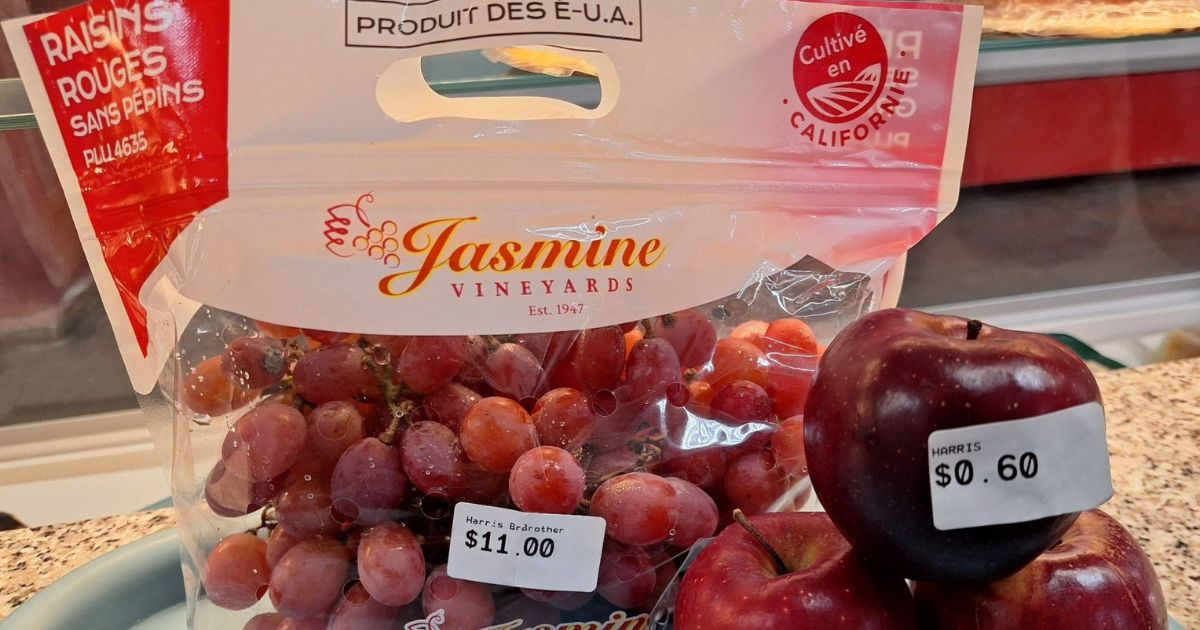
Amid the economic crisis and food shortages affecting Cuban families, Tiendas Caribe announced the sale of grapes and apples imported from the United States at their Harris Brothers store, located on O'Reilly between Bernaza and Villegas in Old Havana.
According to the , apples are sold for 60 cents —about 264 Cuban pesos on the informal exchange— while grapes are priced at 11 dollars, equivalent to nearly 4,840 pesos, available only for payments with international cards or in cash in dollars.
The promotion, presented as a "special offer," sparked a wave of criticism and sarcastic comments from internet users, who quickly pointed out the stark contrast between the prices and the harsh economic reality of the country.
"Those grapes have gold inside, don't they?" Yuriel Fdez quipped, while Katiuska Montero added, "The grapes have a little bit of gold in them."
In the same vein, Rosa María Pérez Alayo wrote that the fruits should come "from the vineyards of the red lands of Alín, because they have diamonds."
Other comments reflected frustration and anger at what many describe as a new symbol of inaccessible luxury in Cuba.
"We are worse off than before '59," lamented Rosy García, recalling that "back then, everyone could eat grapes and apples; now, only those who have family abroad or hard currency cards can."
Humor was not lacking among users. "The salary of a doctor in a little pack of grapes," wrote Yordanys Núñez, while Hamaya Cuesta asked if "the grapes come with a visa included."
For her part, Rosa María Hoyos Fornaris joked, "Twelve little pea balls have the same effect, and they come with included proteins."
Other opinions pointed to the government's double standards. “The grapes are from the United States and are sold by the Cuban government itself, the same one that blames the blockade for all the ills,” wrote Irene Rondón Izquierdo.
Meanwhile, Ruth Matos deemed the price "a disrespect and a mockery that the Minister of Economy should examine."
Among the most shared reactions, Julia Arencibia Ledesma summed up the feelings of many with a straightforward phrase: “Another great achievement of the revolution.”
The comments reflect the growing discontent of Cubans with the dollar stores, where prices are set in currencies that are inaccessible to most.
In a country where the average salary is around 20 dollars a month, buying a package of grapes is equivalent to half a month's wages.
The sale of these fruits imported from the United States— a country that the regime blames for the shortages— highlights the contradiction of a system that turns to foreign markets while blaming the "blockade" for its inefficiency.
The Harris Brothers store, managed by Tiendas Caribe under the military conglomerate GAESA, has become a symbol of the inequality that dominates today's Cuban economy: storefronts filled with imported products that the majority can only gaze at through the glass.
While access to basic products remains a challenge for most Cubans, state-owned stores continue to offer essential items in dollars, out of reach for those who rely on salaries in pesos.
In Havana, it was reported that products such as children's insect repellent and creams for bites are sold exclusively in foreign currency, even amid outbreaks of diseases like dengue.
This practice particularly affects families with young children, forcing them to confront prices in foreign currency to safeguard their children's health.
Days later, another controversial offer came to light: a piece of beef imported from the United States was selling for 330 dollars at the supermarket on 3rd and 70, in the Playa municipality.
The figure exceeds more than a year's average salary on the island and has generated reactions of outrage among consumers, who see these kinds of prices as a sign of growing inequality and the disconnection of the state trading system from the reality of the Cuban population.
Filed under: