
Related videos:
In the midst of a blackout crisis affecting the entire country, Cuba's Minister of Energy and Mines, Vicente de la O Levy, assured the National Assembly that the government's goal extends beyond the mere recovery of the electrical system, and that the aim is to “advance in the energy transition and seek independence from fossil fuels”.
During the sixth ordinary session of the X Legislature, De la O Levy stated that the country's energy strategy seeks "energy sovereignty," based on the use of domestic resources and the promotion of renewable sources. "The goal is much broader than merely recovering the system," he insisted, while pointing out that the definitive solution to power outages lies in a "structural transformation" of the Cuban energy model.
The minister presented figures on distributed generation, which, as he stated, has increased from 300 to more than 1,000 megawatts (MW) of technical capacity. He highlighted the installation of 51 photovoltaic solar parks, of which nearly 800 MW are already synchronized with the system. He also emphasized the importance of the 11,000 emergency generators, which, according to the official, ensured the operation of hospitals during Hurricane Melissa.
De la O Levy acknowledged, however, that there are still provinces with setbacks and that the energy deficit cannot be resolved without the participation of all sectors. He reiterated that the sustainability of the system depends on "maintaining the system with national crude oil and gas, with sun and wind."
The statements from the minister coincide with those made by Prime Minister Manuel Marrero Cruz, who stated that the government has allocated $1.15 billion to the recovery program of the National Electric System (SEN). The information, shared by the Electric Union (UNE) on Facebook, sparked a wave of criticism on social media, where many citizens questioned the actual results of this substantial investment.
"The investment has been very noticeable, every day is a victory of the blackouts over the people", quipped a user from Havana. "He can say that one billion dollars were allocated to the system, but as long as the country remains in darkness, we aren't interested; the solution is not just to talk and talk, but to resolve and provide electrical service", wrote a user from Matanzas.
Other comments questioned the effectiveness of the spending. “Too much money for so few MW without results. Either there are extra zeros or there are missing MW. It's impossible to spend 1.8 million USD per MW, let alone on repairs,” noted a worker from ETECSA.
From various provinces, testimonies of frustration are being echoed. “Where is the improvement, if every day is worse, with fewer hours of electricity? Those thermoelectric plants need to be rebuilt,” said a mother of the family. Another user summarized the general sentiment: “It’s clear that they are working hard and making a huge effort: we’re left without water, electricity, medicine, food… They are doing a tremendous job of mass extermination.”
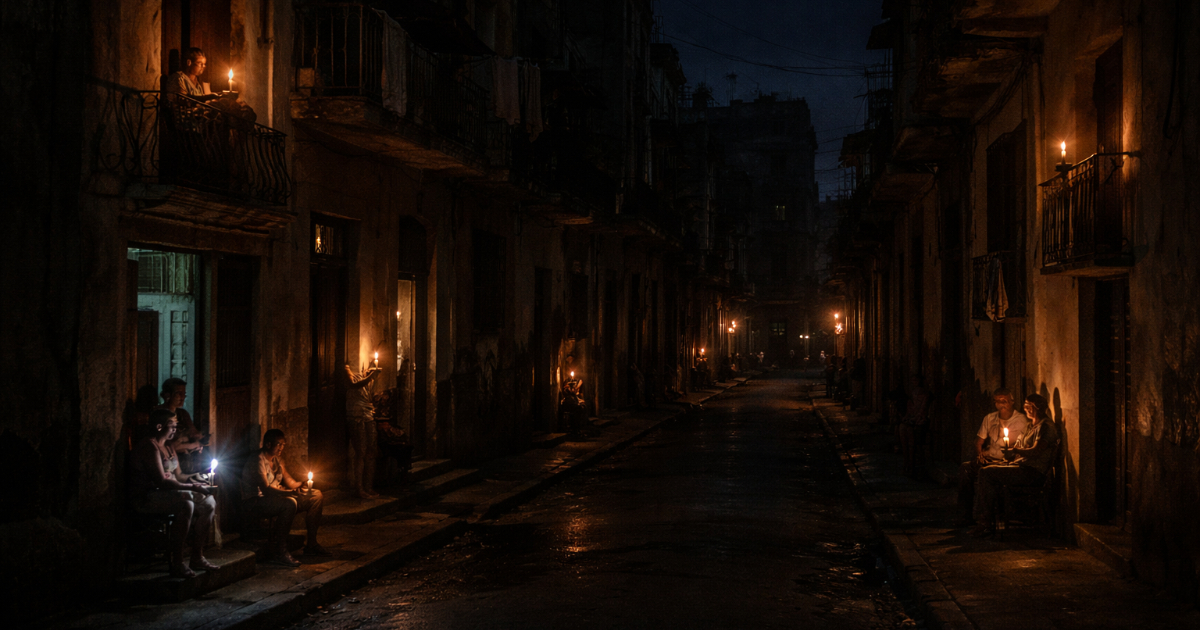
The reactions reflect the deep discredit with which broad sectors of the population receive the official announcements regarding the electrical system. While the Government insists on figures of recovery and energy transition, the everyday reality for millions of Cubans continues to be marked by power outages of up to 20 hours a day, a lack of clear information, and an increasing sense of abandonment in the face of a crisis that shows no signs of improvement.
Filed under: