
Related videos:
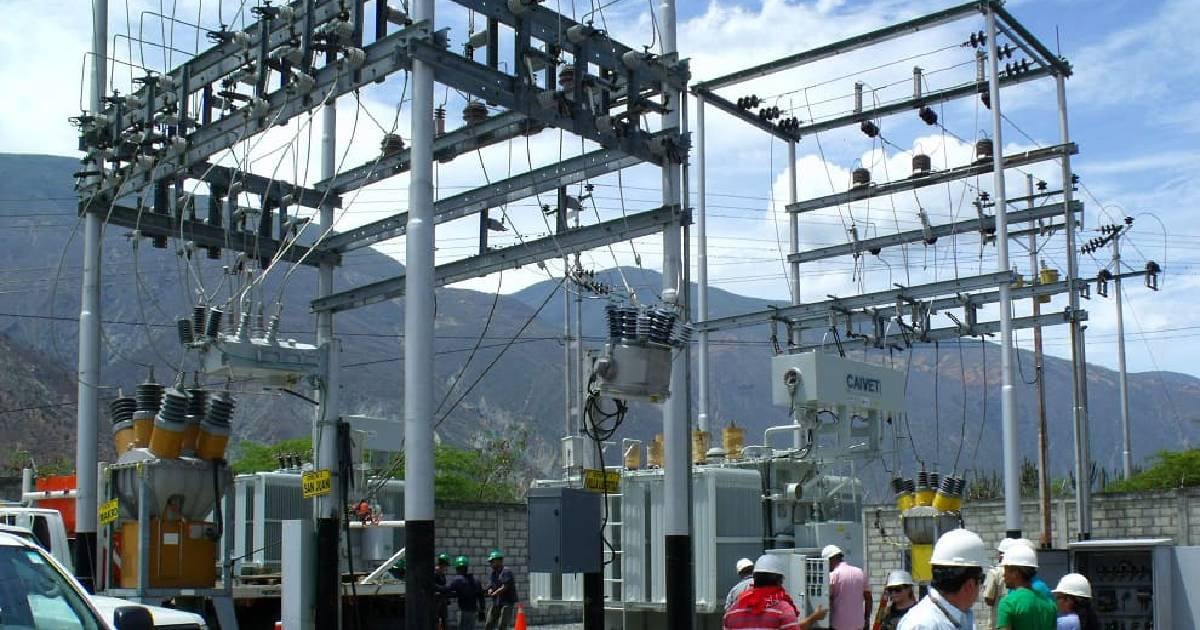
The United States has declared the reconstruction of Venezuela's electrical system a strategic priority, which it considers "deteriorated and fragile" after years of neglect, corruption, and lack of investment by the Chavista regime, according to an official document from the Department of Energy (DOE) published this week.
The plan is part of the energy agreement between both countries, driven by the capture of Nicolás Maduro on January 3 and the establishment of an interim administration supported by Washington, cited the newspaper El Economista.
The initiative aims to modernize Venezuela's electrical infrastructure to ensure a sustained increase in oil production, which is critical for regional energy and political stability.
"We will work to improve the electrical grid, which is essential for increasing oil production, economic opportunities, and the daily quality of life for the Venezuelan people," the DOE document states.
The Department of Energy describes the Venezuelan electrical system as "the most critical bottleneck" for the country's recovery.
According to the report, the network has lost more than 30% of its generation capacity, leading to chronic blackouts that affect both basic services and industrial and oil activities in one of the nations with the largest crude oil reserves worldwide.
The DOE emphasizes that the system is "highly centralized and dependent on hydroelectric power (78%)," which makes it vulnerable and obsolete.
The infrastructure suffers from high transmission and distribution losses, as well as ongoing failures in the equipment and main lines, the document indicates.
"Due to electrical failures, Venezuela loses over 3,000 dollars for every megawatt/hour that is rationed," estimated energy consultant José Aguilar, who warned that the grid is the biggest technical and financial obstacle to the country's economic development.
Washington is already coordinating with the Venezuelan interim authorities and private companies to bring in equipment, spare parts, and specialized technical services to rehabilitate the system.
Sources from the DOE confirmed that all projects will be funded and directly supervised by the United States, which will exercise total control over Venezuela's oil revenues to ensure “transparency and integrity” in the use of the funds.
"The U.S. government has begun to market Venezuelan oil in the global market for the benefit of the United States, Venezuela, and its allies. All revenues will first be settled in accounts controlled by the U.S. in recognized international banks," the statement details.
The electrical reconstruction is not framed as a humanitarian program, but rather as a technical project of energy interest. The DOE argues that without a fully operational power grid, it is impossible to restore oil production to historic levels.
The plan includes the rehabilitation of generating plants (hydroelectric and thermoelectric); the replacement of transformers and critical transmission lines; the supply of U.S. light crude to dilute Venezuelan heavy oil; and investment in technology and maintenance services, with participation from Chevron, ConocoPhillips, and ExxonMobil, which stated yesterday that the country is still not safe for "investment" and requested guarantees.
"The goal is not only to restore the electricity supply for the population but also to create the minimum conditions that allow for an increase in oil production and to reactivate the economy under U.S. supervision," emphasizes the DOE document.
The agreement includes a selective lifting of energy sanctions to facilitate the transportation and sale of Venezuelan oil in international markets.
The DOE confirms that the U.S. will provide diluents and light oil to PDVSA to improve the quality of heavy crude, while the benefits from these operations will be partially reinvested in Venezuela and the United States under American financial control.
"The only oil that will enter and leave Venezuela will be that which does so through legitimate and authorized channels, consistent with U.S. law and national security," warns the document.
Energy experts indicate that the complete recovery of the Venezuelan electrical system could take between five and eight years and require over 15 billion dollars in investments.
The DOE acknowledges that the initial efforts aim to ensure minimum conditions for electrical stability in order to accelerate oil production and gradually restore essential public services.
Washington views this project as the structural foundation of the new Venezuelan economic model, focused on oil, regional stability, and control of energy flows in the Western Hemisphere.
Filed under: