
Related videos:
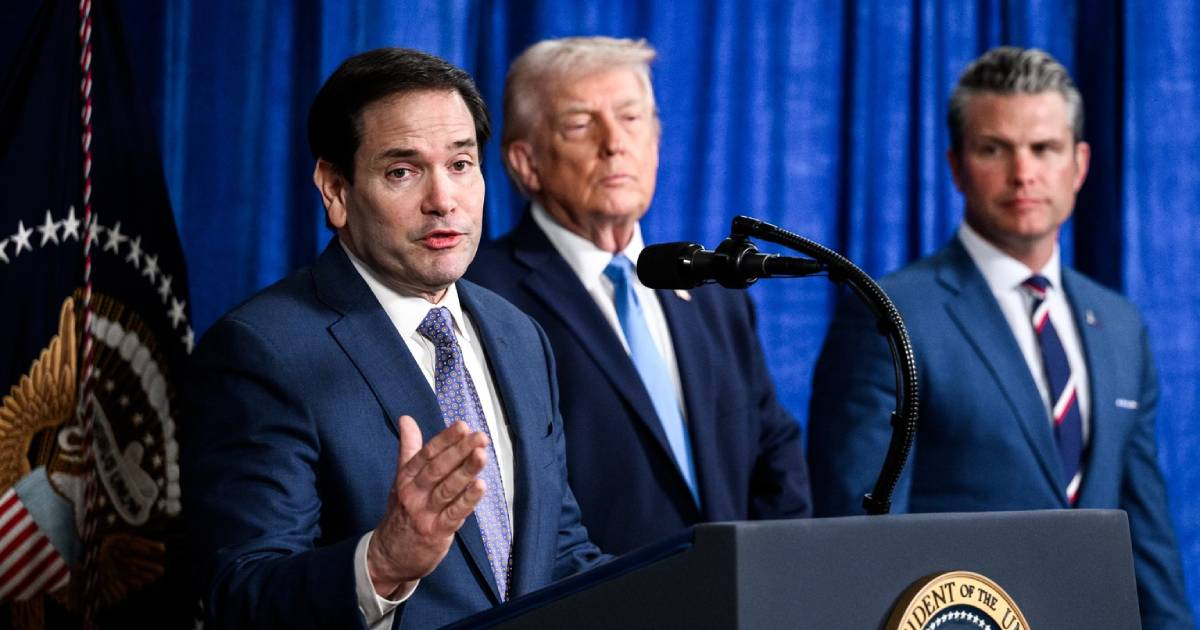
The idea suggested, amidst mockery, provocation, and threat, by Donald Trump about Marco Rubio as a possible "president of Cuba" was more than just a social media occurrence.
In just a few hours, the comment from the U.S. president circulated in major media outlets across Latin America, the United States, and Europe, fueling headlines, analyses, and political interpretations that once again place the island at the center of a narrative of pressure and confrontation.
It all began when Trump reshared a message on his platform Truth Social suggesting that Rubio could become president of Cuba “when the government falls”, and responded with a brief yet eloquent, “Sounds good to me.”
The statement was enough for media outlets like The New York Post to highlight the suggestion as more than just a joke, recalling the political weight that the current Secretary of State has gained within the administration and his hardline history against Havana.
The New York tabloid also emphasized the context: Trump’s explicit threats to permanently cut off the oil and money flowing to Cuba from Venezuela, along with warnings that the Cuban regime "should be concerned."
In Latin America, La Nación from Argentina interpreted the gesture as part of a larger escalation.
According to the newspaper, Trump's comment comes alongside direct pressures and warnings about a possible intervention if Havana does not "reach an agreement," in a context marked by the recent capture of Nicolás Maduro following a U.S. military operation.
The media recalled previous statements from Rubio, the son of Cuban immigrants, in which he claimed that if he were in the Cuban government, “he would be at least a little worried.”
From Central America, Prensa Libre openly discussed an increase in regional tension.
The Guatemalan newspaper linked Trump's statement to the end of Venezuelan support for Cuba and to an increasingly aggressive U.S. foreign policy toward governments allied with Havana. For this outlet, Rubio's mention serves as a direct political message: pressure, warning, and demonstration of strength.
The echo also reached Europe. France 24 Español featured a profile on Marco Rubio, presenting him as one of the most influential figures in U.S. politics regarding Latin America, with an openly anti-communist discourse and a strategy based on sanctions and pressure.
The channel highlighted that, although Trump spoke in an apparently joking tone, the phrase is set within a hypothetical scenario that many are now analyzing seriously, given Rubio's central role in Washington's regional agenda.
For Cubans, both on the island and abroad, the international repercussions of this comment are significant. Beyond the mocking tone, Trump's insistence on cutting resources, demanding agreements "before it's too late," and mentioning Cuba in the context of a change in power once again places the island under a spotlight of uncertainty.
Filed under: