
Related videos:
Amid a deep energy crisis in Cuba and growing geopolitical pressure from Washington, Mexico has emerged as the main supplier of oil and fuels for the island, replacing the collapsed flow from Venezuela.
However, this strategic position, taken by Claudia Sheinbaum's government as part of a "humanitarian" aid, faces increasing doubts: Does Pemex really have the capacity to sustain supply in the long term?
Mexico, the new energy support for Cuba
The capture of Nicolás Maduro by U.S. forces has reconfigured the energy landscape of the Caribbean.
Venezuela, which for decades sustained the Cuban regime with subsidized oil in exchange for medical and intelligence services, has seen its production and export capacity plummet due to sanctions and structural collapse.
In this context, Mexico has become the main oil supplier to Cuba, which "raises the geopolitical cost in its relationship with the United States," according to specialists cited by the agency EFE.
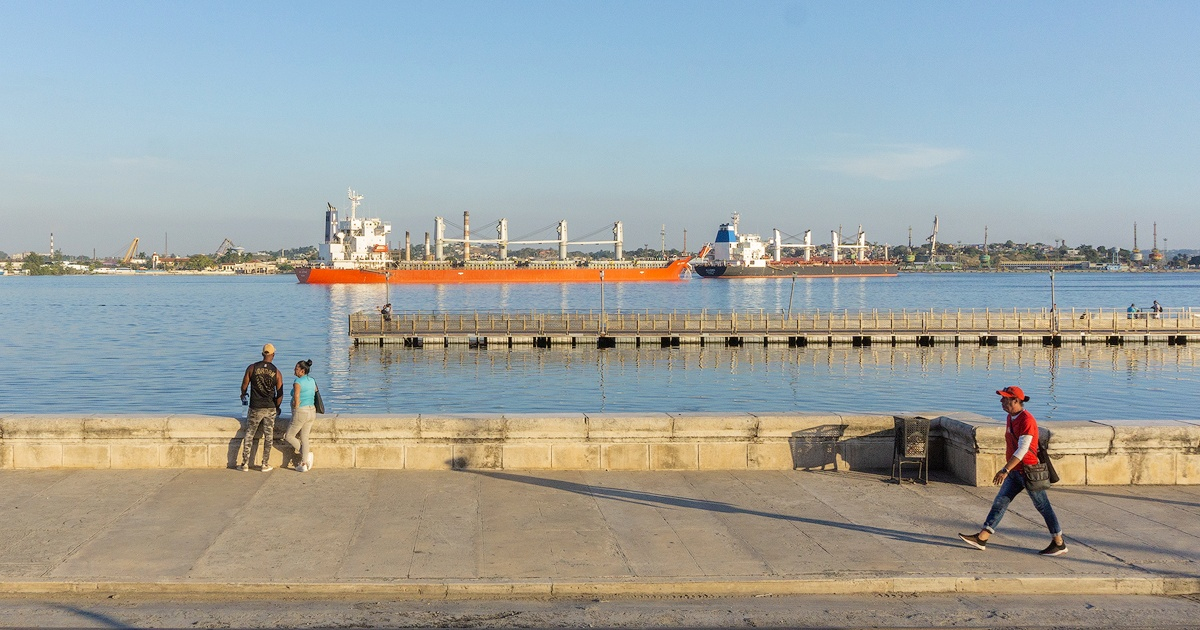
The recent arrival of the ship Ocean Mariner in Havana Bay, carrying 86,000 barrels of fuel from Mexico, confirms this.
“Mexico is becoming more visible as an exporter to Cuba, which raises the risk of pressure with the United States”, warned Gonzalo Monroy, director of the consulting firm GMEC.
The doubts about sustainability from Pemex
Beyond diplomacy, the problem may lie at home.
PEMEX, the Mexican state oil company, has not met its production targets, and experts like Ramsés Pech doubt its ability to maintain consistent exports abroad if the current trend continues.
"Pemex and its private partners produce 1.6 million barrels per day (mbd), of which only 1.3 mbd are from Pemex, falling short of the official target of 1.8 mbd," noted Pech, a partner at the energy consulting firm Grupo Caraiva.
Each barrel sent to Cuba additionally competes with internal needs and profitable export goals, which could trigger alarms within the company if the production backlog continues.
"The opportunity cost can become unsustainable," agree Pech and Monroy.
Humanitarian aid... and uncollectible debt
President Claudia Sheinbaum has defended the shipments to Cuba as part of a long-term humanitarian agreement.
“No more oil is being sent than what has historically been sent,” the leader assured at the beginning of this month during a press conference, responding to revelations from the Financial Times, which estimate a current volume of 12,000 barrels per day being sent to the island.
However, the economic reality behind those shipments is less altruistic.
According to Monroy, Cuba does not pay, and the current scheme includes discounts and lenient conditions that end up accumulating as "accounts receivable" that never get settled.
“That debt accumulates and then is forgiven, as Enrique Peña Nieto did in 2013,” he explained.
The situation creates internal tensions, not only due to the lack of transparency regarding the data -Pemex has not officially responded about the volumes or the amounts involved- but also because of the precedent of multimillion-dollar debts that end up being forgiven in the name of foreign policy.
The Cuban energy context: Total crisis
Meanwhile, Cuba is facing one of the worst energy crises in its history.
The loss of Venezuelan oil, combined with the limited national refining capacity and a collapsed electrical system, keeps millions of Cubans experiencing power outages of up to 20 hours a day.
The Cuban regime has tried to survive by reselling part of the imported oil, while maintaining relations with Russia—limited by the war in Ukraine—and with Mexico as its main current support.
In this context, Mexican shipments have avoided a total collapse, and they are even tolerated by Washington, which fears a new migratory or social outbreak if the country falls into a prolonged and widespread blackout.
A sustainable bond?
Although energy cooperation between Mexico and Cuba is not new—it dates back to the 1980s—the current political environment has amplified its impact.
The ambivalence of the United States, the operational fragility of Pemex, and the lack of payments from Havana create an unsustainable equation in the long term.
“The question is not whether Mexico wants to continue sending oil, but whether it can afford to do so,” Monroy warned.
With production stagnating, finances in the red, and increasing diplomatic pressures, the Mexico-Cuba relationship is on shaky ground, relying on key decisions that have yet to be made.
For now, the vessels continue to depart from Mexican ports heading toward a dark island, in an operation that blends solidarity, geopolitics, and financial risks.
Despite President Donald Trump's public rhetoric—who has vowed to cut off the "economic oxygen" to the Cuban regime—the United States has allowed Mexico to continue sending crude oil to the island.
This was confirmed by the Secretary of Energy, Chris Wright, and other high-ranking officials quoted by CBS News, who pointed out that, in practice, Washington tolerates Mexican supplies as a way to prevent a complete collapse of the Cuban electrical system.
This ambivalence reflects a strategy of restrained pressure, more aimed at forcing concessions than at precipitating an immediate humanitarian crisis.
Filed under: