
Related videos:
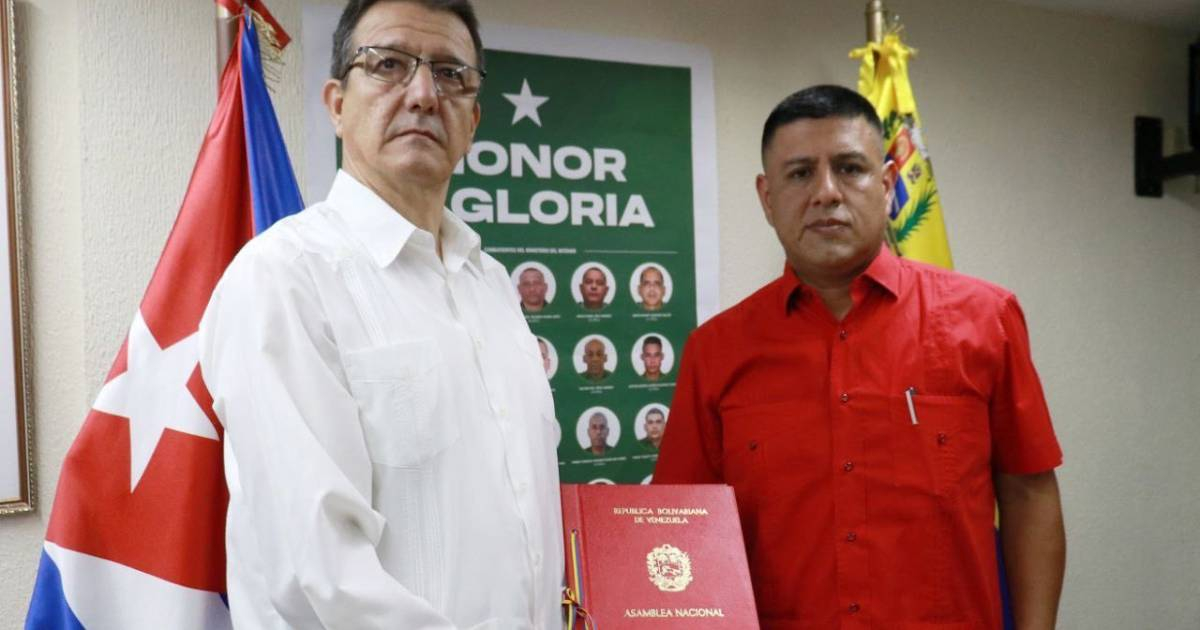
The National Assembly of Venezuela, controlled by Chavismo, delivered a resolution to the Cuban Embassy in Caracas on Monday, declaring "heroes and martyrs" those who lost their lives during the U.S. military operation on January 3, including 32 Cuban soldiers who died in the Venezuelan capital, according to the agency EFE.
The document, unanimously approved on January 8, was presented as a gesture of "unbreakable brotherhood" between both governments and as a tribute to those whom the Venezuelan Parliament considers victims of what it describes as a foreign military intervention.
The announcement came days after Venezuelan Defense Minister Vladimir Padrino López confirmed that the operation resulted in at least 47 Venezuelan military personnel dead and over a hundred injured, with nine women among the deceased.
While in Caracas the official speeches and symbolic recognitions are multiplying, in Cuba the regime has deployed a machine of tributes that has turned the mourning for the 32 soldiers who died in Venezuela into a demonstration of political control and an epic narrative.
Funeral processions escorted by troops, coffins draped with the Cuban flag parading through the main avenues of Havana, honor guards, and military ceremonies have characterized a funeral in which the presence of the State has been much more prominent than that of the family.
The images released by the official press show groups of soldiers, cadets, state workers, and students mobilized to participate in the events, in scenes that appear to be carefully orchestrated and far from an intimate mourning.
The central event took place at the José Martí International Airport and continued at the facilities of the Ministry of Revolutionary Armed Forces, where the coffins were aligned under a narrative of "fallen in combat," which avoids explaining why for years the regime itself denied the presence of Cuban military personnel in Venezuela.
The ruler Miguel Díaz-Canel strengthened that narrative during a tribute held at the Anti-Imperialist Tribune, where he praised the deceased as "titans" who, in his words, offered their lives "until the last bullet."
In his speech, the leader once again positioned the United States as a central enemy and used the deaths of the military as an argument to intensify his confrontational rhetoric, at a time when the Island is experiencing a deep economic and social crisis.
Beyond the speeches and official honors, the facts have revealed a reality that remained silent for years: the Cubans who died in Caracas were not participating in a humanitarian mission nor defending national territory, but were part of the security apparatus of an allied government.
Now, both in Venezuela and in Cuba, their deaths are used as a political symbol, while the uncomfortable questions about the human cost of that alliance remain unanswered.
Filed under: