
Related videos:
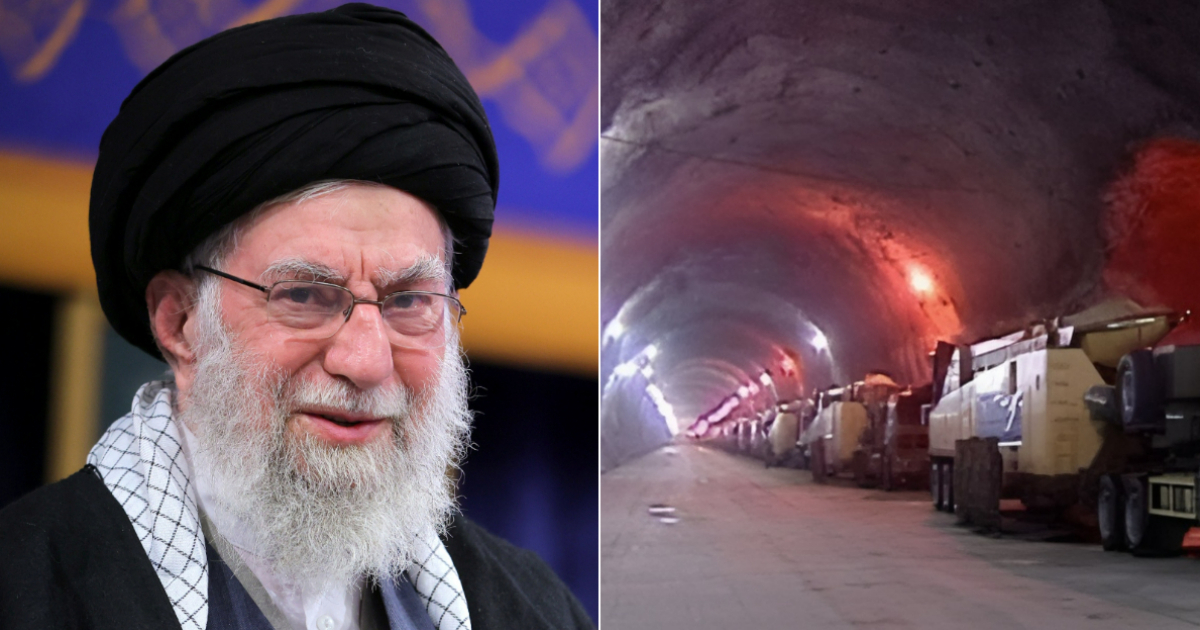
The supreme leader of Iran, Ayatollah Ali Jamenei, moved to a fortified underground shelter in Tehran amid fears of an imminent military attack from the United States, as reported this Saturday by the Israeli news outlet Jerusalem Post.
The measure would have been taken following warnings from high-ranking Iranian military and security officials about the increased risk of a U.S. offensive.
Sources close to the regime indicated that the complex to which Jamenei was transferred has a network of interconnected tunnels and a reinforced structure capable of withstanding heavy bombardments.
According to reports, these are the same types of facilities used by the Iranian regime during the war with Iraq in the 1980s.
The report adds that Masud Jamenei, the third son of the ayatollah, has taken over the daily management of his father's tasks and has become the main channel of communication with the various executive branches of the government.
This internal movement suggests that the supreme leader may be isolating himself or limiting his public appearances while assessing the country's military and political situation.
The transfer of Jamenei occurs one day after the U.S. president, Donald Trump, confirmed the dispatch of warships to waters near Iran. Washington believes that the Persian regime continues to pose a threat to regional stability, especially due to its support for militias in Iraq, Syria, and Lebanon.
This is the second time in seven months that the 86-year-old ayatollah seeks refuge in a bunker. Last June, he reportedly took similar measures due to U.S. attacks on Iranian nuclear facilities.
The new detention of Jamenei reinforces tensions between Tehran and Washington at a time of heightened international pressure on the Islamic regime.
Wave of protests in Iran and warnings from the United States
Since early January 2026, Iran has been experiencing a new wave of popular protests, driven by economic decline, inflation exceeding 50%, fuel shortages, and power outages in several provinces.
The protests, which began in cities in the southwest and quickly spread to Tehran, Mashhad, and Shiraz, are calling for the end of the theocratic regime led by Ayatollah Khamenei.
According to human rights organizations such as Amnesty International and Human Rights Watch, Iranian security forces have responded with violence, leaving dozens dead and hundreds detained.
Videos shared by activists show the Revolutionary Guard shooting at protesters and blocking access to the internet in major cities, a common tactic of the regime during episodes of political crisis.
In response, the United States expressed its support for the Iranian people and condemned the repression. The Secretary of State, Marco Rubio, stated that “the people of Iran have the right to protest without fear of being imprisoned or killed,” and warned the Iranian authorities that “there will be consequences if the violence against civilians continues.”
For his part, President Trump posted a message in Persian and English on Truth Social in which he stated that "freedom is closer than ever for the brave Iranians who challenge the ayatollahs."
Washington has also urged the international community to maintain pressure on Tehran and has strengthened sanctions against senior officials of the Revolutionary Guard and the Iranian Ministry of Intelligence.
The protests, regarded as the most significant since those of 2022 following the death of Mahsa Amini, reflect a growing social discontent in a country suffocated by sanctions, corruption, and the repression of the clerical regime.
Filed under: