
Related videos:
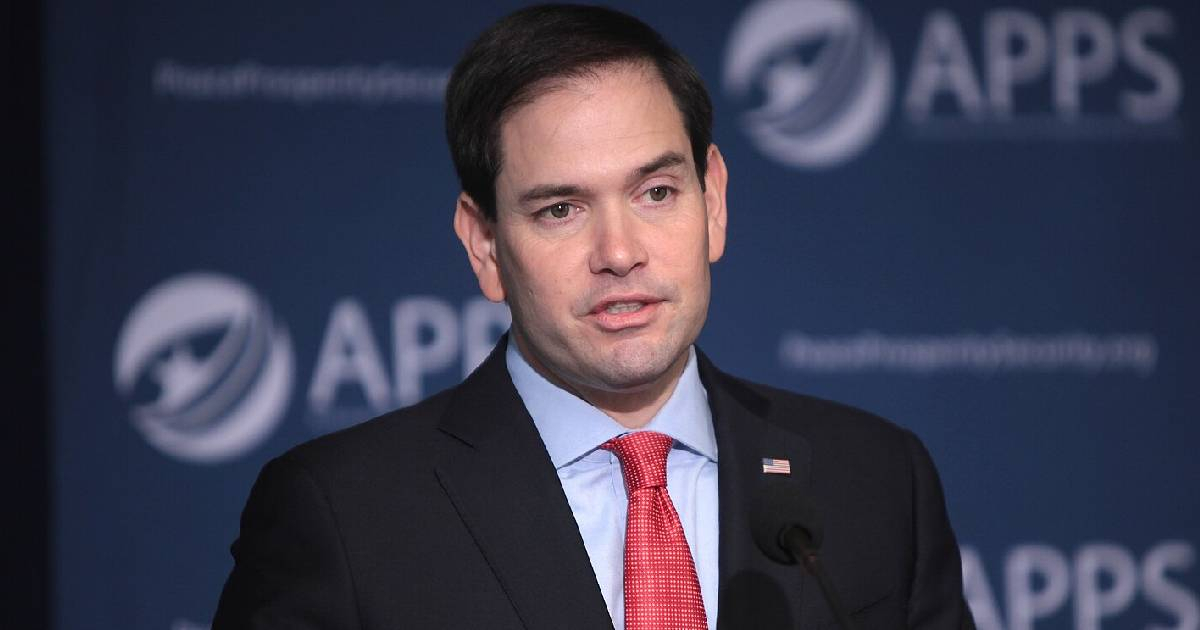
The U.S. Secretary of State, Marco Rubio, warned this Tuesday that the interim president of Venezuela, Delcy Rodríguez, “will suffer the same fate” as the ousted Nicolás Maduro if she does not meet Washington's demands.
During a hearing before the Senate Foreign Relations Committee, Rubio stated that the Donald Trump administration "is prepared to use force" to ensure full cooperation from Venezuelan authorities if other methods of diplomatic pressure fail, reported AFP.
"Delcy Rodríguez is fully aware of Maduro's fate," Rubio stated in his testimony, referring to the former president captured by U.S. special forces on January 3.
"Don't be mistaken: as the president has said, we are prepared to use force to ensure maximum cooperation if other methods fail," emphasized the politician of Cuban origin.
Rubio defended the military operation in Caracas, describing it as a "historic success," noting that the capture of Maduro and his wife, Cilia Flores, was achieved without American casualties or military occupation.
"The history records few examples where so much has been achieved at such a low cost," he said.
The official insisted that Maduro was “an accused drug trafficker, not a legitimate head of state,” thus justifying the military action that left more than 100 dead among Venezuelans and Cubans, according to figures from the Venezuelan government itself.
According to Reuters, U.S. intelligence agencies have expressed doubts about the level of cooperation of Delcy Rodríguez with Washington.
Four sources cited by the media claimed that recent reports are inconclusive regarding whether the interim president is willing to formally sever ties with the international allies of the ousted regime, such as Iran, China, Russia, and Cuba.
Rodríguez, whose swearing-in was attended by representatives from those countries, has not publicly announced any measures to expel their diplomats or advisors.
However, the CIA maintains direct communication with Caracas. Its director, John Ratcliffe, traveled to Venezuela on January 15 to discuss the political future of the country, although Reuters could not confirm whether that meeting changed the assessments of the agencies.
Officials in the Trump administration believe that Washington should maintain "maximum pressure" on Venezuela and take advantage of the transitional period to realign the country's relationships.
"President Trump continues to exert maximum influence over Venezuelan leaders and hopes that this cooperation will continue," said a senior official who spoke on condition of anonymity.
Cited sources from Reuters indicated that the U.S. administration aims for Rodríguez to distance Venezuela from its former allies, which would pave the way for increased American investments in the oil sector.
However, they acknowledge that keeping loyal figures to Maduro in power involves risks and contradictions within the strategy.
Since coming to power, Rodríguez has taken some measures to partially align with Washington, including the release of political prisoners and the authorization to sell between 30 and 50 million barrels of crude oil to the United States.
However, in a recent speech, the leader stated that she has had "enough" of the interventions by the United States, although she assured that she maintains "respectful communication" with officials from the Trump administration.
For the moment, Washington does not consider an immediate replacement for Rodríguez, although it is maintaining contact with high-ranking Venezuelan military officials as a possible alternative, according to Reuters.
Within the internal debate, some advisors to the White House have mentioned opposition figure María Corina Machado as a potential long-term candidate for the country's leadership, according to sources consulted by Reuters.
Meanwhile, Rubio reiterated before the Senate that the White House “will not negotiate with drug traffickers or enemies of freedom,” and assured that Venezuela “will be free and prosperous under a government that fully cooperates with the United States.”
Marco Rubio's statements come in a context where the United States is considering reopening its embassy in Caracas and formally restoring diplomatic relations with the interim government of Venezuela.
At the same time, interim president Delcy Rodríguez announced the unlocking of Venezuelan assets in U.S. banks, which she stated was the result of discussions held with President Donald Trump and the Secretary of State himself.
Filed under: