
Related videos:
The crisis of the National Electric System (SEN) continues to give no respite to the Cuban population.
According to the report from the Electric Union (UNE), on Wednesday the service was affected for 24 hours, with a maximum impact due to a generation deficit of 1832 MW at 6:30 PM.
Although the service was fully restored at 2:35 this morning, just a few hours later, at 4:11 am on Thursday, the blackouts returned.
At 6:00 am, the availability of the SEN was only 1350 MW, compared to a demand of 1870 MW, resulting in a shortfall of 550 MW from early on.
For the noon period, the UNE estimates that the impact could rise to 1050 MW, reflecting the extreme fragility of the system.
Breakages continue to be one of the main factors of the collapse.
In total, six units are out of service due to breakdowns at the thermoelectric plants Mariel, Santa Cruz, Nuevitas, Felton, and Antonio Maceo.
In addition, there are three units under maintenance at the Santa Cruz and Carlos Manuel de Céspedes power plants.
Only due to limitations in thermal generation, there are 420 MW out of service, a figure that confirms the advanced deterioration of the plants, many of which have been in operation for decades without any real structural investments.
For the peak evening hours, the UNE forecasted the potential contribution of unit 1 from the CTE Santa Cruz with 50 MW, unit 2 from the same plant with 80 MW, unit 3 from the CTE Renté with 45 MW, and the Melones tractor-trailer with 45 MW.
However, the shutdown of the CTE Guiteras unit for maintenance is also expected for 96 hours, which further impacts generation capacity.
In that scenario, the total availability for the peak would barely reach 1385 MW, against a maximum demand of 3150 MW, resulting in a deficit of 1765 MW and a predicted actual impact of 1795 MW during the highest consumption period.
Solar energy also fails to compensate for the disaster.
The 49 new photovoltaic solar parks produced 1,929 MWh, with a peak power of 284 MW at noon, a figure that is clearly insufficient given a deficit that far exceeds 1,700 MW.
In Havana, the Electric Company reported that on Wednesday the service was disrupted for 14 hours and 35 minutes.
The maximum insufficiency was 296 MW at 6:30 PM, and due to an emergency, 80 MW were affected.
Although it was possible to restore the service for deficit at 8:40 PM, the company itself warned that if the availability of the national electricity system does not improve, energy contingency measures will be implemented without scheduled times.
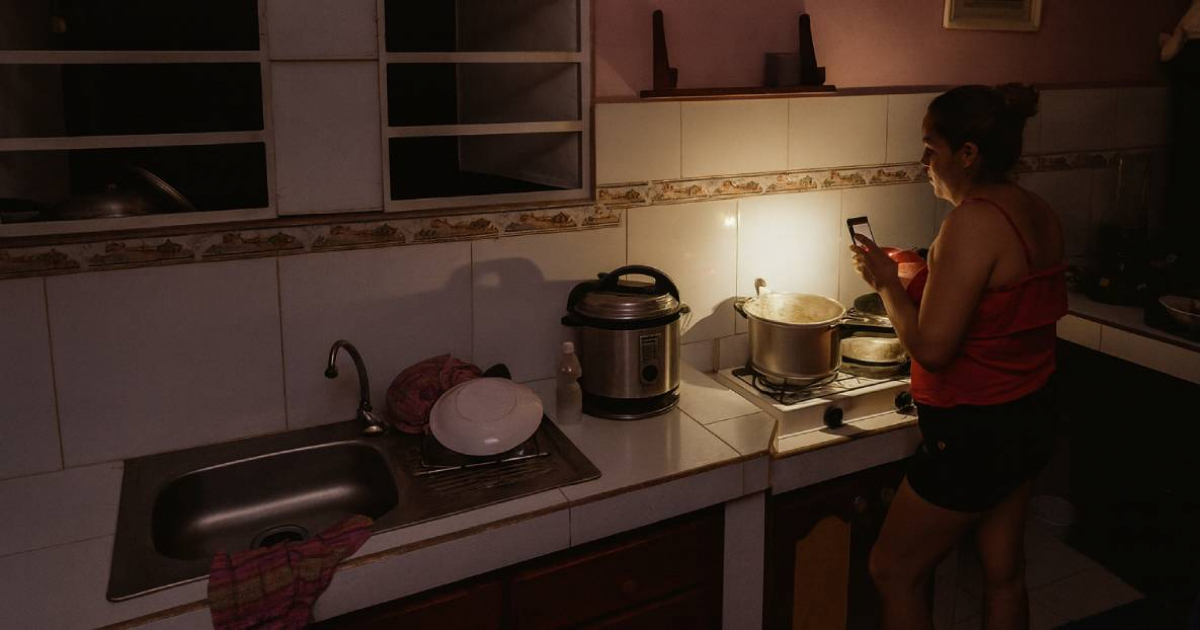
Behind these figures lies a much harsher reality: families spending entire nights without electricity, without fans, without refrigeration for food, and unable to rest.
For months now, in many areas of the country, power outages frequently exceed 20 hours a day, turning everyday life into a test of endurance.
This crisis is not the result of chance. It is the outcome of decades of poor management, neglect of infrastructure, external dependency, and a model that prioritizes propaganda over real solutions.
Meanwhile, the cost is borne by the citizens: the elderly, children, the sick, and workers trying to survive amidst the heat, scarcity, and constant uncertainty.
Filed under: