
Related videos:
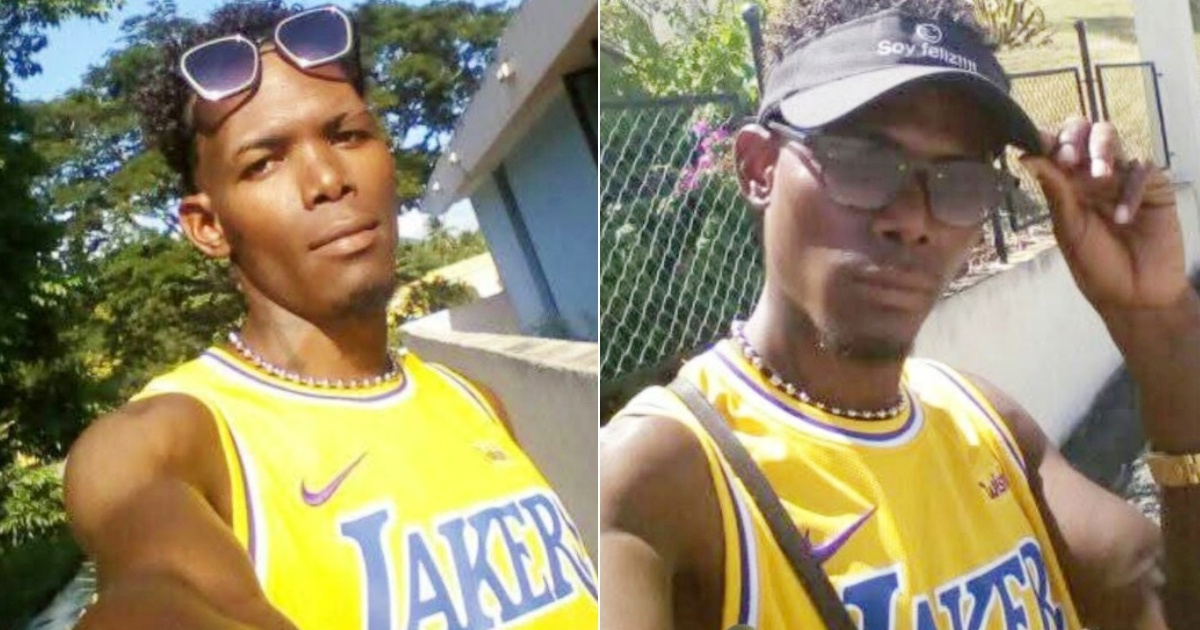
In recent hours, new and shocking details have emerged about the murder of Eduardo Ortiz, a 31-year-old known to everyone in El Cobre, Santiago de Cuba, as “Kañín.”
The crime, which occurred on Sunday, February 1 in broad daylight, has caused an outpouring of dismay in that popular Cuban town, and has highlighted the fragility of the social fabric, institutional neglect, and the rising violence affecting the most vulnerable sectors of the country.
The victim, a regular presence around the Sanctuary of the Virgin of Charity, earned a living selling flowers, small stones, and religious figures to the pilgrims, like many others in this emblematic town in eastern Cuba.
The murder, which occurred in broad daylight and in front of witnesses, has been detailed by the Cuban activist from El Cobre, now residing in Florida, Omayr Sayut Taquechel, who has publicly denounced what happened.
According to his testimony, the events unfolded after a visitor to the sanctuary handed over one thousand Cuban pesos to Ortiz to distribute among the vendors at the site.
Instants after the money was delivered, a man identified as Mito Torres Moya appeared on the scene and demanded a portion of the money. Eduardo responded that he was not entitled to anything since he was not present during the distribution.
There was already a history of confrontation between the two.
“A few days earlier, they had had a confrontation, a disagreement,” Sayut explained.
Tensions escalated quickly: they argued, they were separated, but Mito returned home, armed himself with a sharp object, and went back to the scene, this time accompanied by his son, Gardi Torres Moya.
The scene that followed was brutal. Mito's son physically attacked Ortiz, hitting him in the face, and they began to struggle.
In the midst of the fight, Mito took the opportunity to attack from behind: “he stabs him in the collarbone and another in the side,” the activist detailed.
Eduardo tried to escape, injured, but his attacker pursued him. He threw an iron ball that knocked him down, and when he attempted to get up, he received a third stab wound, this time in the lower back.
He bled a lot, some people intervened, they took him to a hospital, he developed a pneumothorax, they were going to operate on him, but he died before the surgery.
Reports of police inaction
One of the most outrageous elements of this crime, according to Sayut's public statement, is that the police never arrived at the scene.
“That's for you to see how far the fuck… that police go. So you can see how far the dehumanization goes that we ourselves, the Cubans, have,” the activist expressed with anger during a live broadcast.
It was not until just after four in the afternoon on the day of the crime that the alleged murderer, Mito Torres Moya, voluntarily turned himself in to the authorities. His son, Gardi Torres Moya, remains at large.
"A beloved kid by the whole town of El Cobre. Kañín was a kid who didn't deserve this mess, man," lamented Sayut, who had known the victim since he was little.
.
The crime has not only caused a wave of grief among those who knew Eduardo, but it has also raised strong concerns about potential reprisals.
"This will have consequences," warned Sayut, noting that there are people close to the victim who are deeply disturbed and do not rule out a settling of scores.
In a call for reflection, the activist urged: “Do not use your 'blades' against innocent people. Everyone has problems. Do not make your relatives, your fathers, your mothers, continue crying, suffering, for vanities, for foolishness. For a thousand Cuban pesos, the life of this young person was lost today.”
The Face of Kañín: A Symbol of Everyday Life in El Cobre
Eduardo Ortiz was about to turn 32 on February 14. He was, as journalist Yosmany Mayeta Labrada had previously indicated, one of the familiar faces around the Sanctuary of Our Lady of Charity.
“She sold flowers, stones from the mine, and sunflowers to the pilgrims, improvised songs, and earned her living with whatever came along,” she wrote.
“Eduardito was one of the familiar faces in the Sanctuary’s surroundings... and now he is no longer here,” lamented Mayeta.
The death of Eduardo Ortiz has sparked a wave of messages on social media. Friends, neighbors, and acquaintances remember him fondly and demand justice.
But beyond the call for criminal sanctions, the community is asking what place human life occupies in a country where police presence is selective, social tensions simmer beneath the surface, and differences are resolved with knives in the absence of institutions to mediate and protect.
The murder of “Kañín” is not merely the result of a personal conflict; it is also a reflection of a context of abandonment, frustration, and structural violence where the life of a humble young man, known and loved by all, was lost for “a thousand Cuban pesos.”
Filed under: