
Related videos:
Havana denied this Tuesday that a negotiation table with the United States is being designed, although it acknowledged that it has been exchanging messages since the capture of former Venezuelan president Nicolás Maduro on January 3rd, an event that has reconfigured the political landscape of the continent.
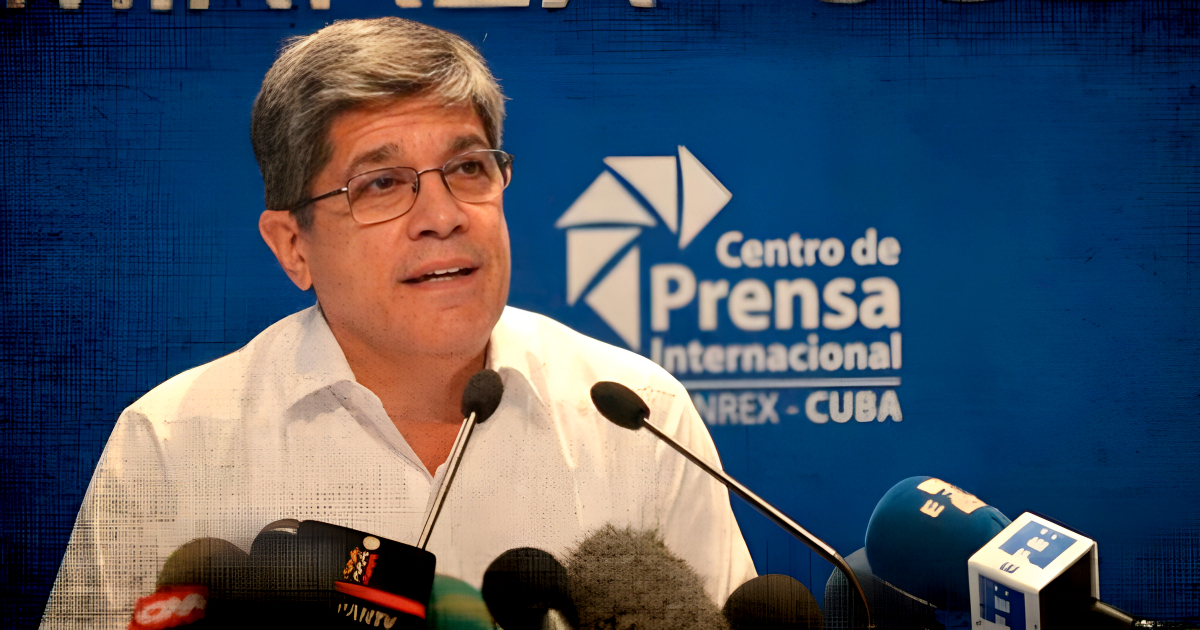
In an interview with the agency EFE, the Deputy Minister of Foreign Affairs, Carlos Fernández de Cossío, stated that “it would be a mistake to say that a bilateral negotiation is being designed,” and emphasized that “that dialogue has not begun.”
"The U.S. government is fully aware of Cuba's willingness to engage in dialogue, and it has not rejected it," he specified.
The diplomat's statements contrast with the recent claims made by U.S. President Donald Trump, who asserted that his administration is engaged in "high-level negotiations" with Cuban leaders.
Fernández de Cossío also ruled out indirect contacts through intermediaries such as Mexico or the Vatican, and reiterated the regime's boundaries: there will be no discussions on political or economic reforms, nor the release of political prisoners, topics that are indeed part of the ongoing transition process in Venezuela.
“Cuba faces the same limitation that Washington would have when discussing its Constitution or the raids against migrants in Minneapolis,” the official stated, dismissing any external conditioning.
The deputy foreign minister acknowledged, however, that the country is facing a critical situation and announced the imminent implementation of a contingency plan.
"We have limited options and a need for reorganization that will require a lot of work, creativity, and sacrifice. This will be a very difficult reorganization process for the population," she warned.
The statement comes amid a nearly total energy blockade and new sanctions driven by Washington, which has labeled the Cuban regime an “unusual and extraordinary threat” to the national security of the United States.
The red lines of Havana before Washington
Fernández de Cossío's statements are part of the strategy outlined by the Cuban regime in recent days, after the official himself confirmed that there is no and will not be a dialogue with the United States that includes political or economic reforms.
During an interview granted this Monday to The Associated Press, Fernández de Cossío made it clear that the Cuban regime will not discuss its Constitution, its economic system, or its socialist model, considering them “non-negotiable internal matters.”
The Deputy Foreign Minister explained that Havana's willingness to engage in dialogue is limited to technical or cooperative issues, such as security, migration, or drug trafficking, but does not extend to structural transformations of the system.
We are open to dialogue, but not to the negotiation of our political system, he stated.
By maintaining these limits, the Cuban regime aims to protect the constitutional pillars that ensure its continued hold on power: the irrevocability of socialism (Article 4), the hegemonic role of the Party (Article 5), and the prohibition of reforming that political order (Article 229).
That position clashes with Washington's vision under the Monroe Doctrine, advocated by President Trump and Secretary of State Marco Rubio, which promotes the democratic transition of authoritarian regimes in the hemisphere.
Havana's refusal to discuss its Constitution or political model is interpreted in the United States as an explicit resistance to change, at a time when the White House has made it clear that there will be no stability without a transformation of the system.
Filed under: