
Related videos:
The United States accused China this Friday of conducting a "massive and deliberate buildup" of nuclear weapons, aiming to achieve an arsenal comparable to that of Washington or Moscow.
The complaint was made by the Under Secretary of State for Arms Control, Thomas DiNanno, during a session of the UN Disarmament Conference in Geneva.
"This increase is opaque and not subject to any limitations regarding arms control, which symbolizes the change that has occurred in the global nuclear strategic environment over the past 15 years," DiNanno stated before the delegates.
According to a report by EFE, the official emphasized that the current context is particularly sensitive, since for the first time since the early 1990s, the world lacks a valid treaty between the two major nuclear powers to limit and verify their arsenals, following the expiration of the START III agreement between the United States and Russia.
DiNanno recalled that when the treaty was signed in 2010, Washington and Moscow reduced their strategic weapons to "historic lows," while China maintained "a relatively small nuclear arsenal, consistent with its deterrence approach."
However, he assured that since then, Beijing "took advantage of the legally binding restrictions from the United States and Russia to begin expanding its arsenal at its own pace."
According to the U.S. representative, that trend was already concerning during the first term of Donald Trump and has intensified over time.
"China is on track to have over 1,000 nuclear warheads by 2030," he warned.
He also lamented that while other countries are required to be transparent in multilateral forums, "China denies the evidence" regarding its nuclear expansion and continues to develop capabilities with Russian support.
From the Chinese delegation, the deputy ambassador to the UN in Geneva, Jian Shen, rejected the accusations and labeled them as "a false narrative."
Shen accused the United States of having "aggravated the arms race" by investing billions of dollars in the development of new nuclear weapons.
The Chinese diplomat assured that his country "has never competed with others in terms of investment, number, or range of nuclear weapons" and that it has no intention of starting an arms race.
The strategic struggle and the path of dialogue
The accusation in Geneva contrasts with the relatively constructive tone that direct contacts between Washington and Beijing have shown in recent days.
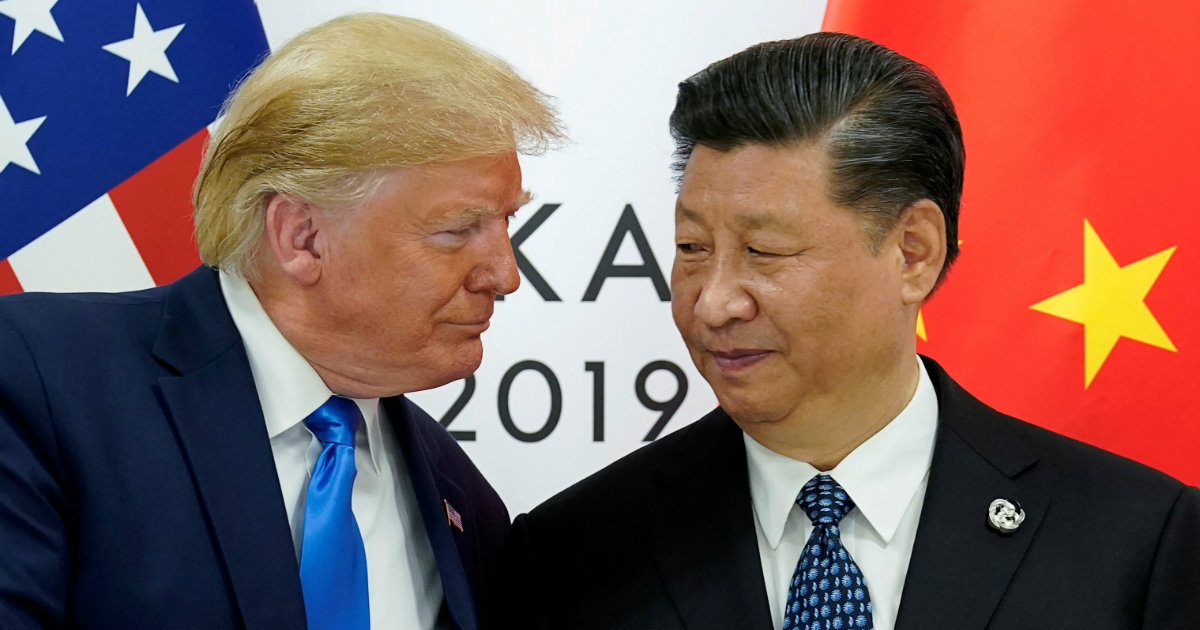
Last Wednesday, U.S. President Donald Trump confirmed that he had an "excellent" phone conversation with his Chinese counterpart Xi Jinping.
"It was a lengthy and thorough call, in which many important topics were discussed," he wrote on his Truth Social network.
Among the topics discussed, he mentioned trade, military and diplomatic issues, as well as a possible visit to Beijing in April. The agenda included Taiwan, the war between Russia and Ukraine, the situation with Iran, and energy and agricultural trade.
Trump emphasized that China is considering significantly increasing its agricultural purchases from the United States, particularly soybeans.
"Everyone is very positive! The relationship with China, and my personal relationship with President Xi, is extremely good," concluded the leader.
From Beijing, Xi Jinping spoke of "mutual respect" and the necessity of managing differences through dialogue.
"By addressing the differences one by one and continuously fostering mutual trust, we can forge a suitable path for both countries to get along," he said, according to the official Chinese version.
Xi also issued a clear warning regarding Taiwan: "The issue of Taiwan is the most important matter in China-U.S. relations," and urged Washington to handle arms sales to the island with caution.
Despite the strong rhetoric in Geneva regarding nuclear weapons, both governments seem to bet on keeping communication channels open in an international context marked by the war in Ukraine, tensions in the Middle East, and global technological competition.
Filed under: