
Related videos:
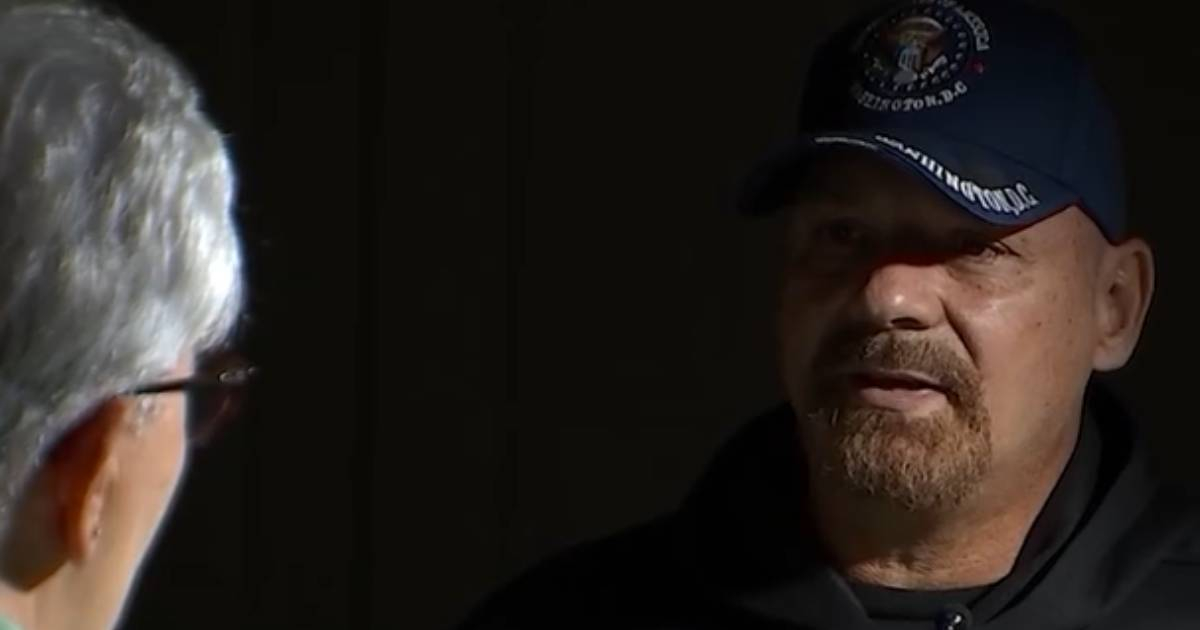
The former Marine Dahud Hanid Ortiz, sentenced to 30 years for the murder of two Cubans in Madrid, re-emerged in an interview in Miami with an account of alleged torture in Venezuelan prisons.
Its version, however, has ignited outrage in Spain and once again opens the wound of Elisa Consuegra Gálvez and Maritza Osorio Riverón, two women who ended up dead due to a crime that, according to the justice system, was not aimed at them.
The interview was broadcast by Telemundo 51 and marks Ortiz's first public appearance since his controversial release from prison, after being included in a detainee exchange between Caracas and Washington last year.
On camera, the former military officer insists on his innocence regarding the "triple crime of Usera," claiming that it was all "a setup," while describing the extreme mistreatment he suffered during his detention in facilities linked to the Venezuelan regime's counterintelligence apparatus.
But the approach of “victim or murderer?” promoted by the program fell like salt in the wound. The Spanish newspaper 20minutos was straightforward in stating that Ortiz is not an “accused” but a convicted criminal, and his public appearance has sparked outrage among the families and loved ones of the victims, who see how the man sentenced in the case is trying to turn the narrative around.
The history that haunts Ortiz dates back to June 2016, when three people were murdered in a law firm in the Madrid neighborhood of Usera. Among them were Elisa, a lawyer from Havana, and Maritza, a receptionist from Holguín and mother, in addition to an Ecuadorian client.
In the coverage of the case, the media has emphasized the brutal nature of the crime, the passionate motive being investigated, and the fact that the victims “died by chance,” caught in a revenge that was not their own.
The outrage is not only directed at the interview. It also returns to the most incomprehensible point for the family members: how a man with a finalized conviction ended up outside of prison.
In January 2024, a court in Caracas sentenced Hanid Ortiz to 30 years in prison for the triple homicide committed in Madrid in 2016, following a process in which Spanish and German authorities participated with evidence and testimonies linking him to the crime. Venezuelan justice took over the case after Caracas denied the extradition requested by Spain, arguing that Ortiz, born in Venezuela and also a citizen of that country, should be tried in his territory and could not be handed over to another state.
In July 2025, the case erupted again when Ortiz appeared among those released in a swap between Venezuela and the United States. His inclusion as a supposed "political prisoner" sparked criticism and a sense of betrayal among the victims' circles.
In the report by Telemundo, alongside the account of the former marine, there is a plea from Cuba by the father of one of the victims, who is calling for justice and questioning why the convicted individual is at liberty in the United States.
What is “his version” for Ortiz sounds like a secondary assault to the families of Elisa and Maritza: seeing their daughters' names reduced to a footnote while the convicted man tries to rewrite history in front of the cameras.
Filed under: