
Related videos:
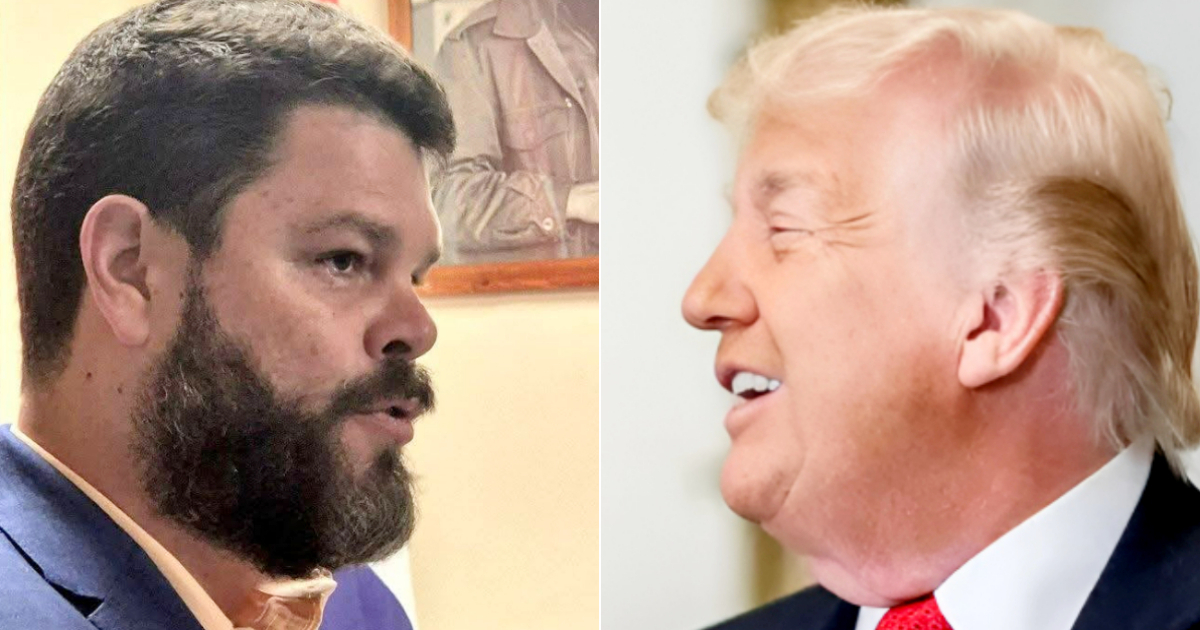
The phrase “Cuba will not kneel before Trump”, spoken from London by Fidel Castro Smirnov, grandson of Fidel Castro, did not go unnoticed.
On the contrary: it unleashed a genuine avalanche of reactions on the Facebook page of CiberCuba, where in less than 24 hours, over 4,500 users harshly, ironically, and with open indignation commented on the speech of the heir to the most powerful surname of the regime.
Far from garnering majority support, the publication provoked a flood of criticism focused on a single point: the gap between the discourse of “resistance” and the reality of everyday Cubans.
"From London and with guaranteed light, anyone can talk about sacrifices", summarized one of the most frequently repeated comments in various forms.
One of the most consistent reactions was the accusation of hypocrisy. “How easy it is to speak of resistance from a capitalist country”, wrote one user, while another added: “Let them come say that in my neighborhood, where we cook with firewood”.
The contrast between life in Europe and the blackouts, food shortages, and lack of medicine in Cuba was the central focus of the conversation.
Castro Smirnov has established himself as one of the most visible representatives of the new rhetoric of Castrism: a blend of inherited slogans, academic language, and symbolic gestures designed for external consumption.
The dictator's grandson often presents himself as a scientist and defender of sovereignty, but his public image has been shaped more by propaganda than by real debate, from speeches at international forums to media stunts like his parachute jump in honor of his grandfather.
On that journey, he is often accompanied by his wife, Marxlenin Pérez Valdés, with whom he forms a political-symbolic tandem that blends ideological loyalty, public visibility, and a life of privileges that is detached from the everyday reality of the average Cuban.
Together they have projected an image of generational continuity of Castroism, defending the system from platforms and conditions that starkly contrast with the crisis, shortages, and blackouts faced by millions of Cubans on the Island.
Many users openly questioned Castro Smirnov's right to speak on behalf of Cuba. "Don't say Cuba, say you all", was read in several comments. "Cuba is the people, not the Castro family", wrote another internet user, highlighting a clear divide between the official discourse and public perception.
The constant mention that the statement was made from abroad became almost a collective refrain. "And what is he doing in the United Kingdom?", dozens of comments asked.
“If socialism is so good, why do none of them live here?”, others insisted. For many readers, the scene was symbolic: the elite defending the system from the outside, while the people survive on the inside.
The indignation was also tinged with sarcasm. "Good joke", "the joke tells itself", or "another 'come for me'" were recurring phrases, clearly referring to similar speeches made at the time by Nicolás Maduro.
“This is what Maduro said... and we already know how it ended”, wrote a user, drawing a parallel that appeared time and time again.
Beyond the mockery, many comments expressed fatigue and exasperation. "The people can no longer endure this", "we are exhausted from being asked to make sacrifices", "we have been resisting for 67 years", were recurring themes.
In that context, the word "kneel" was reinterpreted by readers: "The people have been on their knees for decades", wrote one woman; "they have us with broken knees", pointed out another.
The criticism was not limited to Castro's grandson but extended to the entire system. "They defend communism, yet they live off capitalism," summarized a comment that garnered numerous reactions.
“They are princes guarding their castle”, said another, alluding to what many perceive as a political dynasty disconnected from the national reality.
Messages also emerged questioning the source of the resources that allow members of the Castro family to travel and reside abroad.
“What salary do you live on in London?”, “who pays for those trips?”, several users asked, while others claimed that it was money “stolen from the people” or accumulated thanks to inherited privileges.
In the midst of the outrage, there were those who outright rejected the confrontational speech. "It's not about kneeling, it's about lifting a country", wrote a user.
Another comment was more direct: “No one wants war or slogans, we want food, light, medicine, and freedom”. These voices reflect a clear demand: less rhetoric and more real solutions.
A significant group of comments even expressed expectations of imminent change. "Their time is running out", "start packing", "karma is coming", was repeated in various tones.
For many readers, the grandson of Fidel's speech was not a display of strength, but of disconnection and nervousness in the face of an adverse international scenario.
No messages were absent that separated the country from the regime. “Cuba is not Díaz-Canel or the Castros”, wrote a user. “Cuba is the people that suffer”.
That distinction appeared consistently and reveals a widespread perception: the word Cuba has been hijacked by those in power, while the population is relegated to sacrifice.
Overall, the avalanche of comments conveyed an unmistakable message. Fidel Castro Smirnov's speech, instead of igniting pride or a spirit of resistance, deepened the rejection and distrust of an audience marked by fatigue, precariousness, and a sense of injustice.
From social media, many Cubans responded with a clear message, though not always phrased in the same way: do not speak on behalf of a people who do not live as you do.
The massive reaction on Facebook highlights that, for a significant portion of the Cuban public opinion, the slogans voiced from abroad are no longer convincing, and the gap between the ruling elite and the national reality has never been so apparent.
Filed under: