
Related videos:
The announcement of an international flotilla aimed at bringing food and medicine to Cuba in March continues to generate controversy both inside and outside the island, but a new detail has added more fuel to the debate, as Mariela Castro Espín, daughter of Raúl Castro and one of the most prominent figures in the Cuban political apparatus, has been listed as a member of the Advisory Council of the Progressive International, the coalition that is promoting the initiative.
The information is published on the official Progressive International page, where it details that the Advisory Council is the body responsible for "establishing the strategic direction" of the movement. Among the listed names is Mariela Castro, presented as a deputy of the National Assembly and director of the National Center for Sexual Education (CENESEX).
The flotilla, named “Nuestra América”, was announced this week by an international coalition of social movements, labor unions, and humanitarian organizations that claim to be responding to the fuel crisis, blackouts, and shortages of medicines on the island.
According to the organizers, the mission aims to set sail in March across the Caribbean and is inspired by the so-called Global Sumud Flotilla, which attempted to deliver humanitarian aid to Gaza.
Among the public figures supporting the project are American activist David Adler, general coordinator of Progressive International, former British Labour leader Jeremy Corbyn, and Democratic Congresswoman Rashida Tlaib.
Adler stated that “when governments impose collective punishments, ordinary people have the responsibility to act,” while Corbyn defended Cuba's right to “decide its own future” and blamed the U.S. embargo for the crisis.
In materials released by the organizers, the administration of Donald Trump is even directly accused of "suffocating the island" by cutting off the supply of fuel, flights, and essential goods. They also claim that "the consequences are deadly" for newborns, the elderly, and the sick.
However, the debate has become even more tense following the news of Mariela Castro's presence in the advisory body of the organization.
For many Cubans, their inclusion in the Advisory Council raises an inevitable question: how can a project driven by a structure that includes a direct representative of the Cuban political power be presented as an independent initiative of international solidarity?
On social media, activist Salomé García Bacallao reacted strongly, describing the announcement as a "propaganda spectacle" sanctioned by the regime. In her post, she shared a phrase that quickly went viral: "If they enter, we will too".
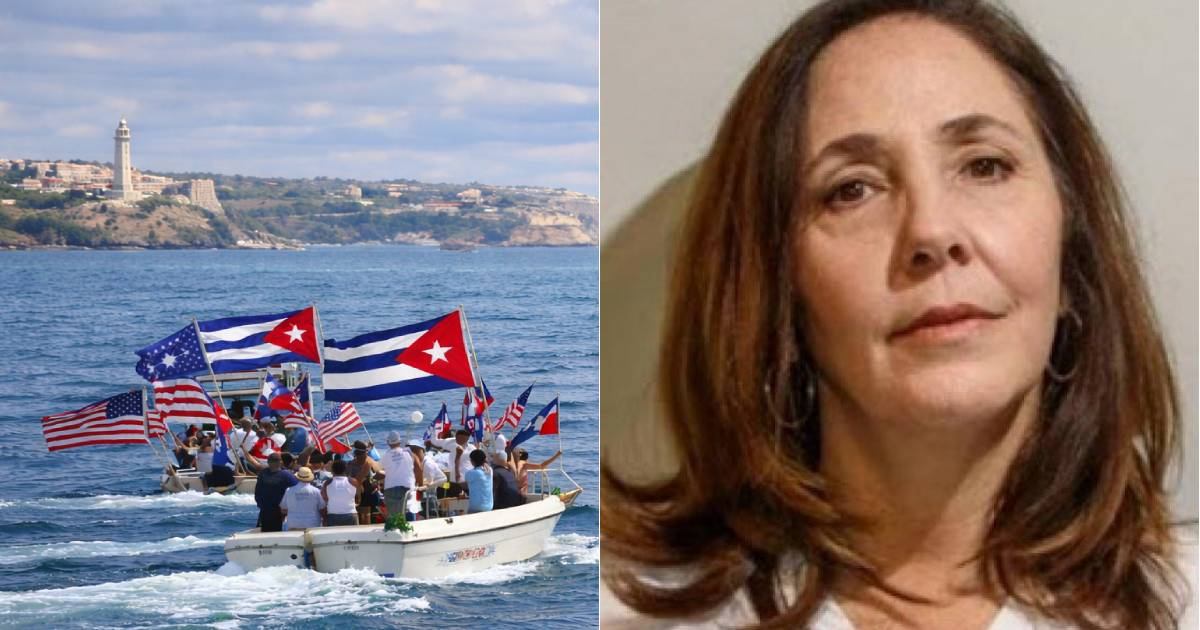
The slogan ignited hundreds of Cubans in exile, who began discussing the possibility of organizing a parallel flotilla, not to support the regime, but to demand the right to return and stand alongside the Cuban people.
The discussion, laden with indignation, is not limited to ideology. For thousands of Cubans who have emigrated in recent years, the word "flotilla" does not resonate with solidarity, but rather with a new scenario where others decide who can enter Cuba… and who cannot.
Filed under: