
Related videos:
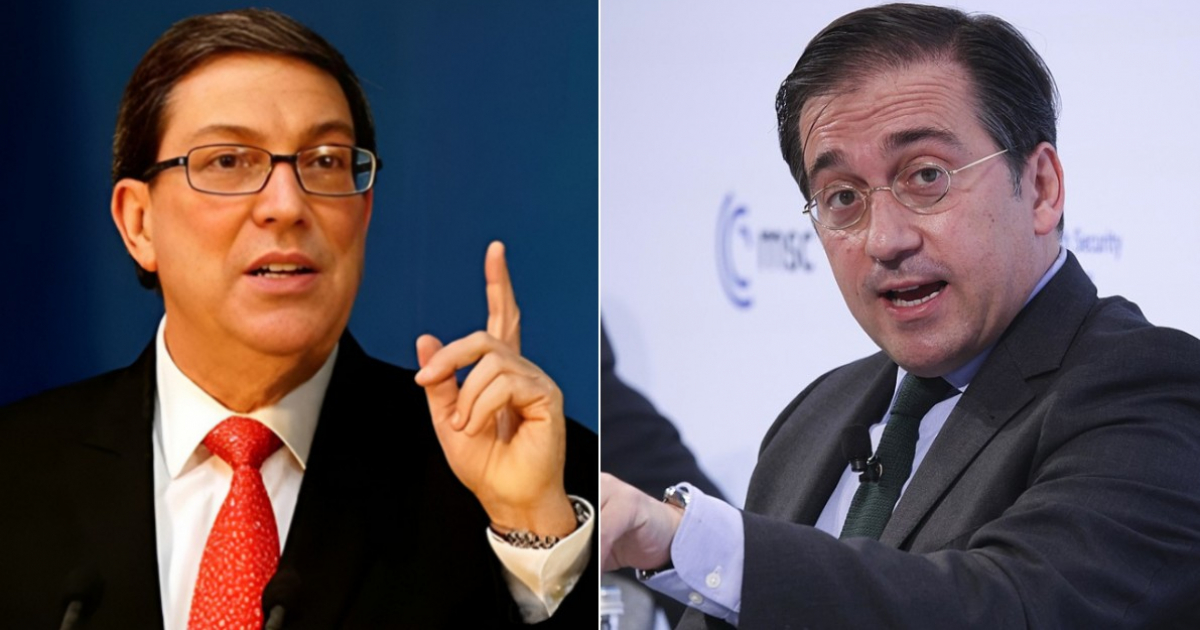
The chancellor of Cuba, Bruno Rodríguez, is undertaking an international tour to seek assistance in the face of pressures from the United States, and this Monday he will meet in Madrid with the Spanish Minister of Foreign Affairs, José Manuel Albares, in a meeting focused on the serious situation facing the Caribbean island.
The visit was confirmed by sources from the Spanish Ministry to the agency EFE.
Rodríguez, who was recently in China gathering support against what Havana calls an "energy blockade" imposed by Washington, requested the meeting with Albares during his stop in the Spanish capital on his way back to Cuba.
The focus of the conversation will be Cuba's internal situation, marked by a deep economic and humanitarian crisis, as well as the preparation for the upcoming Ibero-American Summit, which will be held in Madrid on November 4th and 5th.
The Cuban leader has embarked on this journey to strengthen ties with allied countries such as China, Russia, and Vietnam, amidst the growing difficulties that the Island faces following the restrictions and increased pressure from the Trump Administration.
In Beijing, for example, the Chinese Foreign Minister, Wang Yi, assured Rodríguez that China will maintain "support and assistance within its capabilities", defending Cuba's sovereignty and security, and rejecting what he described as external interference.
This diplomatic effort reflects the Castro regime's reliance on its allies to navigate an increasingly critical situation.
The Cuban government, which has driven the economy to an extremely precarious situation, is forced to seek political and material support from other capitals, while trying to counteract the consequences of the policies implemented by Washington.
The crisis facing Cuba cannot be solely attributed to U.S. measures: the regime has maintained absolute control over the economy for decades, limiting the economic and political freedoms that could allow for more dynamic development. This lack of reforms has contributed to a decline in the supply of basic goods, chronic energy issues, and persistent economic mismanagement.
In China, Rodríguez expressed gratitude for the "support against blockades and sanctions."
Simultaneously, Russia conveyed to Cuba that it will continue to provide "political support and necessary material" in light of Trump's pressure, and described the current situation as a serious risk to the economic and social stability of the Island.
The exchange between Rodríguez and Albares takes place in a complex international context and amidst a debate about the legitimacy of the sanctions, the real impact on the civilian population, and the role that the allies of the Havana regime should play in mitigating the crisis.
While Havana insists that external pressure hinders its development, its search for foreign support reveals the fragility of its political system and its structural difficulties in addressing its economic challenges.
These diplomatic efforts are in addition to the preparations for multilateral forums such as the Ibero-American Summit, where Cuba's situation is expected to be one of the topics on the agenda.
Filed under: