
Related videos:
The Cuban artist Lázaro Saavedra, National Prize for Plastic Arts, has sparked debate again with an image that he himself described on Instagram as a “visual short circuit.”
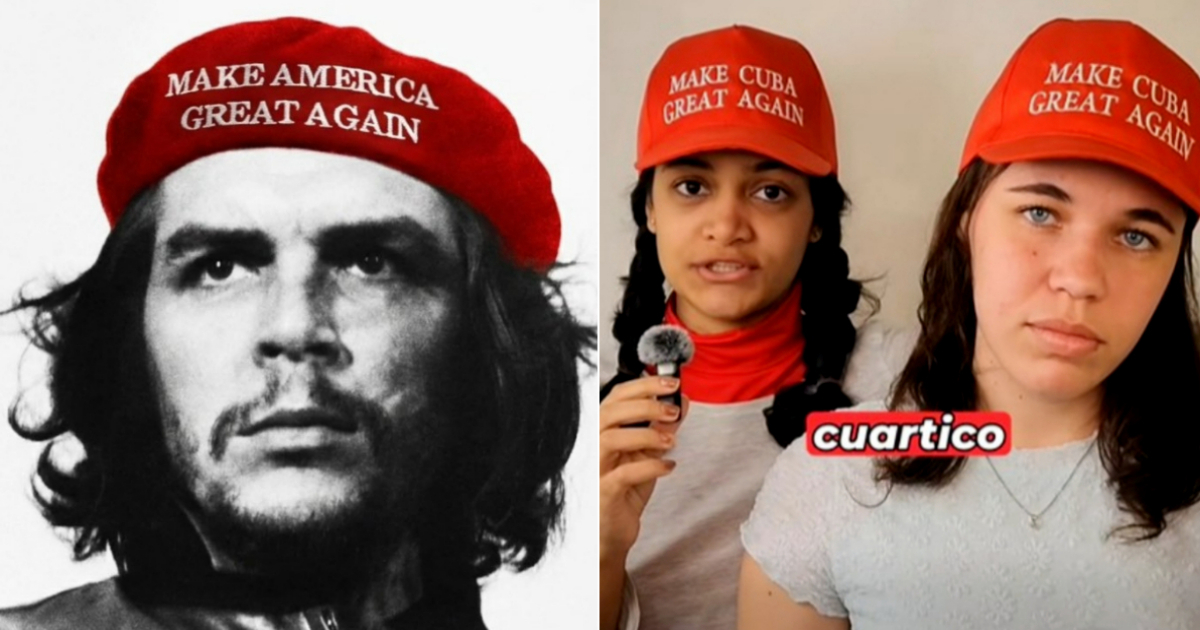
In the shared piece, the iconic portrait of Che Guevara (photo by Alberto Korda) is modified with a red cap that replaces his traditional revolutionary beret with an accessory associated with the slogan “Make America Great Again” (MAGA), an emblematic motto of U.S. President Donald Trump.
The visual operation is direct and unsettling: two symbols historically presented as antagonistic —the most reproduced face of the Cuban revolutionary imaginary and one of the most recognizable emblems of Trumpism— are merged into a single image.
The result does not seem to be a literal adherence to any narrative, but rather a conceptual gesture that challenges meanings and underscores the fragility of icons when they are removed from their context.
The publication takes on an additional dimension when connected to the recent controversy surrounding the independent project El4tico.
Following the arrest of its members, Kamil Zayas Pérez and Ernesto Ricardo Medina, several young individuals shared a supportive video in which they wore caps with the slogan “Make Cuba Great Again”.
The gesture sparked intense controversy on social media: while some interpreted it as an unnecessary provocation or an ideological alignment with Trump, others defended it as an act of symbolic freedom and a break from the official narrative.
In that context, Saavedra's work enriches the discussion. By transferring the MAGA symbol to the foundational imagery of Castroism, the artist not only ironizes the global circulation of political slogans but also indirectly engages in the debate opened by El4tico and its defenders.
The image suggests that symbols can be emptied, inverted, or reappropriated, and that their power lies precisely in the contention over their meaning.
True to his trajectory, Saavedra does not provide a definitive reading. The "short circuit" occurs in the viewer's gaze, who is compelled to confront the uncomfortable and provocative coexistence of two ideological narratives that, when intersecting, reveal new layers of interpretation about the current critical context in Cuba.
Filed under: