
Related videos:
The gradual withdrawal of Cuban advisors and security forces from Venezuela is not just a diplomatic adjustment: it represents the possible dismantling of a military and intelligence control structure that Havana helped design since 2008 to shield chavismo against internal conspiracies and military fractures.
The withdrawal, confirmed by Reuters, takes on greater significance when set against years of official denials from the Cuban regime regarding its direct involvement in security and repression tasks in the South American country.
According to the report, Cuban advisors have been removed from key positions within the General Directorate of Military Counterintelligence (DGCIM), the agency noted for its central role in the surveillance, prosecution, and imprisonment of officers suspected of disloyalty.
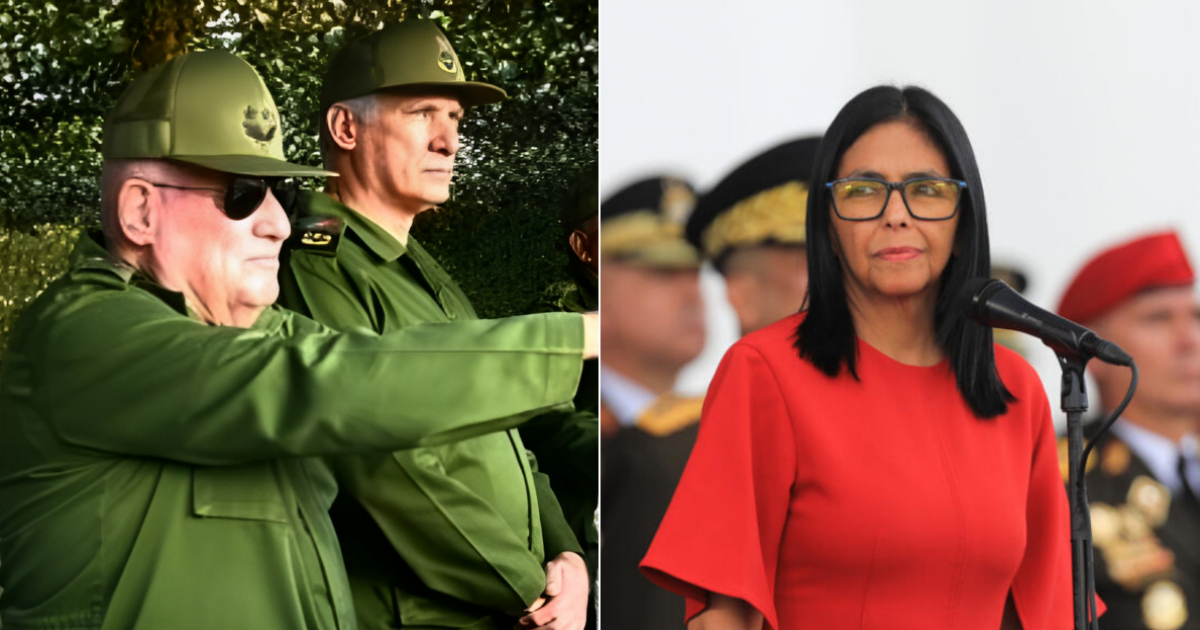
Moreover, the interim president Delcy Rodríguez would have replaced Cuban escorts with Venezuelan bodyguards, breaking with the practice established by Hugo Chávez and upheld by Nicolás Maduro, who entrusted their personal security to elite forces sent from Havana.
The immediate trigger was the U.S. military operation on January 3 that culminated in the capture of Maduro and resulted in the deaths of 32 Cuban personnel.
Havana confirmed the casualties and presented them as "internationalist heroes," a recognition that contrasted with years of categorical denials regarding the Cuban military presence in Venezuela.
Architecture of Control: The Agreements of 2008
The Cuban influence on Venezuelan security apparatuses was not improvised.
A special report by Reuters published in 2019 revealed the existence of two agreements signed in May 2008 between the Defense ministries of both countries, which granted Cuba extensive access to the Venezuelan military sector and the ability to restructure it.
Under those agreements, Venezuelan officials were sent to Havana for counterintelligence training; Cuban instructors supervised the "modernization" of the then military intelligence service (DIM); and the agency's mission was redefined to shift its focus from external threats to monitoring its own soldiers, officers, and commanders.
In 2011, the DIM was renamed DGCIM, reflecting its new focus on internal counterintelligence. According to testimonies gathered by Reuters, agents trained by Cuba infiltrated military barracks, intercepted communications from high command, and promoted a system of informants that instilled fear and paranoia within the armed forces.
The DGCIM was subsequently pointed out by the United Nations and human rights organizations for practices that include torture, arbitrary detentions, and cruel treatment.
Cases like that of corvette captain Rafael Acosta, who died in custody in 2019, or those of officers accused of conspiracy after private meetings, highlighted the extent of the repressive apparatus.
Experts in security consulted by Reuters agreed that this structure was crucial for Maduro's political survival, especially during times of economic crisis, mass protests, and calls from the opposition for a military uprising.
Systematic denials and forced recognition
Despite the evidence gathered over more than a decade, the Cuban regime repeatedly denied having operational military presence in Venezuela.
In 2019, Foreign Minister Bruno Rodríguez Parrilla categorically rejected the accusations regarding Cuban military personnel who "train, control, or intimidate" in the South American country.
However, official reports following the deaths of the 32 personnel in January confirmed that members of the Revolutionary Armed Forces (FAR) and the Ministry of the Interior (MININT) were part of the security apparatus linked to the Chavista leadership.
The contradiction was evident: for years, cooperation was described as purely technical or medical, while the agreements revealed by Reuters displayed a profound redesign of the Venezuelan intelligence system under Cuban guidance.
A strategic withdrawal
Now, under direct pressure from the administration of President Donald Trump —which has reiterated its intention to break the Caracas-Havana axis and has blocked oil shipments to the Island— the Cuban presence seems to be diminishing in sensitive areas.
Although some military advisors and professors associated with the National Experimental University of Security (UNES) remain in the country, sources cited by Reuters indicate that the influence of Havana is waning.
Analysts suggest that Delcy Rodríguez is acting cautiously: she aims to consolidate her internal position without provoking a sudden break with a historical ally.
What is at stake is not just a bilateral alliance, but the framework of control that allowed chavismo to navigate internal conspiracies for over a decade. If the Cuban withdrawal solidifies, it could disrupt the balance within the Venezuelan armed forces, paving the way for its necessary restructuring, in addition to redefining Havana's diminishing regional influence.
The departure of advisors does not erase the legacy of the agreements from 2008 nor the surveillance system they helped build. However, it does mark the most delicate moment of an alliance that, after years of denials and ideological rhetoric, now faces a different geopolitical reality and unprecedented international pressure.
Filed under: