
Related videos:
The structural deterioration, lack of hygiene, and material limitations continue to affect necrological services in Ciego de Ávila, a situation that, according to local authorities, will not have an immediate solution due to the scarcity of resources and fuel.
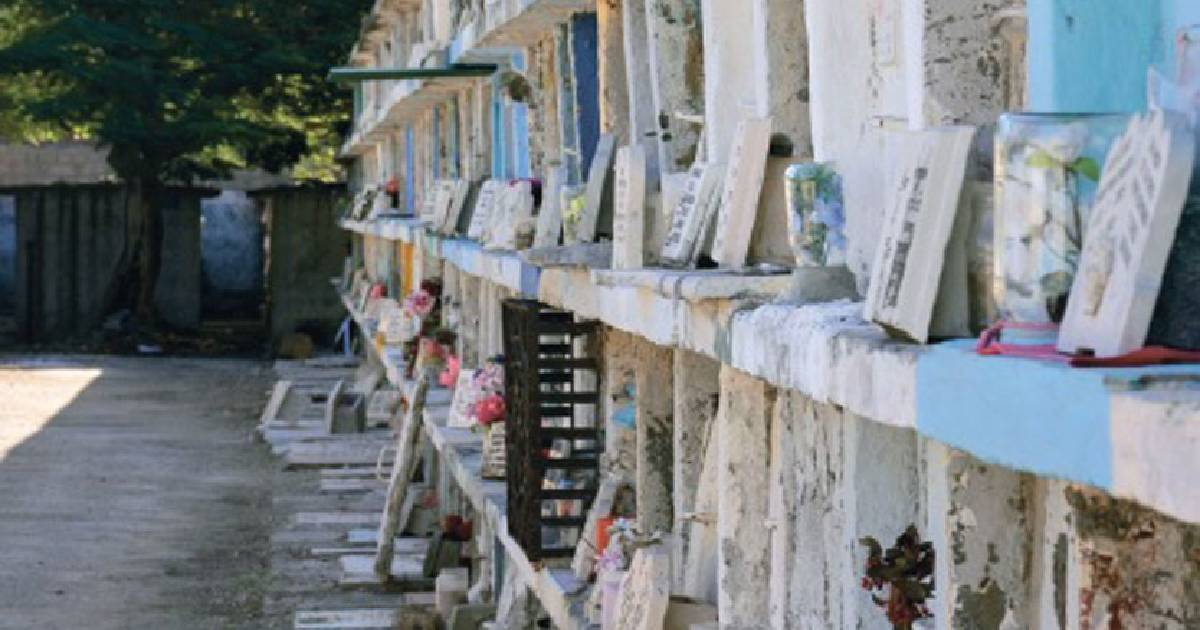
A report from the official newspaper Invasor describes recurring scenes in the cemetery of the capital city: uncovered or dilapidated mausoleums, tall grass, and signs of unsanitary conditions that could be seen in the other 24 necropolises of the province.
The setbacks, however, begin before the burial. The delay of the funeral cars, the questionable quality of the coffins, and the conditions of some funeral homes add to the families' grief.
Institutional reorganization
In light of this reality, the Directorate of Communal Services is transitioning to become exclusively the Necrological Services Unit, after recognizing its inability to simultaneously sustain other tasks such as waste collection and street cleaning.
María Julia López, deputy director of investments at Comunales, explained that the priority is to reconstruct state niches, after which a census of abandoned private vaults will be conducted for intervention.
However, he warned that the lack of resources will hinder quick changes in the appearance of the cemeteries.
Fuel scarcity and operational limitations
According to the cited source, the fuel crisis exacerbates the situation. Currently, only four of the six hearses in the main municipality are operational, which means the Provincial Directorate relies on support from other entities.
The authorities expect to incorporate five new funeral vehicles, although a date has not been specified.
As for the coffins, the province had 98 available on February 18, but officials pointed out that maintaining a stable reserve depends on access to fuel.
The director of Comunales, Luis Alberto Pérez Olivares, announced that investments were made in the coffin factory in Morón and three saws were purchased to enhance the finishing of the caskets.
Some specific improvements
Among the positive actions, the installation of two-kilowatt photovoltaic panels in 14 funeral homes stands out, helping to alleviate the effects of the electrical deficit.
The provincial crematorium will operate with liquefied petroleum gas (LPG) once technical adjustments are completed, although its continuation will depend on the supply from CUPET.
Regarding the new cemetery in the city, whose construction began at the start of the decade, burials are already taking place, although work on the guardhouse, the perimeter wall, and the administrative lighting is still pending, with completion expected in 2026.
A persistent problem
Although the institutional reorganization aims for greater efficiency, the authorities acknowledge that the combination of accumulated deterioration, lack of fuel, and shortage of resources will continue to pose challenges for the funeral services in the province.
In the midst of mourning, many families continue to face additional challenges in a process that, due to its sensitivity, should proceed without complications.
Filed under: