
Related videos:
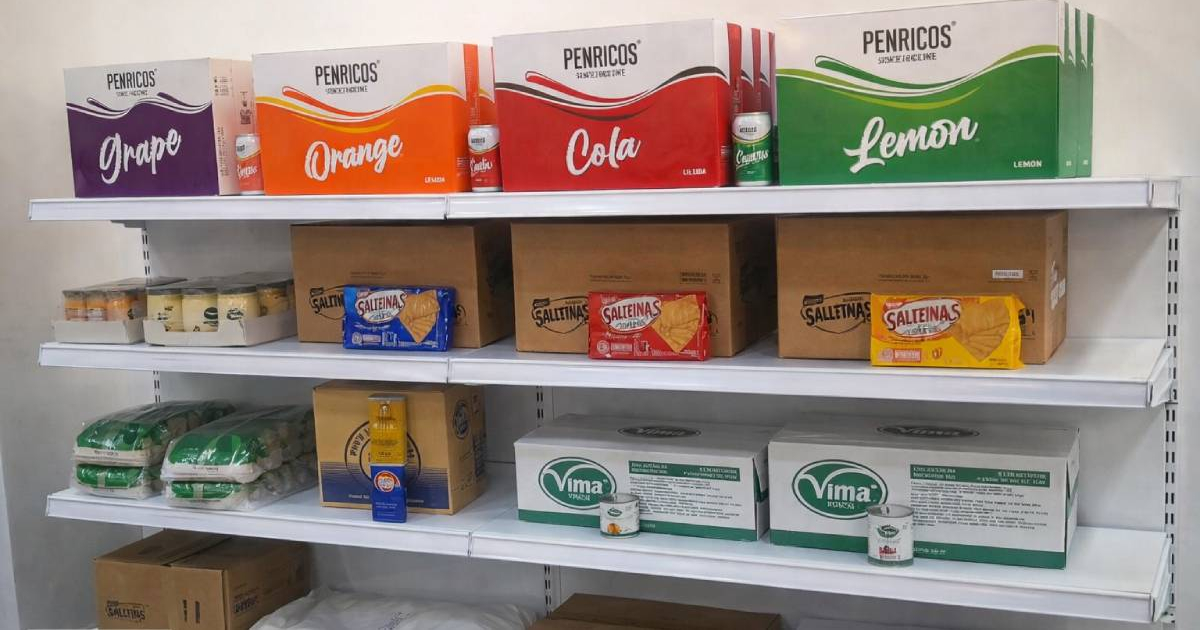
The state network Tiendas Caribe announced the addition of a new wholesale sales service at the Infanta and Santa Marta Shopping Center in Central Havana, and this measure has sparked debate on social media.
The regime assures that this sales model will allow the purchase of products by the box at discounts off the retail price. However, the announcement has caused unrest due to the lack of transparency in pricing and the requirement for payment in United States dollars (USD).
The Havana West Division reported that the service includes the sale of soft drinks by the box, grains, pasta, canned goods, mayonnaise, boxes of chicken thighs, and breasts. They only accept "USD in cash and classic cards."
The state entity stated that this initiative aims to "diversify its offerings and provide practical solutions to its clients," but in the comments, numerous users requested basic information that was not included in the announcement.
The lack of prices and payments in dollars generates criticism
One of the main complaints revolves around the lack of prices and details about the discounts. “How much do the boxes of chicken cost?” is the question that appeared most frequently in the comments.
The fact that sales are conducted exclusively in dollars further fueled the debate. “And who gets paid in USD in Cuba? Where do we get USD from if we don’t have family abroad and we want to supply our business?” questioned a user.
This criterion highlights the gap between those who receive remittances and those who rely solely on salaries in Cuban pesos.
In the informal market, one US dollar is around 500 Cuban pesos (CUP), an amount unattainable for most state workers, whose monthly salaries do not even cover the cost of an imported pack of chicken.
The dilemma of price ceilings
Beyond the restricted access to foreign currency, the new model presents an additional problem for those trying to resell these products in their businesses.
One comment summarized it like this: “I imagine the chicken is sold at a controlled price, because that's managed by the State, and they fight to prevent private sellers from raising the prices of products they label as controlled.”
The government itself maintains controls and maximum prices for certain foods. However, it requires them to be purchased in dollars and then penalizes or confiscates goods from those who resell them at prices above the set rates in Cuban pesos.
This places small businesses and self-employed workers in a dilemma: if they sell at the price cap imposed by the State, they will not recover their investment made in dollars; if they adjust the price to the actual rate of the informal market, they face fines and confiscation.
The absence of public prices and the exclusivity of payment in USD reinforce the perception that this is a mechanism for collecting hard currency in a context of widespread scarcity, where the supply in the local currency is insufficient or nonexistent.
Filed under: