
Related videos:
The energy crisis in Cuba continues to deepen due to the government's inefficiency in managing the National Electric System (SEN), leaving thousands of homes and businesses without reliable electricity supply.
According to the informative report from Unión Eléctrica (UNE) on Friday, February 27, the country continues to face a critical capacity deficit that significantly affects the population.
On Thursday, the SEN experienced a maximum impact due to a generation deficit of 1,867 MW at 7:10 PM, a figure that exceeded the planned levels due to the non-operation of unit 2 at the CTE Santa Cruz.
That situation persisted throughout the early hours of the morning, leaving a large part of the country with restrictions on electricity supply.
The total availability of the SEN at 6:00 AM was 1,160 MW, while the demand reached 2,150 MW, with 967 MW impacted; it is estimated that during peak hours, the impact could reach 850 MW.
Currently, five units from the CTE Mariel, Santa Cruz, Felton, and Antonio Maceo are out of service due to breakdowns. Additionally, maintenance work has halted three blocks from the CTE Mariel, Nuevitas, and Carlos Manuel de Céspedes.
This is compounded by the limitations in thermal generation that keep 443 MW off the grid.
For peak hours, the incorporation of the Fuel Mariel site with 102 MW, the Regla barge with 48 MW, and the Melones barge with 44 MW is anticipated, projecting a maximum availability of 1,354 MW against a demand of 3,100 MW, resulting in a deficit of 1,746 MW.
Under these conditions, a power loss of 1,776 MW is forecasted, which will result in widespread and prolonged blackouts.
Solar generation, despite the installation of 51 new photovoltaic parks, produced only 4,513 MWh, with a maximum capacity of 761 MW, which is an insufficient contribution in relation to the system's demand.
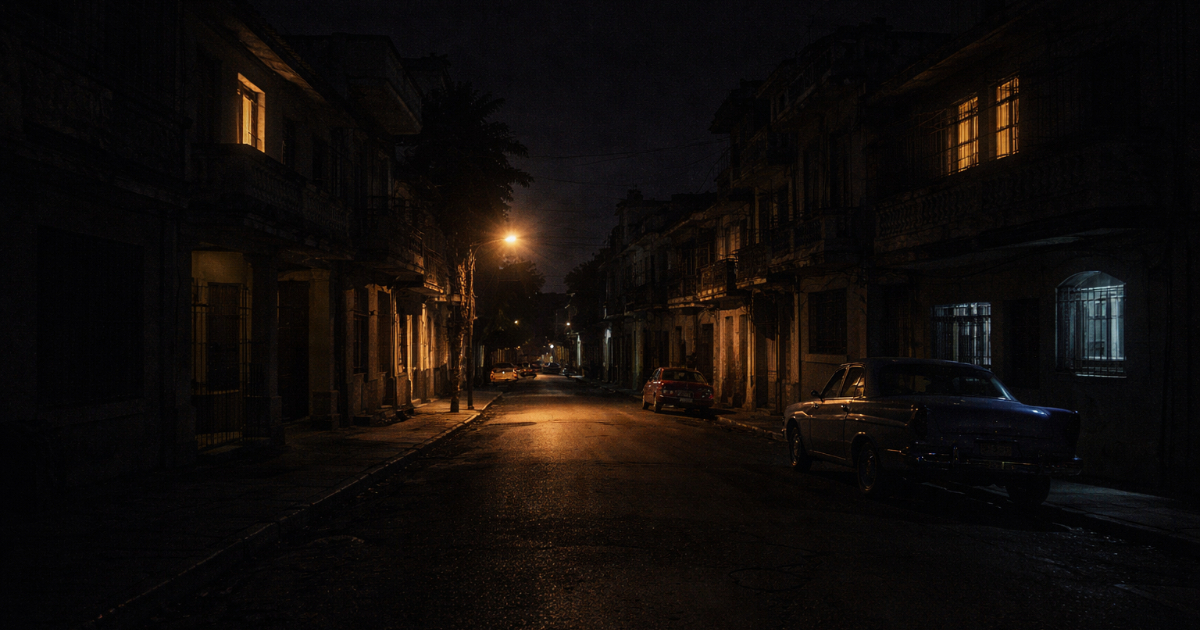
In Havana, the situation is especially critical.
The Electric Company of the capital reported that the service was interrupted for 15 hours and 12 minutes, reaching a maximum impact of 345 MW at 7:10 PM, and it was necessary to add an emergency impact of 70 MW.
At the close of the report, 6 blocks with 233 MW remained affected, and their restoration will depend on the overall availability of the SEN, with no scheduled time for full recovery.
Prolonged blackouts force the population to improvise lighting with candles or other means, significantly increasing the risk of fires, while cooking becomes a daily challenge due to the lack of electricity and gas, forcing people to use firewood, charcoal, or any available fuel.
The situation reflects the deep structural crisis of the Cuban electrical system and the government's inability to plan investments, keep critical units operational, and ensure a reliable supply for the population.
Filed under: