
Related videos:
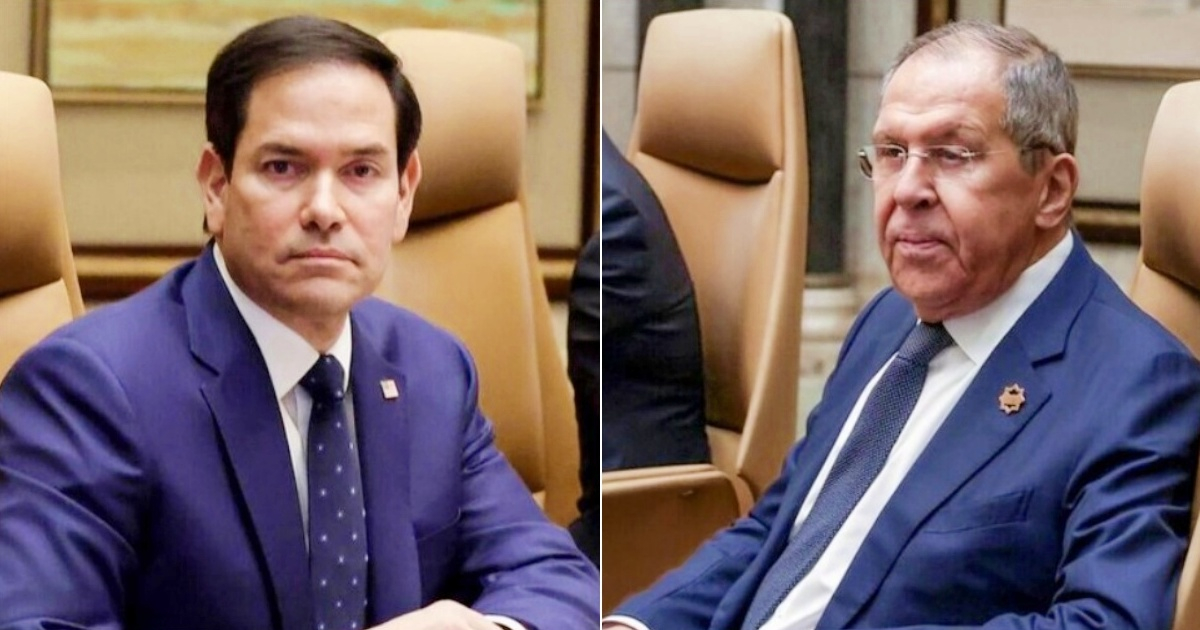
The Russian Foreign Minister, Serguéi Lavrov, stated this week that the United States seeks to expand its political influence over various countries, and warned that Washington will not limit itself to its interests in Venezuela, Cuba, and Iran.
During a press conference cited by the Russian state agency TASS, the head of Russian diplomacy criticized what he described as a U.S. strategy of control over other nations, amid current geopolitical tensions.
"In regard to Iran, U.S. Secretary of State Marco Rubio, in response to a journalist's question, recently suggested the possibility of the United States governing Iran, just as they announced they would govern Venezuela. They are now testing a similar plan for Cuba. And this is likely not the end", Lavrov stated.
The statements made by the Russian chancellor come amid a backdrop of heightened international tensions, particularly following the escalation in the Middle East linked to Iran.
Critiques of Washington's foreign policy
Lavrov also publicly questioned the stance of the U.S. administration regarding the international system and the role of the United Nations.
The minister highlighted statements made by President Donald Trump and other high-ranking U.S. officials that, he said, reflect a foreign policy perspective based solely on national interests.
In his opinion, these leaders "have no qualms about saying that they will not be guided by any principle of the UN, that they will only follow the interests of their own State."
For the Russian chancellor, the current international crisis reflects deeper transformations in the global balance.
"What is happening in the world now is a reflection of deep changes and profound problems in global politics and economics", he stated.
Lavrov considered that the current situation is not limited to recent conflicts, but rather highlights a deterioration of the international order based on norms established after World War II.
"It is not just or primarily about this crisis. It is a reflection of the deeper problems that have arisen, which consist mainly of conflict and the absence of international law," he stated.
The minister compared the current scenario to the existing international system in the 19th century, before multilateral mechanisms were established after World War I and before the creation of the United Nations.
The role of the UN in the crisis with Iran
Lavrov also commented on the actions of the UN Security Council regarding the escalation related to Iran.
He recalled that Russia and China pushed for the urgent convening of the organization on the same day the U.S. and Israeli attacks against that country began.
According to his explanation, "fundamental assessments" were conducted regarding the situation during that session.
"I believe this is the best possible outcome given the circumstances," he stated.
The Russian chancellor stated that the functioning of the Security Council limits the ability to make decisions that contradict Washington's interests.
"The United States, as a permanent member of the Security Council, will not allow decisions to be made that go against its supposed interests," he assured.
It also noted that the other two permanent Western members of the Council - France and the United Kingdom - have tried to maintain some distance from American actions, although it believes they will not oppose them either.
"In general, both Paris and London, of course, will never interfere in the current actions of the United States," he concluded.
Filed under: