
Related videos:
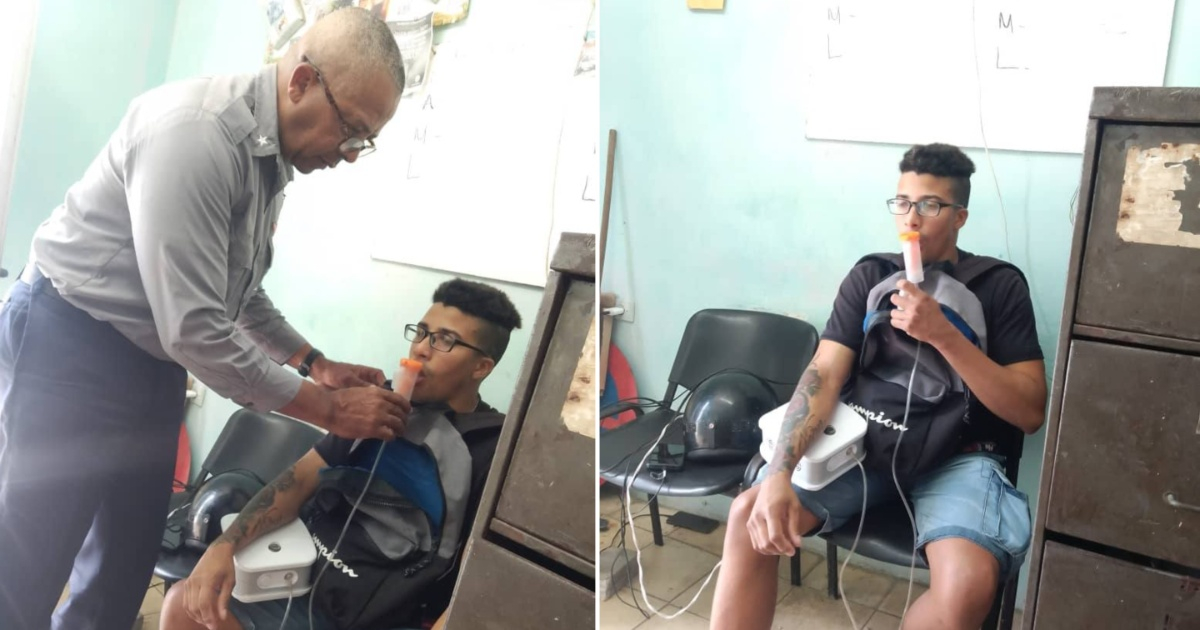
A 29-year-old Cuban man had to go to a station of the Revolutionary National Police (PNR) in Centro Habana this Thursday to use equipment powered by electricity to relieve an asthma crisis, amid the disconnection from the National Electric System (SEN), according to the Municipal Assembly of the People's Power of that municipality.
The incident occurred on the morning of March 5, and according to the official post, the patient was able to recover after about 30 minutes due to the operation of the generator in the police unit.
The information identifies the young man as Marlon Cala Torres, 29 years old, a resident at Zanja number 378 between Gervasio and Cerrada del Paseo, in the Los Sitios Popular Council, in Centro Habana.
The publication states that they arrived at the Centro Habana PNR Station with a “notable lack of breath” caused by an “asthma attack.”
According to the text shared by the Municipal Assembly of the People's Power of Centro Habana on Facebook, the main issue was that the equipment the young man needed "runs on electricity," in a context marked by the decline of the SEN.
The publication does not specify the exact type of equipment, but it is clear that it required electricity to assist during the respiratory distress.
The official entity presented what happened as an example of institutional support under the title "Gestures We Must Not Overlook."
In his account, he attributed the assistance to the operation of the generator at the police station and stated that, thanks to that support, the young man was able to receive aid until he recovered "his normal breathing."
The official message adds a political weight to the episode. “For the people, the Blue Heroes in Cuba will always be available to help and support those most in need,” stated the publication, referring to the police.
However, alongside that institutional narrative, critical reactions from internet users also emerged, which were included in the provided material.
One of the harshest comments summarized the episode with a reproachful phrase toward the system: “The revolution takes away your leg, then gives you a crutch and you have to thank it”; hypocrisy at its highest expression.
Other comments questioned how a police station had power from a generator while homes and other essential services continued to be affected by the lack of electricity.
A user sarcastically pointed out that if this was the precedent, mothers with sick children or families without electricity should also go to the station to bring fans, charge phones, or even preserve food.
There were also criticisms aimed at the distribution of energy resources during the emergency.
Another internet user raised the question of whether "a police station is more important than a home that needs electricity" and suggested, in a questioning tone, that this logic would imply transferring basic functions to other institutions that should cover essential public services.
In the same vein, another comment summed up the discontent with a direct observation: "Oh, I see. So there’s electricity in the PNR but not in the medical station."
On Thursday, a widespread blackout occurred in western Cuba due to the unexpected shutdown of the Antonio Guiteras thermoelectric power plant in Matanzas, the largest in the country.
The incident affected the National Electroenergetic System and left large areas of Cuba without electricity during the night on Wednesday.
The Electric Company of Havana reported that during the early morning, the gradual restoration of service in the capital began.
During the reconnection process, essential services were prioritized, including 37 hospitals and five water supply systems.
For its part, the Ministry of Energy and Mines reported that at 5:01 in the morning, the National Electroenergetic System was reconnected from Guantánamo to Pinar del Río, although it clarified that the integration of generation units is still taking place gradually.
Filed under: