
Related videos:
Trump accelerates his strategy to collapse the Cuban regime before 2026
on the Trump administration's strategy to force the collapse of the Cuban government before the end of 2026, an operation the publication dubbed 'Cubastroika': a systemic transformation induced from the outside through energy suffocation of the regime and selective opening to the private sector on the island.
The term evokes Gorbachev's Soviet Perestroika and summarizes Washington's bet: that the energy pressure combined with an economic outlet for independent Cubans will lead to a collapse of the communist system similar to that of Eastern Europe between 1989 and 1991. Trump summed it up bluntly this Friday on CNN: 'Cuba is going to fall pretty soon.'
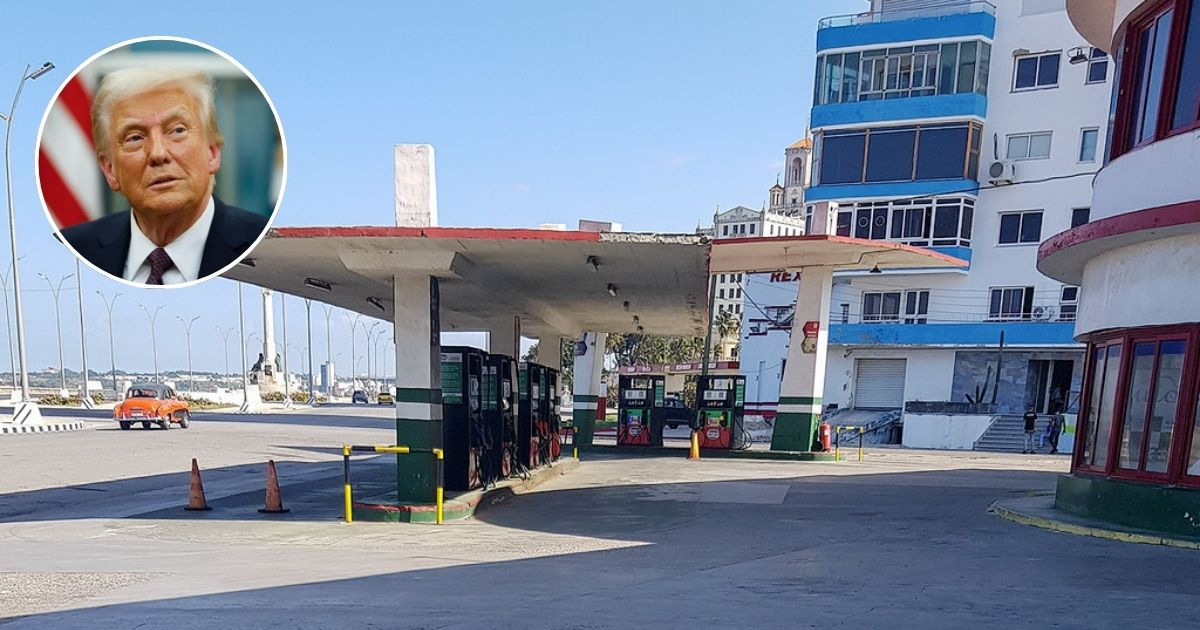
The strategy has two sides. On one hand, Trump signed an executive order on January 29 declaring a national emergency regarding Cuba, authorizing tariffs on any country that supplies oil to the Cuban government. This adds to the cut in Venezuelan supplies—between 27,000 and 35,000 barrels daily—following the capture of Nicolás Maduro, and to the pressure on Mexico, which had become the main alternative supplier. The Coast Guard intercepted on February 13 the vessel Ocean Mariner, carrying 84,579 barrels of Colombian fuel oil valued at $6.9 million, about 16 miles south of Les Cayes, Haiti.
On the other hand, the Department of the Treasury and the Department of Commerce issued new guidelines in February that allow both U.S. and foreign companies to export fuel directly to private Cuban businesses without specific licenses and without volume restrictions, as long as the private sector is the ultimate beneficiary. Cuban-Americans with existing licenses have already begun purchasing diesel and shipping it to Cuba under this scheme.
However, last Wednesday the U.S. banned the use of Cuban banks in those fuel sales to the private sector, effective Tuesday, due to concerns over fund diversion and connections to military entities, complicating the logistics of the selective opening.
An anonymous source within the Trump administration was direct in describing the logic behind the strategy: 'Energy is the chokehold to kill the regime', and termed the regime change as '100 percent a 2026 event'. Trump, for his part, stated that 'Cuba has no money' and suggested that the U.S. could 'end up having a friendly takeover of Cuba', with Marco Rubio negotiating at a high level with Havana.
The conditions for lifting the embargo, according to the 1996 Helms-Burton Act, include the removal of all Castros from power, the release of political prisoners, the restoration of freedoms of association and expression, and the holding of multiparty elections.
The humanitarian consequences are devastating. Cuba imports approximately 60% of its oil, and the crisis has resulted in blackouts of up to 20 hours a day, fuel shortages for hospitals and garbage collection, cancellation of international flights, and a collapse of public transport. The UN coordinator Francisco Pichón urged the U.S. for a 'humanitarian exception' for fuel shipments. The regime, on its part, described the potential naval blockade as an 'act of war', while Russia attempted to send a ship with 200,000 barrels of diesel to Havana in February, challenging the restrictions.
The Trump administration channeled 9 million dollars in humanitarian aid to Cuba through Caritas and the Catholic Church, deliberately avoiding the Cuban government, in what it describes as a distinction between the people and the regime that has been in power for 67 years.
Filed under: