
Related videos:
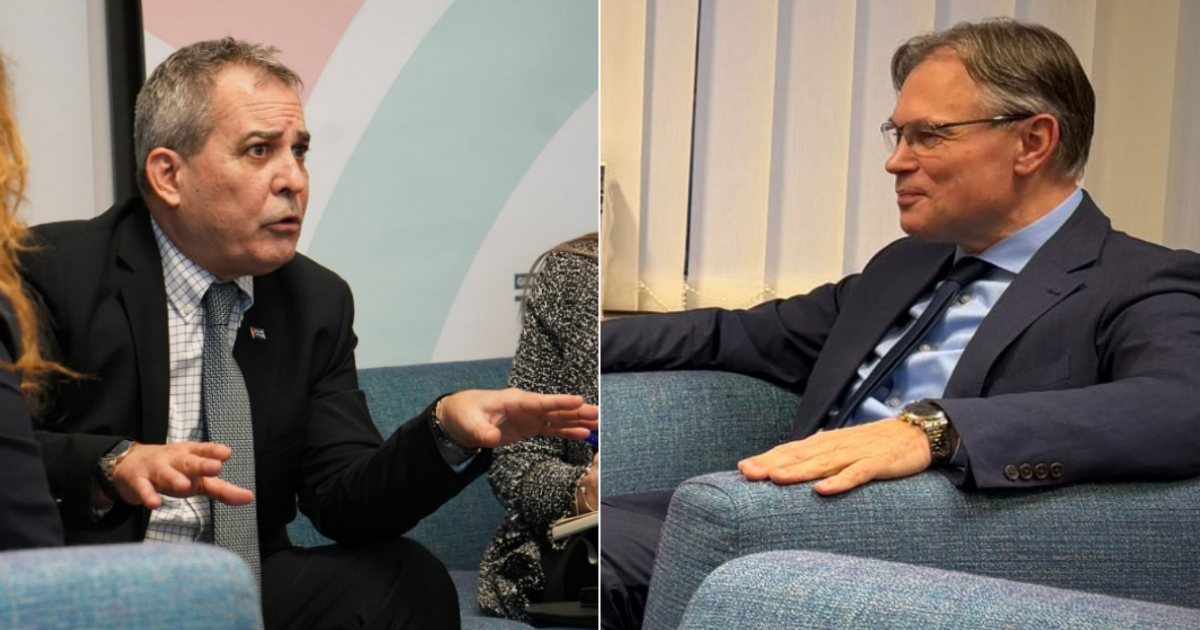
The Polish Europarliament member Arkadiusz Mularczyk stated that the suspension of European Union (EU) funding to the Cuban regime could be closer than ever, following the progress made in the European Parliament to review the current framework of cooperation with Havana.
During a press conference held in Miami with representatives of the Cuban exile community, Mularczyk recalled that in January, the European Parliament approved an amendment to its annual foreign policy report, calling for a review and suspension of the Political Dialogue and Cooperation Agreement (PDCA), in effect since 2017, which governs relations between the EU and the Cuban regime.
"In January, we achieved the approval of an amendment calling for the cessation of funding to the communist regime of Cuba due to its involvement in the war against Ukraine. We have written to European officials urging them to act swiftly in accordance with that resolution. I believe we are very close," the politician stated.
The initiative has received support from exile organizations and human rights activists, who have been questioning the agreement signed between Brussels and Havana for years.
Orlando Gutiérrez Boronat, secretary of the Assembly of the Cuban Resistance (ARC), stated that the debate within European institutions has gained momentum and could lead to concrete changes in the policy towards Cuba.
According to the activist, one of the main issues with European funding is the lack of transparency regarding the allocation of funds designated for projects within the island.
"There is no clear information about how much money is being sent or how it is being used. This lack of transparency raises serious suspicions of corruption," stated the opponent to Martí Noticias.
The amendment approved in January by the European Parliament —with 331 votes in favor, 241 against, and 63 abstentions— also warns that Havana's political support for Russia and Belarus contradicts the principles of European foreign policy.
The topic has become particularly sensitive due to reports regarding the presence of Cuban citizens fighting alongside Russian troops in the invasion of Ukraine. Mularczyk warned that the involvement of these combatants poses a direct threat to European security.
"Cuban mercenaries are fighting in Ukraine, and this poses a threat to Poland, the Baltic States, and all of Europe," he noted.
The debate over European funding is also taking place amid increasing scrutiny of the ADPC both within and outside Europe. Over the past year, Cuban civil society organizations, activists, and opponents have called for a review or suspension of the agreement, believing it has not led to real improvements in human rights on the island.
Various independent groups have sent letters to European institutions requesting the activation of the human rights clause included in the agreement and an audit of the use of funds allocated for projects in Cuba.
Critics also point out that some cooperation programs end up channeling resources toward state institutions or entities linked to the government apparatus, which, according to their opponents, ultimately strengthens the regime itself.
Although the official position of Brussels continues to favor dialogue as a tool to address tensions with Havana, consensus within the EU appears to be eroding.
One of those responsible for defending the regime's narrative in Brussels is the Cuban ambassador to the European Union, Juan Antonio Fernández Palacios, a diplomat whose career exemplifies the style of Havana's diplomacy: absolute loyalty to the official line and a combative rhetoric that often leaves little room for the usual formalities of the profession.
Over the years, he has been at the center of several controversial incidents, from stating on social media that the “yes” won in the 2019 constitutional referendum “because we felt like it,” to warning a foreign correspondent with an unsettling “we’ll talk later” for reporting on the repression against independent journalists.
In international forums, he has also not hidden that tone: in 2018, he exploded at an event in Peru upon hearing the name of the opposition figure Oswaldo Payá, angrily ordering that “you don’t mess with Cuba.”
With that track record, it's no surprise that their response to the offer of humanitarian aid from the United States after a hurricane was a disdainful rejection of "handouts." In the end, it is a diplomacy more akin to an ideological rally than to the traditional manual of foreign service
Fernández Palacios's "style" now has the opportunity to "shine," as several MEPs have called for a review of the connections with the Cuban regime, to assess the actual impact of cooperation, and to consider the suspension of the agreement if human rights violations and Havana's alignment with Moscow continue.
In that context, the discussion about the future of the ADPC and European funding for the Cuban regime has become one of the most sensitive issues in the relationship between Cuba and the European Union.
Filed under: