
Related videos:
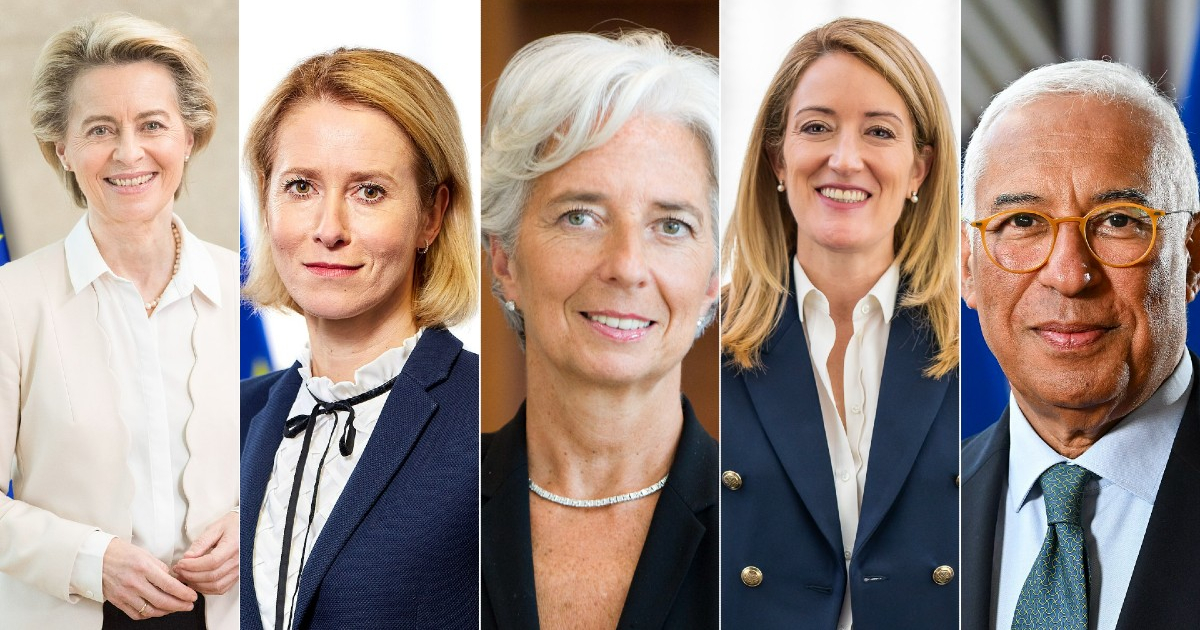
While Cubans are drowning in blackouts, hunger, and repression, Brussels remains trapped in its own maze of "critical dialogue," resolutions that are not implemented, and gestures against the U.S. embargo. The European Union, under the leadership of the President of the European Commission, Ursula von der Leyen, condemns on paper the dictatorship of Miguel Díaz-Canel, but in practice, it resists breaking away from it. From the European Council, chaired by António Costa, Washington is being urged to remove the terrorism sponsor label from Havana. That is not neutrality: it is incoherence.
In Cuba, European institutions themselves have recognized for many years a profound deterioration of democracy and human rights: there are no free elections, no pluralism, no judicial independence, and any dissent is met with imprisonment, exile, or forced silence. There are political prisoners, a massive exodus, and a church warning of “social chaos” if structural changes are not undertaken, while the population survives amid blackouts, long queues, and televised speeches that no one believes. And yet, the question remains: what more does the European Union need to see to treat Cuba as it is, rather than as a myth from the certain European left of the 1970s? While the High Representative for Foreign Affairs, Kaja Kallas, speaks of “European values” and “human rights,” the reality is that these principles remain just that—speeches and statements.
The European hypocrisy is evident. On one side, the European Parliament, currently presided over by Roberta Metsola, has approved resolutions calling for the suspension of the Political Dialogue and Cooperation Agreement with Cuba, activating the clauses that allow for its freezing, cutting the funding that ends up in the hands of the State, and considering personal sanctions against those responsible for repression, starting with the regime's leadership. On the other hand, the Council and the Commission keep that agreement intact, continue to speak of “constructive engagement,” and refuse to take the political step that they themselves describe, in their own texts, as the logical consequence of Havana's systematic noncompliance. A comfortable hypocrisy has taken root in Brussels: resolutions are approved to ease the conscience, but decisions that would truly have consequences are blocked. And in this same European ecosystem, where even the European Central Bank under Christine Lagarde holds more weight than many foreign ministries, the EU prefers the comfort of a PDF over the responsibility of action.
What more does the European Union need to see in order to treat Cuba as it is, rather than how it was viewed in the mythology of a certain European left from the 1970s?
In theory, European foreign policy is guided by the defense of human rights and democracy; in practice, however, the protection of European banks and companies against the extraterritoriality of U.S. sanctions and the obsession with maintaining "channels of dialogue" at any cost weigh much more heavily in the case of Cuba. The official line repeats that the embargo and Cuba's inclusion on the list of "State Sponsors of Terrorism" are unilateral measures that harm the population and European interests, and therefore must be called for their elimination. Questions and debates in the European Parliament repeatedly insist on the effects of that list on the credit, insurance, and financial operations of European companies, while the victims of Cuban repression remain a footnote. The real priority is not to support Cubans facing the dictatorship, but to protect the geopolitical and economic comfort of Brussels.
The European Union is not defending Cubans when it calls for Cuba to be removed from the terrorism list: it is defending its banks and its maneuvering room. Human rights appear in speeches; corporate balances in decisions. Meanwhile, an uncomfortable fact is silenced: the Cuban state's history with armed groups and repressive regimes. For decades, Havana was a refuge and training center for Latin American guerrillas; it sheltered members of organizations like ETA, FARC, or ELN; and even today it refuses to extradite those responsible for bloody attacks, citing diplomatic technicalities. The Cuban intelligence apparatus has been pivotal in the design of Nicolás Maduro's repressive system in Venezuela, from the restructuring of counterintelligence services to the implementation of surveillance and torture methods. Cuba has been linked to the Russian invasion of Ukraine through the sending of Cubans recruited as mercenaries to fight on Russia's side. For the EU, the same regime that exports repressive know-how to Caracas and harbors fugitives in Havana deserves “critical dialogue”; those who impose sanctions deserve lectures on international law. It is hard to find a more obscene inconsistency.
The taboo surrounding the terrorism list exposes this contradiction. European documents and speeches reference the "so-called list of state sponsors of terrorism," as if the adjective "so-called" were enough to downplay decades of evidence regarding the behavior of the Cuban state. Members of the European Parliament urge the Commission and the European diplomatic service to intervene with Washington to remove Cuba from that list "in defense of the Cuban people," without explaining why this people deserves less scrutiny than the victims of the ELN, FARC, or the repression in Cuba and Venezuela itself. If Cuba does not fit into the category of a state that sponsors, protects, or facilitates terrorism, who does?
The double standard is blatant. The EU supports strong sanctions against other regimes for backing armed groups or oppressing their populations, but with Cuba it invokes a sentimental exception: the history of the Revolution, the embargo, the "sovereignty" of a single-party regime. It's an exception that says more about Europe than about Cuba. It shows to what extent Brussels remains trapped in a romantic narrative, fueled by old ideological reflexes, completely detached from the real Cuba of 2026: a weary country, devoid of freedoms, with a collapsed economy and an oversized police state.
The contradiction becomes grotesque when read all at once. On one page, the EU condemns the systematic violations of human rights in Cuba, stating that there are no free elections or legal opposition, and that the dialogue agreement is being violated. On the next page, it expresses concern that U.S. sanctions and the terrorism list "harm the Cuban people and European businesses," offering itself as a mediator to ease pressure on the regime without demanding verifiable political reforms in return. This is consistent with the European obsession with "conflict management," but incoherent with the facts and the victims.
What would it mean, then, to be on the right side of history with Cuba? It is not enough to tweet concern or to lament the “deteriorated human rights situation” in a plenary session. If the EU truly wants to align itself with the democratic demands of Cubans, the path is clear: implement what its own Parliament has already voted on, activate the agreement's clauses to suspend it, freeze cooperation channeled through the state and redirect funds directly to independent civil society, to the families of political prisoners, to exiles, and to the genuine private sector. Promote individual sanctions against judges, prosecutors, military leaders, and high-ranking officials responsible for torture, rigged trials, and disappearances. Maintain criticism of the extraterritorial nature of the embargo, if desired, but without turning that argument into a political lifeline for Havana. One can question the instrument without clearing the regime's record.
The issue is no longer what the European Union plans to do with Cuba, but rather how much longer it is willing to betray its own principles. There is no honorable middle ground between a dictatorship that represses, protects terrorists, and exports repression, and a people that demands freedom. Either Europe sides with the regime and openly accepts the disrepute that comes with it, or it stands with the victims and acts accordingly: suspending agreements, cutting off political oxygen, and sanctioning the executioners. There are no decent alternatives. At this point, continuing to "sugarcoat" the situation is no longer diplomatic prudence; it is complicity.
Filed under:
Opinion article: Las declaraciones y opiniones expresadas en este artículo son de exclusiva responsabilidad de su autor y no representan necesariamente el punto de vista de CiberCuba.