
Related videos:
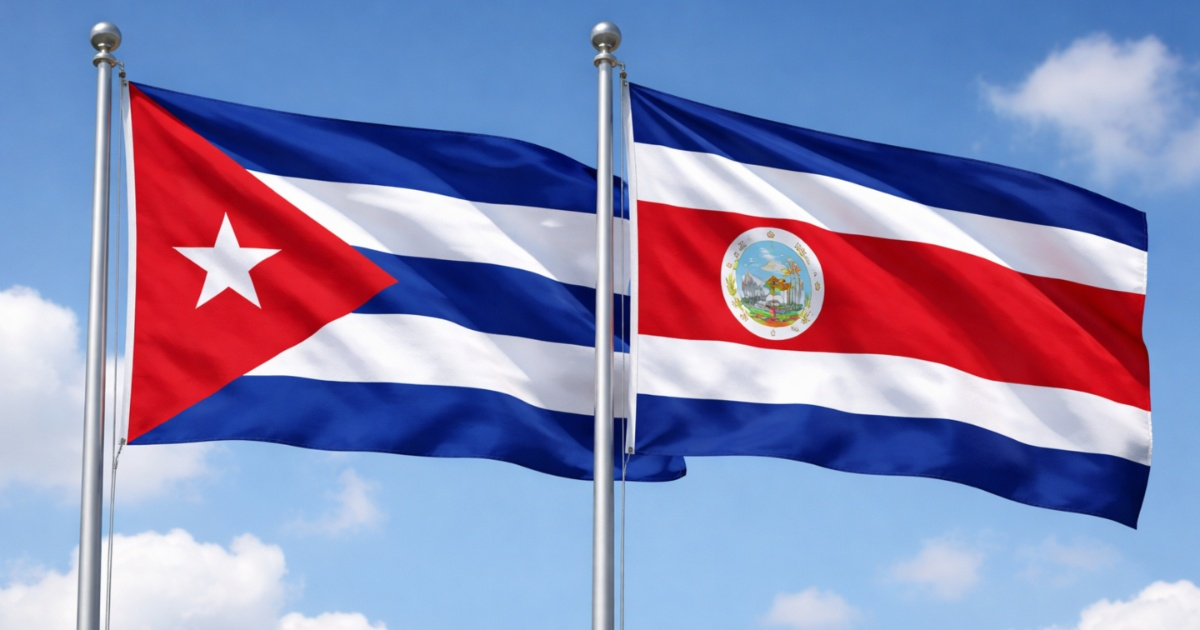
Cuban Foreign Minister Bruno Rodríguez reacted strongly to the Costa Rican government’s decision to close its embassy in Havana and reduce bilateral relations to a consular level, labeling the measure as "arbitrary and unjustified" and stating that it is a determination "doomed to failure."
In a message posted on the social network X, the head of Cuban diplomacy accused San José of acting in "clear submission" to the pressures from the United States and asserted that Washington is attempting to drag other countries in the region into its "historically failed" aim of isolating Cuba.
"We repudiate the arbitrary and unjustified decision of the government of Costa Rica to reduce diplomatic relations with Cuba to a consular level. It is an act of clear submission to the pressures and dictates of the U.S. government, which seeks to drag other countries in the region into its historically failed attempt to isolate Cuba. This is a decision doomed to failure, as has happened more than once in recent history between Costa Rica and Cuba, whose peoples have shown that nothing has been able to, nor will it be able to, separate them," Rodríguez wrote.
The chancellor's response came after the Costa Rican government announced the closure of its embassy in Havana and requested the Cuban regime to withdraw its diplomatic staff from San José, a measure that represents a drastic reduction in the political ties between the two countries.
The decision was confirmed by President Rodrigo Chaves and Foreign Minister Arnoldo André, who presented it as a response to the ongoing deterioration of the human rights situation in Cuba.
Costa Rica justified the measure due to the worsening internal crisis on the island, characterized—according to Costa Rican authorities—by repression, blackouts, and widespread shortages.
Arnoldo André stated that the decision is driven by his country's "deep concern" over that deterioration and additionally denounced an increase in the persecution of activists, opponents, and citizens critical of the Cuban government.
It was also noted that restrictions on fundamental freedoms such as expression, association, and peaceful protest have intensified, while living conditions continue to deteriorate due to shortages of food, medicine, and basic services.
As part of that redefinition of the bilateral relationship, Costa Rica requested Havana to act reciprocally and withdraw its diplomatic personnel, leaving only minimal consular functions.
The Costa Rican embassy in Cuba had not had diplomatic staff since February 5, which made it "practically impossible" to maintain normal operations on the island.
Additionally, President Chaves announced that his country will not maintain direct consular representation in Cuban territory and that assistance for Costa Rican citizens will be managed from Panama.
The decision was discussed with the elected president Laura Fernández Delgado, who supported the measure.
With this, San José effectively initiated a de facto diplomatic break, although without a complete severance of ties between the two states, as from now on the relationship will be limited to the consular level.
Reaction from Havana
In response to that announcement, the Cuban regime accused the Costa Rican government of acting under pressure from the United States.
In a statement from the Ministry of Foreign Affairs of Cuba, Havana described the decision as unilateral, arbitrary, and unjustified, and stated that it was communicated through a diplomatic note.
The Cuban Foreign Ministry stated that the measure does not serve the interests of the Costa Rican people, but rather reflects external pressures, and criticized what it sees as a history of alignment by San José with Washington's policy toward the island.
The Cuban government also expressly rejected the Costa Rican request to reduce the diplomatic staff at its embassy in Costa Rica.
Havana deemed the argument of reciprocity invoked by San José to be unfounded and asserted that this request lacks basis. Nevertheless, starting April 1, relations between both countries will be maintained solely at the consular level, confirming a significant reduction in diplomatic ties.
From the official Cuban perspective, this step is part of a broader strategy promoted by the United States to isolate Cuba in the region, within a context of increasing political and economic pressure on the regime.
Havana assured that the decision will not affect the historical ties between both peoples.
In that same vein, Bruno Rodríguez stated that history has shown that "nothing has been able to nor will it ever be able to" separate the peoples of Cuba and Costa Rica.
Filed under: