
Related videos:
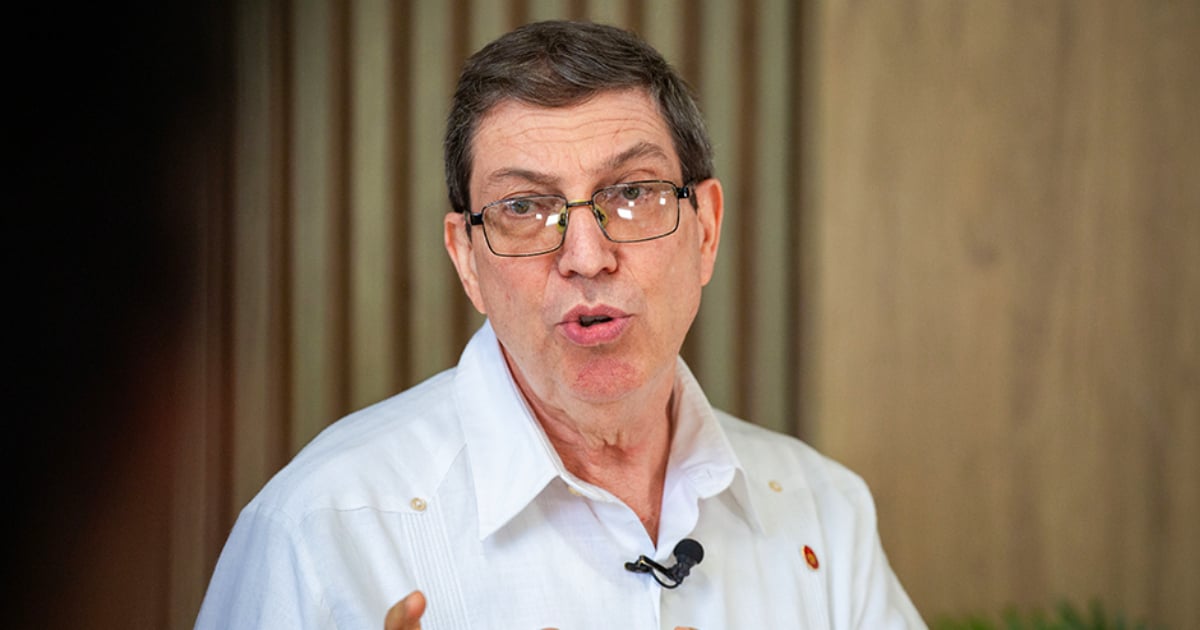
Cuban Foreign Minister Bruno Rodríguez Parrilla accused the United States of attempting to "destroy the constitutional order and take control of the country," in a message posted on social media following recent statements by President Donald Trump and Secretary of State Marco Rubio regarding Cuba.
“USA threatens Cuba with destroying the constitutional order and taking control of the country,” Rodríguez Parrilla wrote on his social media.
In the same message, he denounced that "the collective punishment imposed on us Cubans will not undermine the full exercise of sovereignty nor our creativity in the face of the blockade and energy siege," and warned that "any aggression from imperialism will collide with the unwavering will of the Cuban people in defense of the independence of the Homeland."
The statements from the chancellor are part of the response from the Cuban leadership to a series of pronouncements made earlier this week from Washington.
From the White House, Donald Trump labeled Cuba as a "failed nation" and stated that he could take control of the country. "If I free it, I take it. I think I can do whatever I want with it,” he said this Monday. He also described the island as a territory without resources: “They have no money, they have no oil, they have nothing.”
The next day, Secretary of State Marco Rubio stated that the Cuban economy "does not work" and that the system has survived thanks to external subsidies.
They need to put new people in charge. They must change drastically, he stated, while defending the need for profound transformations in the country's leadership. At the same time, Trump supported the ongoing contacts and assured that they would "do something very soon" regarding Cuba.
In response to those statements, Miguel Díaz-Canel also reacted with a message in which he accused the United States of threatening "almost daily" to overthrow the Cuban constitutional order.
In that text, he stated that Washington intends to “take over the country, its resources, properties, and even the economy itself that aim to suffocate us into submission” and described the embargo as a “fierce economic war” applied as “collective punishment against the entire population.”
The exchange of statements comes just a few days after Díaz-Canel himself publicly acknowledged on March 13 that there are conversations between both governments, following weeks of official denials.
According to his explanation, this is a “first phase” aimed at “identifying the most serious issues in the bilateral relationship, seeking solutions, and assessing the willingness of both parties.”
Since then, the official discourse has combined the acknowledgment of those contacts with an increasingly harsh tone towards Washington. Díaz-Canel later stated that Cuba "will not accept impositions" nor negotiate "its sovereignty or its constitutional order", and accused the United States of acting from a "weakened" position.
In that context, Rodríguez Parrilla's message reinforces that line of response, at a time when possible conditions for advancing an agreement have been publicly proposed from Washington, including references to changes in the leadership of the Cuban regime.
The verbal escalation coincides with an especially complex internal situation. Cuba is facing a severe energy crisis, with prolonged blackouts and fuel shortages, amidst an economic decline that has heightened social discontent.
Thus, while channels of communication remain open between both governments, public statements reflect a rise in political tension, with direct accusations from Havana in response to warnings issued from Washington.
Filed under: