
Related videos:
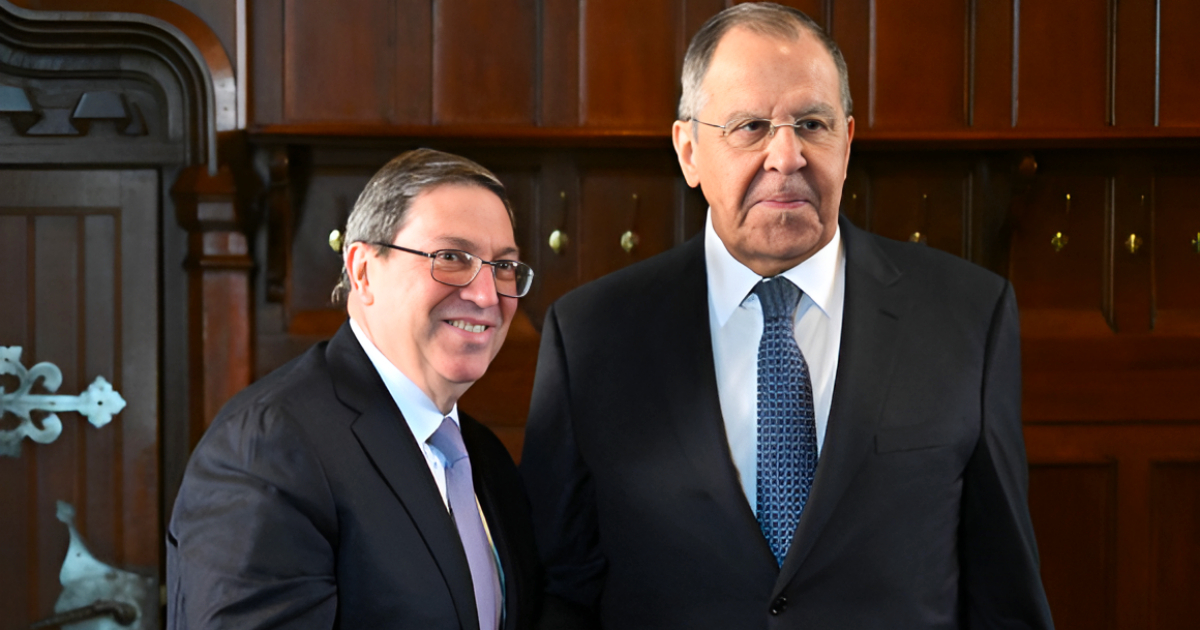
The Russian Minister of Foreign Affairs, Serguéi Lavrov, held a telephone conversation this Thursday with the Cuban Chancellor, Bruno Rodríguez Parrilla, in which he reiterated Moscow's support for Cuba in the face of political and economic pressure from the United States.
According to reports from the Russian Foreign Ministry, the contact was initiated by the Cuban government and allowed for discussions on various issues concerning the bilateral agenda and the international context.
During the conversation, Lavrov described the economic and political pressure exerted by Washington against the island as "unacceptable" and assured that Russia will support the Cuban people in defending their sovereignty and their right to choose their own development model.
The dialogue also included planning future meetings between both governments, including the 23rd meeting of the Russian-Cuban intergovernmental commission on trade, economic, scientific, and technical cooperation.
It is worth noting that Moscow has employed a similar rhetoric in other regional crises without necessarily leading to concrete actions.
During the escalation in Venezuela at the end of 2025 and the beginning of 2026, Russia also proclaimed its "solidarity" and support for the sovereignty of the Nicolás Maduro government in the face of pressure from Washington.
However, that rhetorical support did not prevent the outcome of the Venezuelan crisis nor the current political transition in which the United States exerts a strong influence over the government led by Delcy Rodríguez.
This background makes Lavrov's statements about Cuba be interpreted more as a diplomatic gesture than as a real guarantee of effective support.
The words of the Russian chancellor come in a context of increasing signs of a supposed strengthening of strategic relations between Moscow and Havana.
In recent weeks, Kremlin officials have reiterated their political support for the Cuban regime and announced shipments of oil and other forms of aid to alleviate the severe energy crisis facing the island.
This support comes as the Cuban regime seeks to reinforce its international alliances in the face of worsening internal economic conditions, characterized by prolonged blackouts, fuel shortages, and inflation that is severely impacting the population.
On January 29, the President of the United States, Donald Trump, signed an executive order declaring a "national emergency" in response to what his administration views as a threat to U.S. and regional security stemming from the activities of the Cuban government.
The document accuses Havana of maintaining ties with countries deemed hostile by Washington and of allowing the presence on the island of military and intelligence capabilities from Russia and China.
As part of that measure, Washington announced tariffs on countries that sell oil to Cuba and warned of possible reprisals against those who disregard the new restrictions.
Despite the escalation of tensions, Trump also recently acknowledged that his administration is in contact with the Cuban government to explore a possible agreement, although he described the Caribbean nation as a "nation in decline" that no longer has the economic support of Venezuela.
Meanwhile, Moscow continues to present itself as one of Havana's main international allies, at a time when the Cuban regime is facing one of the most challenging economic periods in recent decades.
Filed under: