
Related videos:
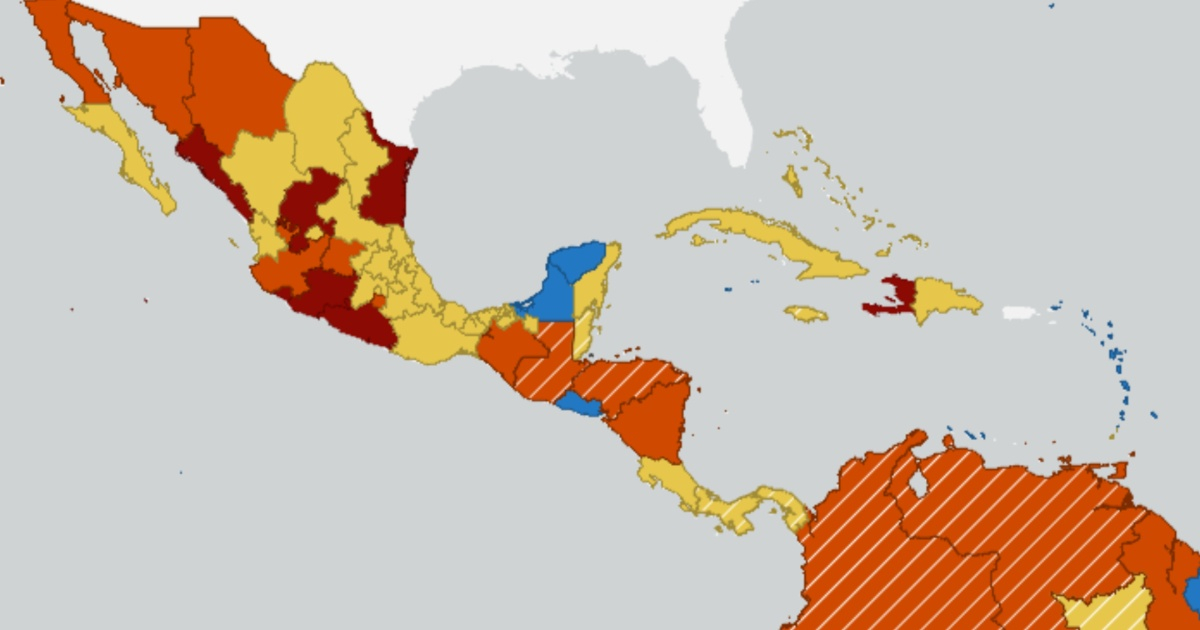
Cuba is listed at Level 2 (Exercise Increased Caution) on the updated list released this Thursday by the U.S. Department of State, which ranks destinations around the world based on their danger to American travelers, right before the travel season in April.
In a map issued by the State Department this Thursday, the Island is shown at that intermediate level amid a deep crisis: widespread blackouts, general shortages, and increasing social unrest that has led the U.S. Embassy in Havana to issue multiple security alerts so far in 2026.
At the most dangerous end of the list, the Level 4 (Do Not Travel) category includes 20 countries: Afghanistan, Belarus, Burkina Faso, Central African Republic, Haiti, Iran, Iraq, Lebanon, Libya, Mali, Myanmar, Niger, North Korea, Russia, Somalia, South Sudan, Sudan, Syria, Ukraine, and Yemen.
Iran holds that highest level due to risks of terrorism, unrest, kidnappings, and arbitrary detention of U.S. citizens, worsened following the Operation Epic Fury, the coordinated attacks launched by the U.S. and Israel on February 28, 2026.
The conflict with Iran has reconfigured the risk landscape across the region. Saudi Arabia, Oman, Kuwait, and Bahrain have been raised from Level 2 to Level 3 (Reconsider travel) since the attacks in February.
On March 22, the Department of State issued a against American interests outside the Middle East.
The Iranian military spokesperson, General Abolfazl Shekarchi, had warned two days earlier on state television: "Parks, recreational areas, and tourist destinations anywhere in the world will no longer be safe for you."
Destinations to be cautious
In Mexico, classified as Level 2 nationally, several states were elevated following the wave of violence triggered by the death of the CJNG leader, El Mencho, on February 22. Sinaloa and Colima moved to Level 4, while Jalisco and Baja California rose to Level 3.
Venezuela, on the other hand, was downgraded from Level 4 to Level 3 on March 19, following the ousting of Nicolás Maduro, although risks from crime, kidnappings, and terrorism persist.
The decline of tourism in Cuba contrasts with the growth seen in other Caribbean destinations. Mexico and the Dominican Republic have attracted travelers diverted from the Island, while the hotel occupancy in Cuba fell to 18.9% in 2025.
Among the destinations rated as the safest, at Level 1 (Normal Precautions), are Argentina, Australia, Canada, Japan, Portugal, and Switzerland, among others.
The Department of State recommends that all travelers enroll in the STEP (Smart Traveler Enrollment Program) to receive security alerts from embassies and consulates abroad.
On March 20, the diplomatic mission of the United States in Cuba warned about possible protests in the capital over the weekend, including a demonstration at the Malecón.
Days later, on March 21, Cuba blocked the fuel supply to its own embassy.
Tourism on the Island has experienced ongoing deterioration. In January 2026, 240,578 travelers arrived, a decrease of 9.2% compared to the same month the previous year.
The arrivals from the U.S. dropped to half: from 14,027 in January 2025 to just 6,997 in January 2026.
Filed under: