
Related videos:
The president of the National Institute of Hydraulic Resources (INRH) of Cuba, Antonio Rodríguez Rodríguez, attributed the water crisis on Thursday to the country's energy issues and stated that 87% of the population served by the water system relies on the SEN.
In an appearance on the official space Mesa Redonda, the official stated that the INRH is the second largest consumer of electricity in the country, which makes each blackout a direct interruption of the water service.
"There is an 87% that depends on the National Electric System (SEN). And since we are the second largest consumers in the country, it is clear that the impacts are greater," declared Rodríguez Rodríguez.
Cuba has 3,300 water pumping stations. Of these, 211 operate by gravity and 834 have solar panels installed, which represents 33% of the total.
However, these alternatives only benefit one million residents, just 13% of the population served by the water and sanitation system.
The INRH identified 480 stations as essential due to the population they serve, of which only 135 are in protected electrical circuits.
The director himself acknowledged the magnitude of the problem: "The deficits are so numerous that in the analysis we conducted to protect the 480 stations, we needed 591 megawatts. If we allocate 591 megawatts solely for water supply, almost all activity in the country comes to a standstill."
The official also explained that there are more water leaks than in previous years, although he justified the lack of repairs: "These activities receive the least fuel because the others are the ones that guarantee the service." This is not the first time the sector has faced such acknowledgments: in 2024, the director of INRH admitted the exodus of personnel from the hydraulic sector.
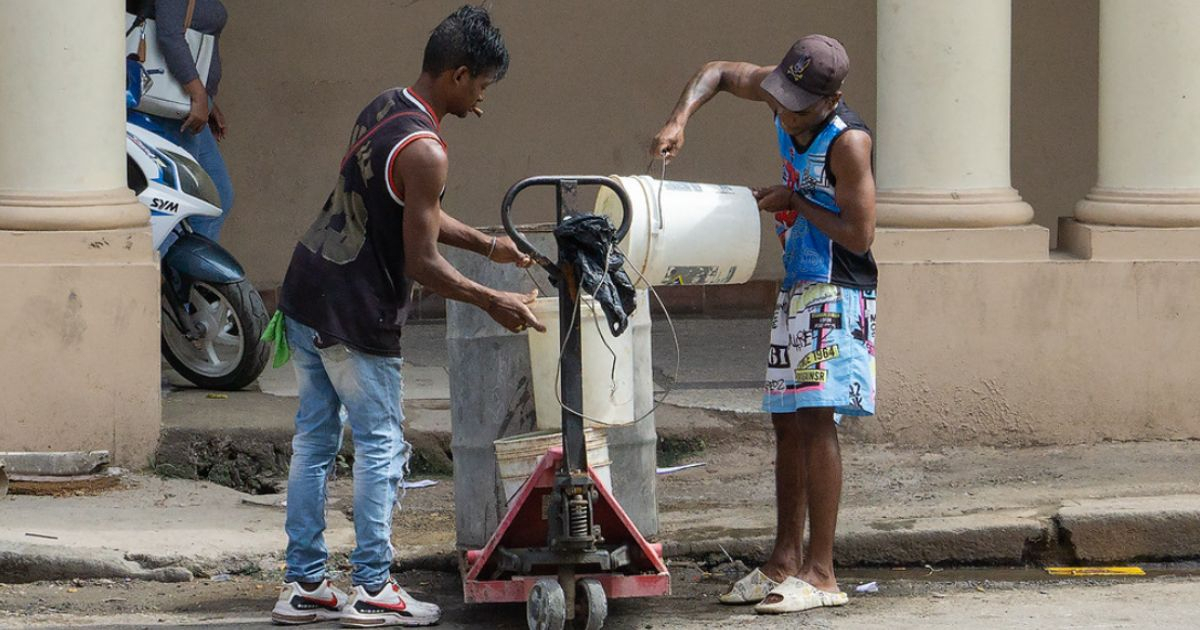
The impact on the population is devastating. In Matanzas, all municipalities report breaks that have gone unrepaired for months, and residents have dug between 20 and 40 wells in sidewalks and patios due to the lack of water. In Santiago de Cuba, 50 systems are inoperable, and fecal contamination in the water has been detected, affecting 180,000 people.
Meanwhile, water trucks are being sold on the black market for between 7,000 and 15,000 Cuban pesos. According to data from the World Health Organization for 2025-2026, only 61.2% of the Cuban population has access to safe drinking water.
This water crisis occurs in the context of the sixth nationwide blackout in 18 months, which took place on March 16, leaving 62% of the territory without electricity for almost 30 hours.
The electricity generation deficit reached 1,881 megawatts on March 25, with an availability of only 1,145 megawatts against a demand of 3,000.
Filed under: