
Related videos:
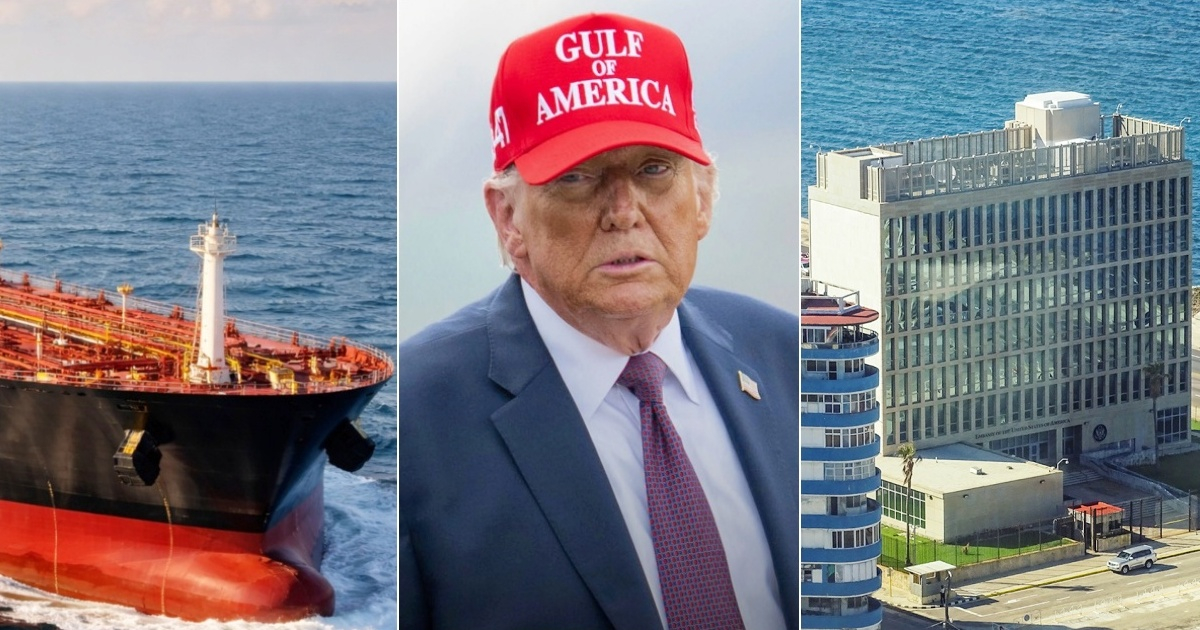
The decision by the Donald Trump administration to allow the arrival of a Russian tanker in Cuba - amidst a recent policy of energy pressure on the island - would have been influenced by a previous move by the Cuban regime regarding the United States embassy in Havana, according to journalist Eric Martin, citing his own sources.
The reporter, specialized in the State Department, stated on the social media platform X that Washington approved the shipment of Russian crude only after Havana authorized a key concession for the U.S. diplomatic mission.
"Yes, the United States plans to allow Cuba to receive this approaching Russian tanker," wrote Martin, before clarifying the context of the decision.
“But this happens AFTER the Cuban regime authorized the importation of fuel for the U.S. embassy,” he added, citing information provided to him by sources he did not publicly identify.
The journalist emphasized that it would be “an important action (not reported until now)” which, in his view, “shows that Havana is collaborating, albeit a little.”
An unexpected turn in Washington's politics
The apparent shift in stance from the White House contrasts with the hard line adopted just weeks earlier, when the Trump administration had threatened sanctions and tariffs on countries that supplied oil to Cuba.
In that regard, Martin emphasized another revealing element.
“Trump just said that he has ‘no problem’ if a country wants to send oil to Cuba right now,” he pointed out.
The journalist himself warned that this position could surprise governments that have recently been pressured by Washington.
“This could be a big surprise for Mexico and some other countries,” he noted, reminding that they had previously been “threatened with tariffs just two months ago if they did exactly that.”
The confirmation from Trump on Air Force One
Martin's statements align with those expressed by the U.S. president himself this Sunday, during an exchange with the press aboard Air Force One.
Trump confirmed that he would allow the arrival of the Russian tanker Anatoly Kolodkin, loaded with between 700,000 and 730,000 barrels of crude oil destined for Cuba.
"If a country wants to send some oil to Cuba, I have no problem with that," the leader stated bluntly.
When asked about a potential benefit for Russia, he downplayed it.
"It doesn't help him. He loses an oil tanker. That's all," he said in reference to Moscow.
The president defended the decision by citing humanitarian reasons: “I prefer to let him in… because people need heating, cooling, and all the other things you need.”
However, he maintained his critical stance towards the Cuban regime.
"Cuba is finished. They have a bad regime... very poor and corrupt leadership," he stated, insisting that the arrival of the oil "is not going to matter," he asserted.
A shipment in the midst of the energy crisis
The Russian oil tanker, sanctioned by the United States, the European Union, and the United Kingdom, departed from the port of Primorsk in early March and arrived in Cuba this Monday, according to Russian authorities.
The ship is carrying about 100,000 tons of crude oil—equivalent to more than 700,000 barrels—in what marks the island's first major fuel delivery in over three months.
Despite the immediate impact, specialists like expert Jorge Piñón from the University of Texas estimate that the shipment would only cover about two weeks of consumption in a country faced with prolonged blackouts and a deep energy crisis.
The backdrop: The embassy amid the blackouts
The alleged "action" of the Cuban regime, mentioned by Martin as a catalyst for the U.S. response favoring the shipment, comes after weeks of tensions over the fuel supply to the U.S. embassy in Havana.
According to previous reports from The Washington Post, the Cuban government had initially rejected a request from the diplomatic mission to import fuel for its generators, amid ongoing blackouts.
The denial forced the embassy to reduce operations, concentrate staff in shared accommodations, and limit the use of generators, as challenges to maintain its basic functions increased.
A movement with political implications
The episode suggests a possible tacit exchange between both governments amid an unprecedented energy crisis in Cuba and a U.S. policy that, until recently, aimed to severely restrict the flow of oil to the island.
While Havana faces widespread blackouts and a virtually paralyzed economy, the specific easing from Washington -though framed as a humanitarian decision- reveals more complex dynamics in the bilateral relationship.
And, according to the information revealed by Eric Martin, everything points to the fact that access to fuel for the U.S. embassy may have been a key factor in that turnaround.
Filed under: