
Related videos:
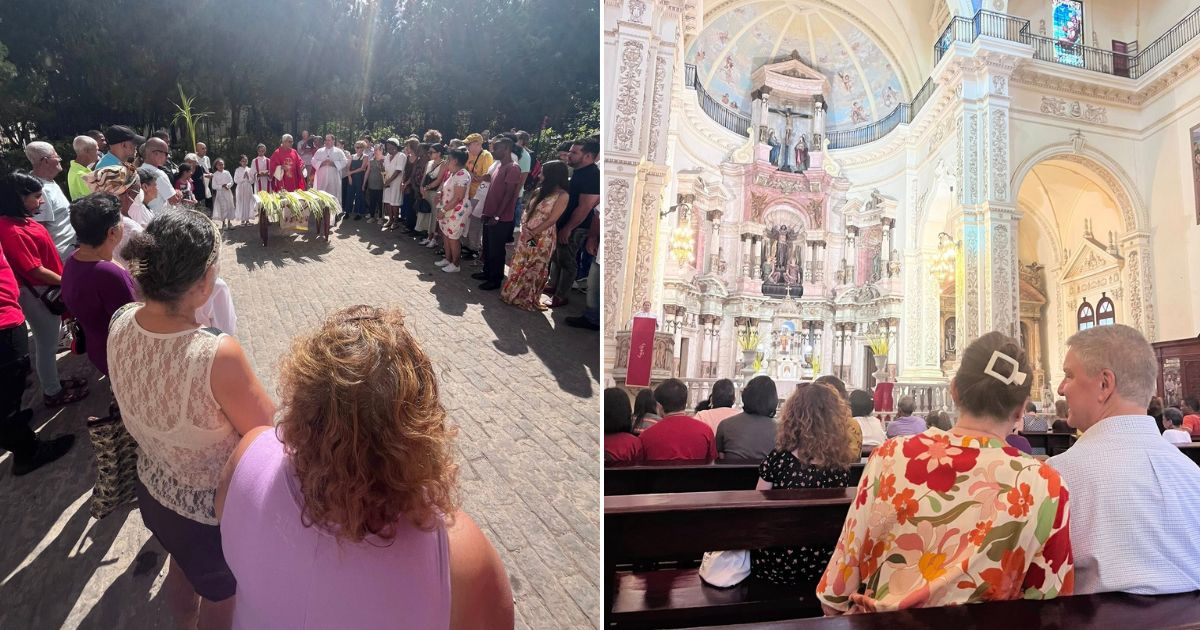
The Deputy Chief of Mission at the United States Embassy in Cuba, Roy Perrin, his wife Michele, and members of the U.S. diplomatic community attended the Palm Sunday services at the Basilica of San Francisco de Asís in Old Havana, and took the opportunity to express their solidarity with everyday Cubans and political prisoners.
The Embassy published images of the event on its social media along with a message that left no room for doubt about its intention: "In these moments of reflection, our thoughts are with the ordinary Cubans who wish for a better future and all those who remain unjustly imprisoned."
The publication used the hashtag #WithCubanCitizensStanding, a direct signal of support for Cuban civil society in a context of increasing diplomatic pressure on the regime regarding human rights and religious freedom.
The gesture takes on a particular symbolic weight during this Holy Week, as the Cuban regime has banned processions in churches in Havana and Granma during these days.
This history of religious restrictions is compounded by the documented practice of detaining almost all the Damas de Blanco on Sundays when they try to attend mass to pray for political prisoners.
The presence of U.S. diplomats at a public act of faith in Havana is part of the visibility and solidarity strategy with civil society that the Embassy has upheld under the leadership of the mission chief Mike Hammer and his deputy Perrin, who has held the position since August 2025.
Perrin was officially introduced at a meeting with activists, opposition figures, and relatives of political prisoners at the residence of the mission chief, setting the tone for his management from the very beginning.
The religious event yesterday occurred just two weeks after the regime announced the release of 51 individuals, linking the decision to negotiations with the Vatican and the approach of Holy Week.
According to human rights organizations, at least 760 people remain imprisoned for political reasons in Cuba.
However, the Cuban government did not disclose the names of those released nor confirm if there were political prisoners among them.
Weeks prior, the Cuban Deputy Minister Carlos Fernández de Cossío had dismissed any release of political prisoners.
The chancellor Bruno Rodríguez justified the measure as an act of "goodwill" and part of the "humanitarian trajectory of the Revolution."
Filed under: