
Related videos:
The Russian government announced that it is preparing a second shipment of oil to Cuba amid the severe energy crisis the island is facing, and stated that one of its ships managed to "break the blockade."
The Russian Energy Minister, Serguéi Tsivilev, made the announcement during the Energoprom-2026 forum, following a meeting with Cuban representatives in Saint Petersburg.
In his statements, he emphasized the exceptional nature of the operation and his country's intention to maintain the supply.
“Cuba is under a total blockade; it is completely isolated. Where did the oil shipment come from? A Russian ship broke the blockade. A second ship is being loaded right now, and we will not leave the Cubans in trouble”, stated the Russian official, according to remarks reported by TASS and other Russian media, which have also been echoed by news agencies.
A second shipment is on the way
Although the high-ranking Russian official did not specify the amount of the new shipment or provide dates, the new tanker is already being loaded and will be part of a strategy to provide energy support to Havana in the context of a critical shortage.
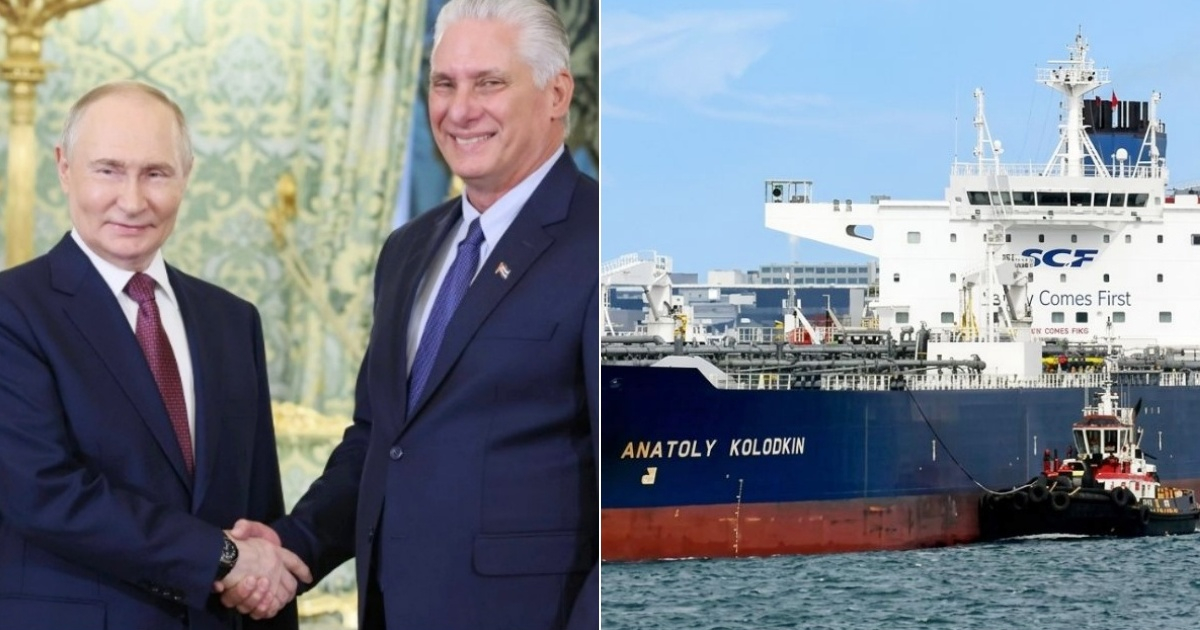
The announcement comes just days after the arrival in Cuba of the Russian tanker Anatoly Kolodkin, which transported approximately 100,000 tons of crude oil—equivalent to around 730,000 barrels—in what was the first shipment received by the island in almost three months.
That shipment, described by Moscow as "humanitarian aid," was presented by Russian authorities as a decisive action in response to the energy restrictions facing Cuba.
The narrative of the "blockade" and the U.S. version.
While Russia insists that it has managed to bypass a "total blockade," Washington's version has introduced significant nuances in recent days.
After the arrival of the first ship, the White House clarified that it had permitted the supply for humanitarian reasons, and that this did not imply a change in its policy toward Cuba.
In fact, U.S. authorities indicated that any future authorization would be evaluated "on a case-by-case basis."
In the same vein, Kremlin spokesperson Dmitry Peskov confirmed that the shipment of oil had been previously discussed with U.S. partners, suggesting that it was not a unilateral breach of sanctions, but rather an operation permitted under certain conditions.
President Donald Trump himself downplayed the impact of the shipment.
"It doesn't bother me […] they have a bad regime, they have poor and corrupt leadership, and whether or not a ship of oil arrives, that doesn't matter,” he said.
Cuba needs around 100,000 barrels daily to meet its demand, but it only produces about 40,000, resulting in a severe deficit following the disruption of shipments from Venezuela, the island's traditional energy ally.
Limited impact of Russian aid
Although Russian oil provides some relief, experts warn that its impact is limited. Energy analyst Jorge Piñón pointed out that the crude will mainly be allocated for liquefied gas for hospitals and a reduced amount of fuel for the population.
For his part, the Cuban economist Omar Everleny described the shipment as insufficient to resolve a structural crisis.
The leader Miguel Díaz-Canel himself acknowledged the temporary nature of the relief after publicly expressing gratitude for the Russian aid.
In a message on social media, he stated that the fuel will help in the coming weeks, but admitted that "it is not enough" given the magnitude of the crisis.
Doubts and criticisms
The case has also reignited the debate about the United States' policy towards Cuba. On one hand, Washington maintains economic pressure and sanctions; on the other, it allows occasional shipments of fuel for humanitarian reasons.
The political analyst Andy Gómez summarized this contradiction by pointing out the lack of a clear strategy. “I don’t see an end to this situation yet. I don’t see any sense in it. I don’t see a strategic policy,” he said in statements to Univision.
The opposition leader and former political prisoner, Jose Daniel Ferrer, also expressed doubts about the message that accepting Russian aid sends.
Despite Moscow's triumphant rhetoric, the delivery of oil—and the second one in preparation—barely covers a few days of consumption on the island.
Experts agree that Cuba would need between 8 billion and 10 billion dollars in investment to modernize its energy infrastructure and sustainably overcome the crisis.
Meanwhile, the country continues to rely on specific solutions in a context marked by sanctions, shortages, and geopolitical tensions.
The new Russian shipment, rather than resolving the issue, further highlights the fragility of the Cuban energy system and the growing dependence on external decisions to prevent collapse.
Filed under: