
Related videos:
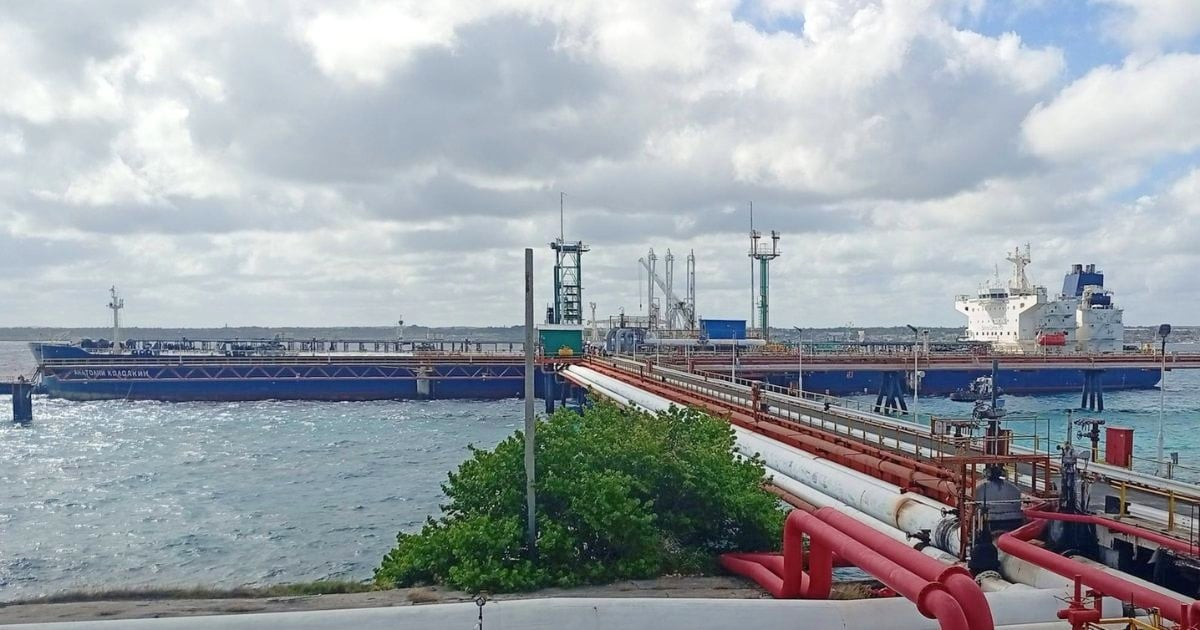
The Cuban Prime Minister Manuel Marrero Cruz expressed gratitude to the government and people of Russia for the arrival of the tanker vessel Anatoly Kolodkin, describing it as a gesture of solidarity in light of the energy blockade imposed on Cuba, without mentioning at any point that it was the Trump administration that authorized the ship's entry.
"We express our sincerest gratitude to the Government and people of Russia for their solidarity gesture amid the energy blockade imposed on our country. #CubaSoberana will continue to defend its right to import fuels," Marrero wrote on his X profile.
Marrero, in this way, joined Díaz-Canel, who had also publicly thanked Moscow a few hours earlier, although admitting that the shipment was insufficient to resolve the crisis.
What neither of them mentioned is that Washington explicitly authorized the entry of the vessel for "humanitarian reasons," as explained by White House spokesperson Karoline Leavitt on March 30.
According to reports, the authorization came after Havana allowed the supply of fuel for the generators of the U.S. embassy in Cuba.
Anatoly Kolodkin is associated with Sovcomflot, the Russian state shipping company sanctioned by the United States, the European Union, and the United Kingdom due to its links to the conflict in Ukraine.
The ship arrived at the bay of Matanzas this Tuesday, becoming the first tanker to reach Cuba in nearly three months, with 730,000 barrels of crude loaded at the Russian port of Primorsk on March 8.
The unloading at the Matanzas supertanker base would take 96 hours before refining begins, but the shipment only covers between seven and ten days of the island's total consumption, which requires between 90,000 and 110,000 barrels per day.
While the regime constructed a narrative of international solidarity, the state television showcased the arrival of the ship as a sovereign victory against the embargo, deliberately omitting Washington's role in making it possible.
Cuba has been without stable oil supplies since January 2026, when Venezuela halted its shipments, and is experiencing blackouts of up to 20 to 25 hours daily, with an electricity deficit ranging from 1,700 to 2,040 megawatts.
On March 16, a total blackout occurred, affecting all 11 million residents of the island, marking the worst episode of a structural energy crisis worsened by 67 years of communist dictatorship.
The Cuban-American political analyst Andy Gómez was emphatic in assessing the situation in an interview with Univision: I don't see an end to it yet. I don't see any sense in it. I don't see a strategic policy."
Gómez also pointed out the inconsistency of the U.S. stance: "The question we need to ask ourselves is, first they said there is an oil blockade against Cuba, that no one could send oil to Cuba, then they said they were allowing Venezuela to send oil to the private sector, and now they are allowing a ship from Russia to enter Cuba."
Cuba has accumulated a 23% contraction in its GDP since 2019 and projects an additional decline of 7.2% for 2026, according to the Economist Intelligence Unit, making Marrero's gratitude a reflection of an energy desperation that ten days of crude will not resolve.
Filed under: