
Related videos:
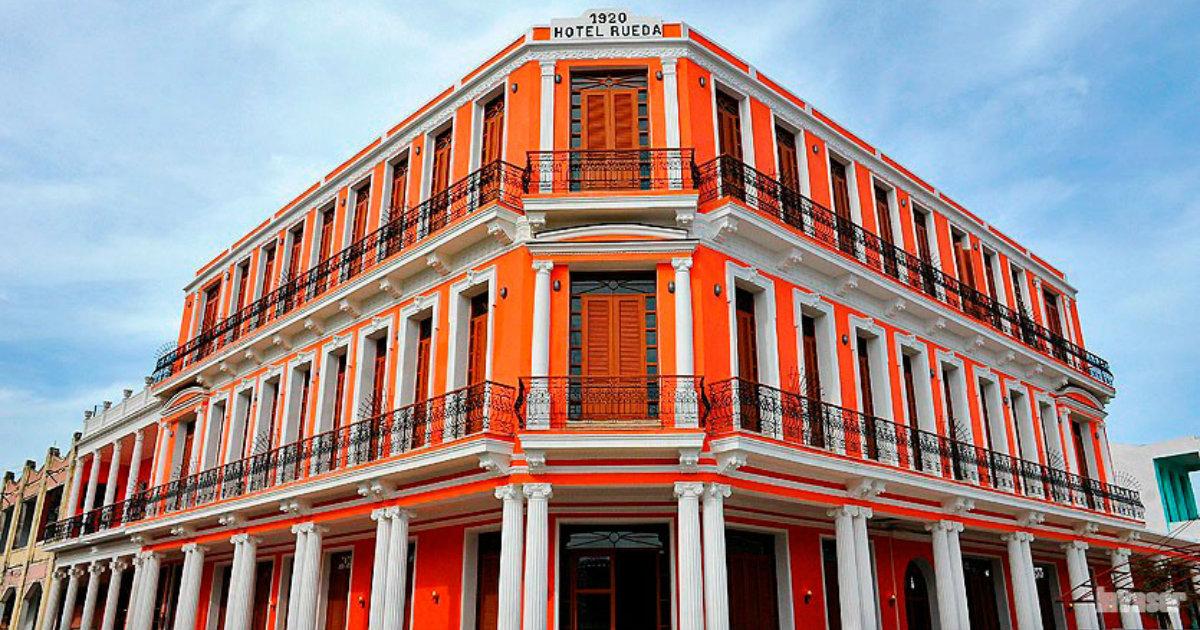
The Hotel Rueda cafeteria, a four-star state establishment of the Cubanacán Group located on the boulevard of the historic center of Ciego de Ávila, has closed its doors due to a lack of staff, according to a report published this past Friday in the "Sin rodeos" section of the state newspaper Invasor.
The Hotel Rueda is one of the symbols of state tourism in Cuba's province: it was reopened in October 2018 with the presence of Miguel Díaz-Canel himself as the first hotel of the Encanto brand from the Cubanacán Group in Ciego de Ávila, after being in ruins for more than 25 years.
The complaint, signed with the initials M.P.M., precisely describes the impact of the closure: "Not long ago, a customer looking to enjoy a delicious coffee while on the boulevard could do so at the café of the iconic Hotel Rueda, located in the historic center of the City of Portals. Currently, they are left wanting, as this establishment is closed due to a lack of staff, losing customers and missing out on revenue essential for continuing to operate."
The case is particularly revealing because the Hotel Rueda was inaugurated by Díaz-Canel as a showcase for the state tourism model, and now it cannot even keep its café open.
The building, founded in 1920 by the Rueda brothers and designated with Protection Grade II by the National Commission of Monuments, was rebuilt with an investment from the Real Estate Company for Tourism and the Tourism Service Company.
Its reopening in 2018 also featured the presence of the then Minister of Tourism Manuel Marrero Cruz and was presented as an achievement of the state management model, with 35 workers selected under the principle of multifunctionality, reported the official CubaDebate.
The closure of the café reflects the structural crisis facing the Cuban tourism sector, affected by the massive emigration of skilled workers, prolonged blackouts, and shortages of supplies.
Cuba closed 2025 with a hotel occupancy rate of 18.9%, the lowest in its recent history, and welcomed only 1.81 million international visitors against a target of 2.6 million.
The staff reduction affects hotels across the island: the Hotel Parque Central in Havana lost 30% of its workforce due to emigration, which forced them to hire hospitality students to fill the vacancies.
In the private sector, the situation is no better: the restaurant Nel Paradiso, in Havana, went from 60 hired workers in 14 months to just 10 who remain in the country.
In 2025 and 2026, hotels such as the Iberostar Torre K in Havana, Sol Cayo Santa María, and Gran Muthu Imperial have temporarily closed, while the military conglomerate Gaviota shut down 20 facilities in Cayo Santa María, leaving more than 7,000 workers unemployed.
The fact that the official newspaper Invasor is the one reporting the closure highlights the seriousness of a collapse that the regime can no longer hide even from its own media.
Filed under: