
Related videos:
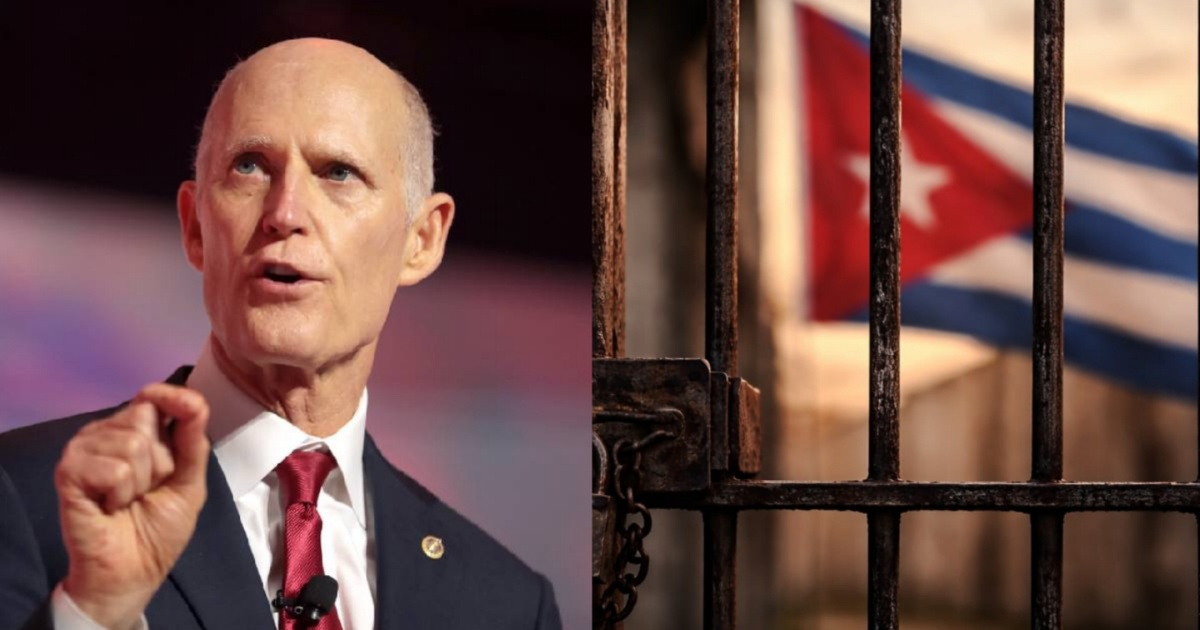
The Republican senator from Florida Rick Scott accused the Castro/Díaz-Canel regime on Tuesday of deceiving the international community with its so-called "mass pardon," as it releases only common criminals while keeping Cuban political prisoners incarcerated and oppressed.
The announcement of the pardon was made by the Cuban government on April 2, 2026, presented as a "humanitarian and sovereign gesture" in observance of Holy Week, and benefits 2,010 inmates.
However, it explicitly excludes those who committed "crimes against authority", a category systematically used to imprison opponents, protesters, and critics of the regime.
"It has been more than a week since the regime announced its so-called 'mass pardon'. In reality, the illegitimate communist regime of Castro/Díaz-Canel is only releasing common criminals while continuing to process and brutally oppress political prisoners and the brave people of Cuba for defending freedom," Scott wrote on his X account.
The senator demanded that the complete list of political prisoners be made public immediately and called for their release: "All political prisoners must be released now!"
In his post, Scott detailed three specific cases of political prisoners who remain incarcerated despite the pardon.
The first is Jonathan David Muir Burgos, a 16-year-old minor detained in Canaleta prison, in Ciego de Ávila, after being arrested during protests against power outages in March 2026. "He's just a boy!" Scott wrote.
The second case is that of the musician and activist Maykel "Osorbo" Castillo Pérez, forcibly disappeared in 2021 and sentenced to nine years in prison.
Scott reported that, after undertaking multiple hunger strikes, he has been denied medical attention and his health status is unknown.
"All because he became the voice of pro-democracy values and freedom for the Cuban people," the senator pointed out.
The third case mentioned is that of Luis Manuel Alcántara, a human rights defender and Cuban artist.
According to Scott, he has been "in and out of solitary confinement with little or no medical attention in unbearable conditions," all for speaking out against the regime's human rights violations.
Luis Manuel Otero Alcántara began a new hunger strike on March 31, 2026 in protest against death threats from State Security officials, and the Provincial People's Court of Artemisa denied a habeas corpus petition in his favor on March 23.
The organization Prisoners Defenders recorded 1,214 political prisoners in Cuba at the end of February 2026, none of whom were included in the pardon.
Justice 11J estimated at least 760 political prisoners, including 358 detained following the protests on July 11, 2021.
This is the fifth pardon announced by the Cuban regime since 2011 and the second of 2026. The first was in March when 51 inmates were released following discussions with the Vatican, of which between five and 27 were political prisoners according to various organizations.
Scott had already criticized the pardon last Saturday, calling it a "scheme to save money" and demanding the publication of the complete list of beneficiaries.
Filed under: