
Related videos:
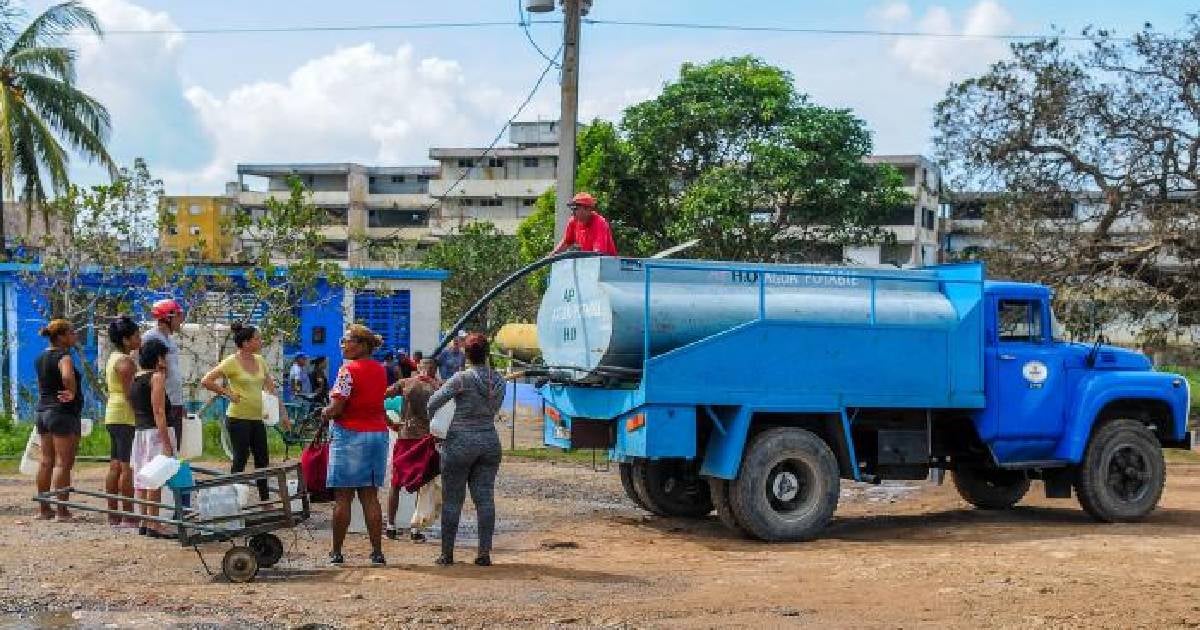
The water scarcity is severely impacting the city of Pinar del Río, where entire neighborhoods go more than two months without service. The water trucks do not meet the demand, and those who manage to access it pay rates that consume half of a salary, while the government admits that many of the pumps installed are recycled and do not solve the problem.
Critical points are multiplying in the city. In Cuneta, Lazareto, Mijares, and Llamazares, residents are waiting for supply cycles that never arrive. In the Llamazares neighborhood, where buildings dominate, a pump has been in a workshop in Havana for over a month, leaving hundreds of families without service.
In other areas such as Vélez, Justo Hidalgo, or Villamil, the complaints are similar: the cycles extend beyond 30 days, and when the water does arrive, it does not reach the second floors, reported the official newspaper Guerrillero.
The testimonials reflect the daily struggle. “I cannot afford the luxury of paying for a water truck, I am retired, this is unsustainable,” confessed a resident. Those who manage to access the service through water trucks claim the price is equivalent to half a salary, an unattainable luxury for most.
Robert Hechevarría Ramírez, director of the Pinar del Río Water Supply and Sewerage Company, admitted that the available equipment is insufficient. Many of the pumps received since Hurricane Ian passed at the end of September 2022 are refurbished from workshops in Havana or Pinar del Río, which explains the frequent breakdowns.
Additionally, due to the frequent and extensive power outages, they become nonfunctional because they lack generators. In practice, every time there is a power cut, the pumping stops and takes hours to restart, the news outlet explained.
The situation worsens due to leaks and the obsolescence of the main pipes. A 20-inch pipe, the oldest in the city, operates with barely two wells, while the 30-inch pipe suffers from a leak that cannot be repaired due to a lack of supplies. The consequence: the aqueduct tank takes six hours to fill and only three to empty, prolonging cycles that were already the longest in the country.
The official response has been to promise new investments. The arrival of pumps from Havana was announced, along with the recovery of equipment in Mantua and La Pescadería, which would alleviate the situation for more than 17,000 residents. However, so far, the results have not been felt in the homes of Pinar del Río.
In the meantime, daily life has become unbearable for thousands of families. Streets are open for repairs without any visible improvements, water trucks are insufficient, and equipment breaks down before it can even be used.
The water crisis in Cuba has reached very alarming levels, as more than three million people, equivalent to 30% of the resident population in the country, are currently suffering from a total or partial lack of this resource nationwide, according to official data.
The Cuban government decided to release the constituency delegates from their usual jobs so they can fully focus on directly assisting the population, amidst a deep energy crisis and water supply issues that have sparked increasing protests in various regions of the country.
The city of Guantánamo is facing a critical situation due to a lack of rainfall that has led to a partial collapse of the water supply system, especially in the southern area of the municipality.
The municipality of Santiago de Cuba is facing a critical situation, as the approximately 500,000 residents there are experiencing the most intense drought in 10 years, with reservoirs at minimum levels and water distribution cycles of up to 38 days, amid accumulated failures in the hydraulic system.
Furthermore, Holguín is experiencing the worst water deficit in the last decade, with more than 200,000 residents also affected by cuts and reductions in supply.
In the city of Las Tunas, more than 90,000 people struggle to obtain a regular supply of water in their homes, especially in the higher areas of the urban landscape, where the pressure is never sufficient to reach the households.
The Zaza dam in Sancti Spíritus, the largest reservoir in Cuba, currently holds only 106.4 million cubic meters of water, which is just 12% of its designed capacity of 1,020 million cubic meters, placing it at the second lowest point in its history.
Frequently Asked Questions about the Water Crisis in Pinar del Río and Other Regions of Cuba
Why are the residents of Pinar del Río paying half a salary for a truckload of water?
The residents of Pinar del Río pay half a salary for a truckload of water due to the severe scarcity of this resource. The city is facing a water crisis where supply cycles stretch out for more than two months and the hydraulic infrastructure is outdated. Many pumps are repurposed and fail to meet the demand, forcing families to turn to tank trucks with high rates, unaffordable for most.
What problems affect water distribution in Cuba?
The distribution of water in Cuba is affected by the obsolescence of infrastructure, frequent pump breakdowns, and power outages. The lack of maintenance of pipelines and the scarcity of supplies hinder the repair of leaks. Additionally, constant power outages disrupt the continuous functioning of pumping stations, worsening the situation nationwide.
How is the Cuban government responding to the water crisis?
The Cuban government has promised new investments and the arrival of equipment to alleviate the water situation. However, to date, the results of these promises have not been felt in households. The release of delegates from their usual duties to address the population directly is another measure adopted, although the real impact of these actions is yet to be seen.
Which regions of Cuba are most affected by the water crisis?
Regions such as Santiago de Cuba, Holguín, Las Tunas, and Pinar del Río are severely affected by the water crisis. In these areas, water distribution cycles exceed 30 days, and in some cases, residents have waited up to 85 days to receive service. The drought, combined with inadequate infrastructure and power outages, has exacerbated this issue.
Filed under: