
Related videos:
The regime of Cuba celebrated on this April 8th the Day of the Fishing Worker with a central event at the Holguín Fishing Company (Holpes), adorned with a commemorative plaque, distinctions, and triumphalist speeches, while millions of Cubans cannot afford to put fish on the table.
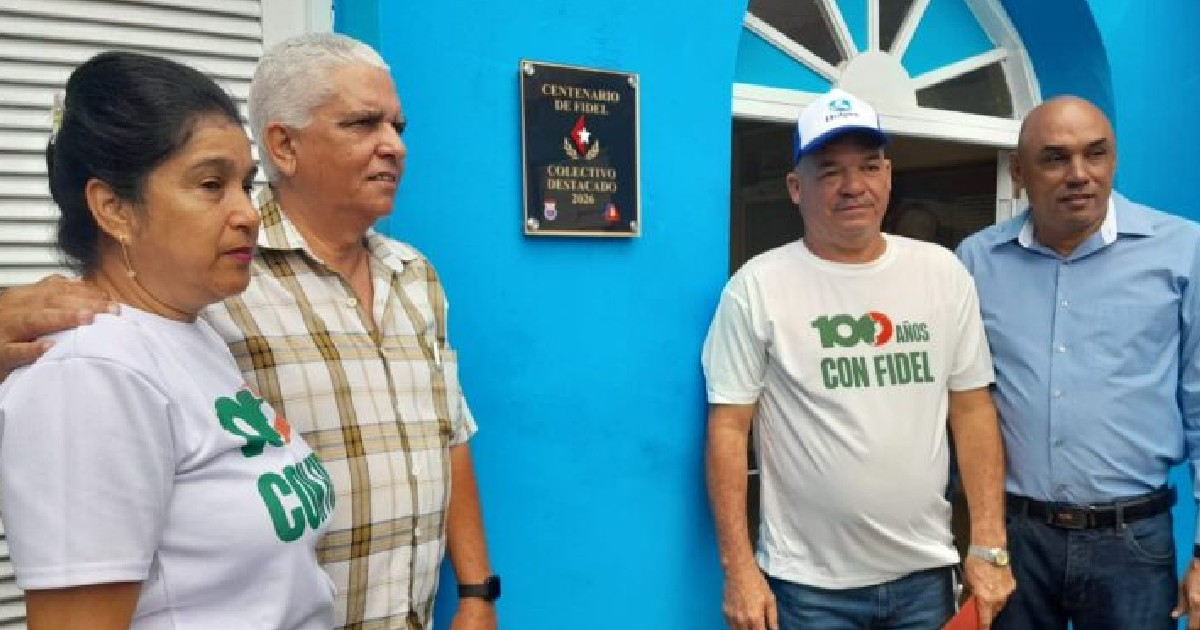
The celebration began with the unveiling of the plaque commemorating the centenary of Fidel Castro's birth, amid an endless string of official activities and propaganda for the anniversary. The event was attended by the Minister of Food Industry, Alberto López Díaz; the First Secretary of the Party in Holguín, Joel Queipo Ruiz; and the General Secretary of the National Union of Workers in the Food Industry and Fisheries, Jorge Luis Fajardo Casas.
Fajardo Casas praised the Holguin-based company, asserting that its workers "have demonstrated that there is no greater force than dedication, love for what they do, and a strong display of commitment." However, he did not specify whether the dedication, commitment, and love translate into concrete fish fillets accessible to citizens and benefits for those very workers.
Distinctions were awarded to 23 workers in the sector, eight companies from various provinces were recognized, and even a replica of the card from the National Association of Innovators and Rationalizers of Fidel Castro was presented to an outstanding worker. The ever-present Commander, who always stated that he did not want official tributes, yet appears in every commemoration on the Island.
The official propaganda spoke of achievements: Holpes reported 383 tons above the plan compared to the previous year and an additional 15.11 tons in exports of species such as HG pincers and eel.
What the speeches did not mention is that the Cuban fishing industry is going through one of its worst historical moments.
The Pesca Bolivia unit in Ciego de Ávila, captured only 17 of the planned 31 tons in the first quarter of 2026, operating with electricity at 12% and fuel at 28% of what is needed. Meanwhile, the Cahamar unit wrapped up its last year with only 30% of the production plan fulfilled.
In 2023, the sector only reached 58% of its plan, with more than sixty boats idle and 23% fewer catches than the previous year.
In 2024, the lack of fuel prevented the storage of lobster, resulting in the loss of 2,000 tons intended for export. According to experts, although there are fish in the island platform, there is a shortage of boats, fishing gear, workers in the sector, and industrial conditions.
For the average Cuban, fish is now an unattainable luxury: in February 2026, ten pounds cost 3,000 Cuban pesos, about 12 dollars on the unofficial exchange, a price beyond the reach of most.
In Cienfuegos, only 20% of the projected 640 tons of farmed fish is allocated for local consumption, and the per capita consumption across the island does not exceed four kilograms annually.
The contrast is hard to overlook: while the regime deploys its propaganda machinery with plaques of the "Maximum Leader," solemn events, and speeches about "dedication and commitment," 80% of Cubans believe that the current crisis is worse than the Special Period.
Filed under: