
Related videos:
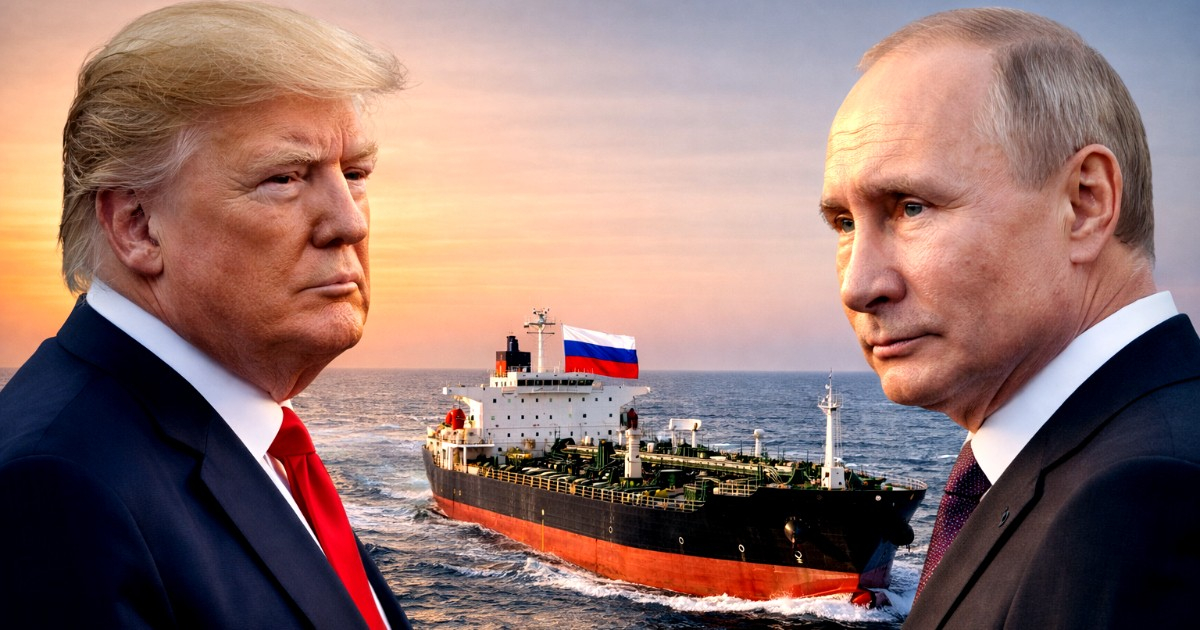
The U.S. Department of the Treasury published on Friday General License 134B from the Office of Foreign Assets Control (OFAC), which extends until May 16 the authorization to complete transactions of Russian oil already loaded on vessels prior to the enforcement of the sanctions.
The measure, like its previous versions (134 and 134A), does not lift the sanctions against Moscow; rather, it establishes a technical window to prevent disruptions in the global energy market.
The Secretary of the Treasury, Scott Bessent, defended the decision, noting that the oil was already in transit and that its sale would not generate significant financial benefits for Russia.
From a legal standpoint, the mechanism is precise. However, its recent application reveals something deeper: the U.S. sanctions do not function as an automatic system, but rather as a flexible tool, subject to high-level political decisions.
The key lies in version 134A, issued on March 19, which introduced an explicit clause: the exclusion of Cuba. This provision blocks any transaction under U.S. jurisdiction—including banks and insurers—that involves Russian oil destined for the island.
The impact was immediate. The oil tanker Sea Horse, carrying about 200,000 barrels of Russian diesel, changed its route to Trinidad and Tobago just a few days later, which analysts interpreted as a direct effect of the tightening regulations.
However, that pattern was broken just ten days later.
On March 30, the Russian tanker Anatoli Kolodkin —owned by the state shipping company Sovcomflot and sanctioned by the United States, the European Union, and the United Kingdom— docked in Matanzas with approximately 730,000 barrels of crude oil. It was the first major fuel supply to Cuba in over three months.
The shipment was not covered by the OFAC license. In fact, that license explicitly excluded it. It was made possible by a direct political decision from the Donald Trump administration, which chose not to block the operation.
“If a country wants to send some oil to Cuba, I have no problem with that,” the leader stated. The White House later confirmed that it was a case-by-case evaluation, with humanitarian reasons amid a severe energy crisis on the island.
This sequence presents an apparent contradiction: a legal framework that prohibits and a political decision that allows. But more than a failure of the system, the episode illustrates how sanctions truly operate.
OFAC defines what is permitted for actors under U.S. jurisdiction, but it does not solely determine what happens on the ground. The interdiction of vessels, diplomatic pressure, or the decision to block a specific shipment fall within the political and strategic realm.
In that regard, Washington seems to be applying a logic of controlled pressure: restricting the structural supply to the Cuban regime without provoking an abrupt collapse that could lead to a humanitarian or migration crisis.
The problem is that this strategy has costs.
Russia has capitalized on the episode as a political victory, presenting the shipment as a breakthrough in the "energy blockade." And that effect could be amplified. The tanker Universal, also from Sovcomflot and sanctioned, is currently sailing towards the Caribbean, marking what would be a second shipment in less than a month.
If it materializes, the logic changes. One shipment can be seen as an exception; two start to resemble a tolerated channel.
At that point, the flexibility that currently allows for managing the crisis could turn into a crack in the pressure strategy. Because sanctions, by definition, lose their effectiveness when they cease to be predictable.
Ultimately, the case demonstrates that the United States' energy policy towards Cuba is governed not only by regulations, but by decisions. And the open question is not whether the sanctions can be eased, but to what extent they can be without losing their effectiveness.
Filed under: