
Related videos:
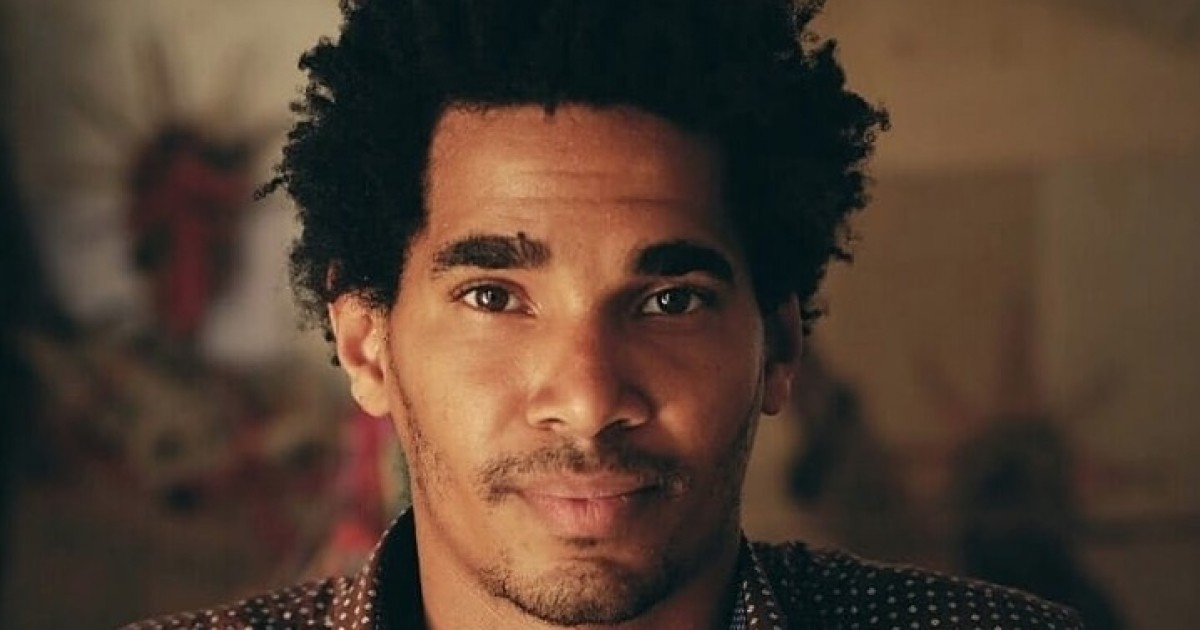
The Cuban artist and opposition figure Luis Manuel Otero Alcántara denounced from prison the uncertainty surrounding his release and the persistence of political repression in Cuba, in a text published in The New York Times, where he openly questions the future of political prisoners on the island.
Titled "I Am One of the Political Prisoners of Cuba. When Will I Be Free?", and written from the maximum-security prison in Guanajay, the text was transmitted to the outside via monitored phone calls lasting about ten minutes, with the assistance of Cuban-American artist and academic Coco Fusco.
Otero Alcántara has been imprisoned for almost five years since he was arrested on July 11, 2021, during the largest anti-government protests in Cuba in decades, and was sentenced to five years in prison in June 2022 for "insulting national symbols," "disobedience," and "public disorder."
In the text, the artivist points out that in early April, the Cuban government announced a pardon for over 2,000 prisoners in what the Cuban Embassy in Washington referred to as a "humanitarian and sovereign gesture," but that the amnesty excluded those who committed "crimes against authority", a category systematically applied to political dissenters.
"In other words, he didn't include me," he writes.
His sentence expires on July 9, 2026, a date upheld by the Criminal Chamber of the People's Supreme Court of Havana on April 7, which rejected an appeal filed by Cubalex and confirmed that no reductions for good behavior were applied.
From prison, Otero Alcántara describes the rumors circulating among the inmates: "that the State will not release me, that the island is running out of food and fuel, that President Trump is going to bomb Cuba."
Despite the fact that the Trump administration has demanded the release of high-profile political prisoners and in April, the artist admits that he does not know if he will be allowed to go free upon completing his sentence.
Otero Alcántara reports that the concessions granted to other prisoners—parole, sentence reductions, home visits—have systematically been denied to him, and that he has participated in multiple hunger strikes to protest against this.
The most recent one lasted eight days, from March 30 to April 6, following death threats made by agents of Department 21 of State Security on March 28.
In the essay, he describes daily life in prison as an exercise in monotony: the same bell ringing at dawn, the same roll calls, the same Russian and Cuban state television channels, the same meager meals.
What keeps him alive, he writes, is painting. "I believe the State knows that if I couldn't make art, I would die, and that's why the guards allow it: so that I don't become a martyr," he states.
"I spend hours and hours each day painting on cardboard, on the floors, on the walls. I paint my despair, my isolation, my frustration. My paintings are like a calendar: a record of each day I have spent confined."
Otero Alcántara co-founded the San Isidro Movement in 2018, a collective of artists, journalists, and academics that advocates for civil liberties in Cuba.
Amnesty International recognizes him as a prisoner of conscience, and the organization Prisoners Defenders reports a historic high of 1,250 political prisoners on the island as of April 2026.
The artist concludes his text with a reflection on the meaning of his sacrifice: "I think of it as trading my time, as if every day I spend in prison is not a lost day, but another day trying to make my country more free and more just. Like another one of my performance pieces, but one that should have ended long ago."
Filed under: