
Related videos:
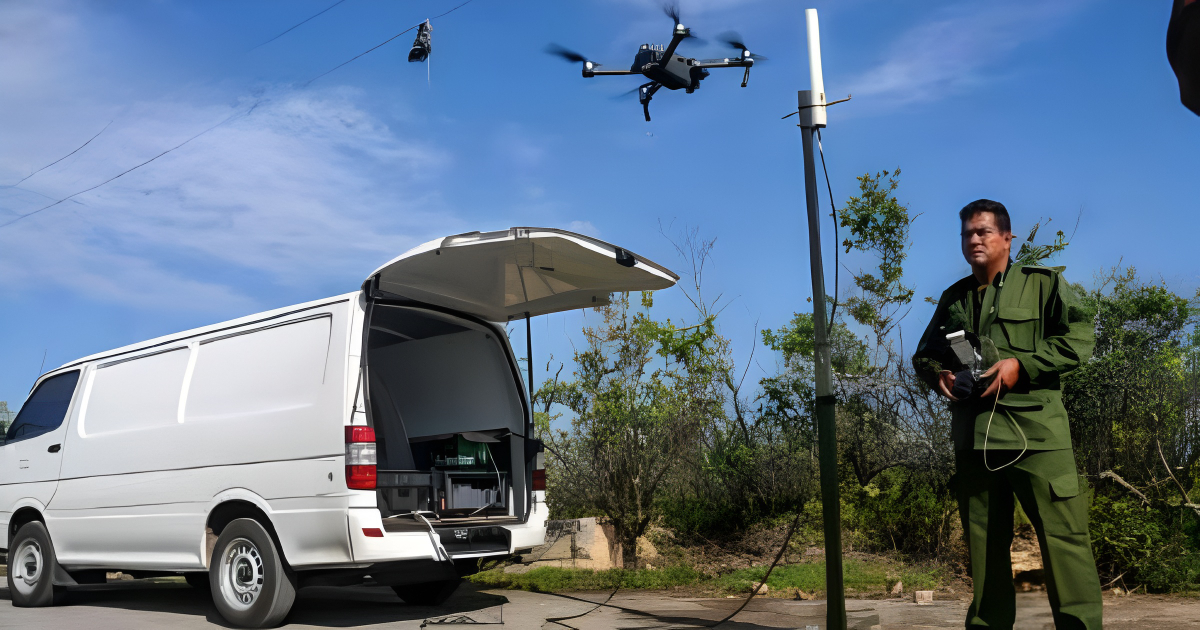
A recent report from Axios based on U.S. intelligence indicated that the Cuban regime has allegedly acquired more than 300 military drones from Russia and Iran since 2023 and discussed possible scenarios for their use against the naval base in Guantanamo, U.S. ships, and even Key West, Florida.
Although there are no official details about the exact type of drones, several analysts point to Iranian models similar to the Shahed-136, used by Russia in the Ukraine war and by Iran in the Middle East, or the variant of this model developed by Russia, the Geran.
Such types of devices have a clear appeal for countries with limited resources: they are much cheaper than buying modern fighter jets or advanced missile systems.
Estimates cited by specialists place the export cost of a Shahed drone between $20,000 and $50,000 per unit. That means that a batch of 300 drones could cost between six and 15 million dollars.
In scenarios of close political cooperation between Iran and Cuba, the price could even be lower through discounts, soft financing, or strategic agreements. Some estimates place the total cost between three and 10.5 million dollars.
The figure is particularly controversial amid the serious crisis affecting the island.
With just three million dollars, Cuba could import thousands of tons of chicken, powdered milk, or rice to partially alleviate the food scarcity affecting the population.
It would also amount to millions of hours of electrical generation using fuel for thermal power plants, in a country where daily blackouts sometimes exceed 20 and up to 30 hours in several provinces.
Experts consulted by international media also recall that Cuban hospitals are facing a chronic shortage of antibiotics, basic supplies, and medical equipment.
Meanwhile, the deterioration of the electrical infrastructure continues to worsen. The Electric Union has repeatedly acknowledged severe generation deficits and constant breakdowns in outdated thermoelectric plants.
Despite this, the regime appears to prioritize areas related to security, internal control, and military cooperation with strategic allies such as Russia and Iran.
Another aspect that draws the attention of military analysts is the relative logistical ease of transporting drones of this kind. According to technical estimates, 300 disassembled drones could fit into just a few standard shipping containers, a small load for a modern cargo ship.
The difficulty would not be physical, but political: to conceal or justify internationally a military transfer of that level to Cuba.
Although Washington insists it does not view Cuba as an immediate military threat, reports regarding investments in drones reignite the debate about the regime's true priorities as the population faces an increasingly deepening economic crisis.
Filed under: