
Related videos:
The official organ of the Central Committee of the Communist Party of Cuba, the newspaper Granma, published an article this Thursday titled “Raúl: Cuba loves you and will defend you”, which includes testimonies from citizens in several provinces expressing their supposed “affection and gratitude” towards Army General Raúl Castro Ruz, who will turn 95 on June 3rd.
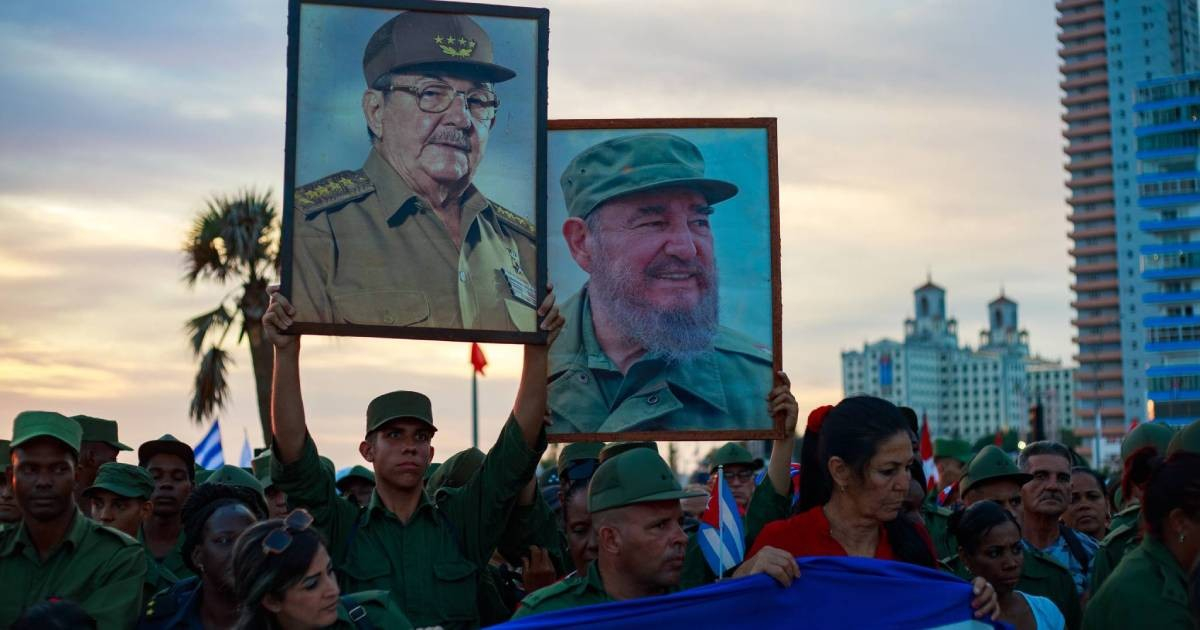
The article is part of the campaign of "anti-imperialist tribunes" that the regime organizes throughout the country from May 23 until Castro's birthday, in response to the criminal charges filed on May 20 by the U.S. Department of Justice. For these events, which almost no one attends voluntarily, the regime brings in military personnel, students, and state employees using transportation provided by the State itself.
The piece from Granma quotes a deputy, a representative from the Committees for the Defense of the Revolution (CDR), a 23-year-old journalist, a telecommunications worker, and a doctor, all expressing messages of rejection towards what they call "Yankee infamy."
The deputy from Ciego de Ávila, Reina Torres Pérez, stated: "Once again, the empire tries to impose its will on a people that is inherently rebellious by nature. It is an outrage, an absurdity any accusation against her."
Liliannys Rosales Fernández, the organizational secretary of the CDR in Ciego de Ávila, stated that “the large CDR membership has expressed itself voluntarily and sincerely” and that “we repudiate those accusations, which are malicious and unfounded.” She also detailed the actions carried out: “We have conducted acts of revolutionary reaffirmation and neighborhood discussions.”
The young journalist from Cienfuegos, Miguel Adrián Rodríguez Pérez, 23 years old, stated that "defending Raúl from this new treachery of the Yankee government has strengthened the patriotism of Cubans, as Raúl represents Cuban identity and dignity."
The central event of the campaign took place on May 22 in front of the United States Embassy on the Malecón in Havana, presided over by Miguel Díaz-Canel. Raúl Castro himself did not attend the event organized in his name; the only leader who spoke was Gerardo Hernández, who read a message from the former president. Granma reported the attendance at 250,000 in Havana, although dissidents claimed that participation was mandatory or conditional for state workers, military personnel, and students.
The accusation that triggered this entire campaign was presented on May 20, 2026 —Cuban Independence Day— at the Freedom Tower in Miami. A federal grand jury charged Castro with seven counts, including conspiracy to assassinate American citizens and four individual counts of murder, related to the shooting down of two Brothers to the Rescue aircraft on February 24, 1996, which resulted in the deaths of Carlos Costa, Armando Alejandre Jr., Mario de la Peña, and Pablo Morales.
Secretary of State Marco Rubio declared that Castro is “a fugitive from American justice” and warned that he would not disclose how he plans to bring him to court.
The context in which the Communist Party launches this propaganda campaign is one of maximum pressure. As Axios revealed this Thursday, the Trump administration is preparing for a possible collapse of the regime "as soon as this summer" and has already conducted military simulation exercises. A senior official described the strategy as "accelerationism." Since January 2026, the United States has imposed more than 240 sanctions against Cuba and intercepted at least seven oil tankers, reducing energy imports by between 80% and 90%.
The article from Granma is, in practice, a piece of propaganda aimed at projecting an image of popular unity that contrasts with the reality of forced mobilization and an unprecedented economic and energy crisis. Foreign companies operating under the regime have until June 5 to cease operations with GAESA, the military corporation that controls the Cuban economy, according to the executive order signed by Trump on May 1.
Filed under: