
Related videos:
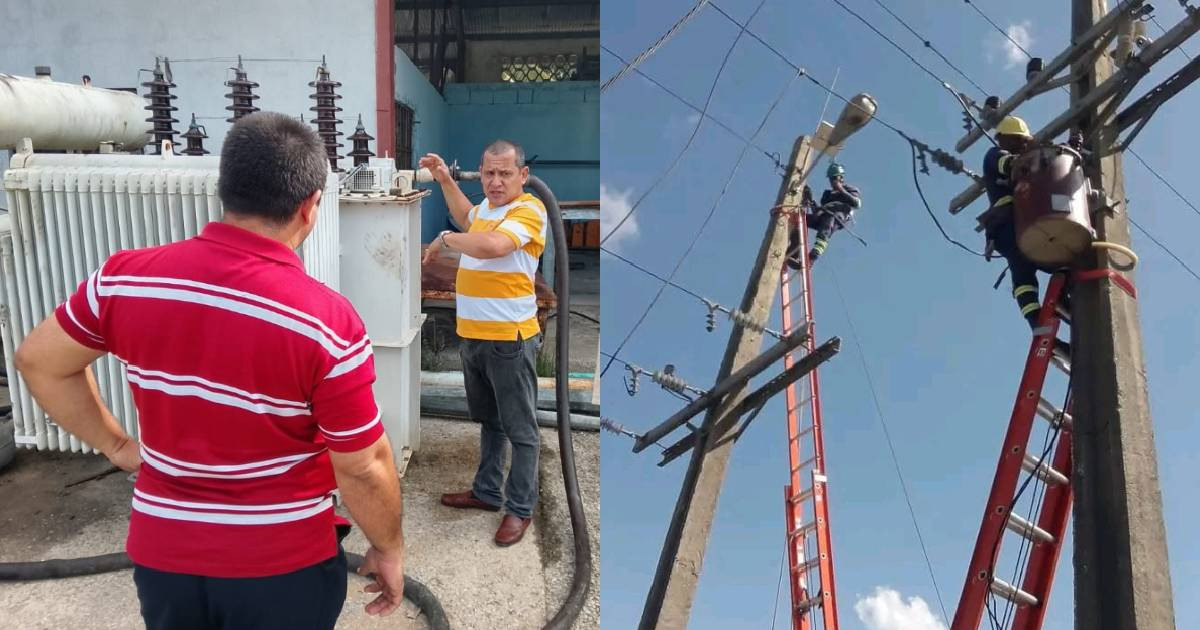
The Provincial Government of Las Tunas rejected on Saturday a supposed statement attributed to Governor Yelenis Tornet Menéndez that circulated on social media and referenced the shortage of electric transformers in the province.
The viral text attributed to the official said: "The neighborhood that loses a transformer won't have electricity until 2027, so take care of those devices. The blockade prevents us from buying."
The official page rated the post as false news and stated that the governor never made such a claim.
However, the denial does not dismantle the problem that led to the circulation of the message, as the shortage of electrical transformers in Las Tunas is a reality acknowledged at various levels of the electrical system.
By mid-May, the province had accumulated at least 11 thefts of dielectric oil and transformer components, according to reports from the official newspaper 26.
The most serious incident occurred on April 19 in the municipality of Amancio, where the theft of 600 liters of oil from two transformers left 40% of the area without electricity, affecting 4,947 customers, as well as essential services such as a polyclinic, telecommunications, and a water pumping station.
Additionally, there was an explosion of a transformer in Puerto Padre on June 3. By the 17th of this month, more than 100 families were still there without electricity or water supply after 13 days of waiting without a definitive solution.
The phenomenon is not exclusive to Las Tunas. In Santiago de Cuba, the removal of transformers from several neighborhoods with no scheduled replacement date sparked protests and cooking pot demonstrations.
In Guantánamo, the Electric Company acknowledged on June 7 that it did not have the physical availability of equipment to replace at least eight damaged units. In Sancti Spíritus, the authorities .
The system also carries structural limitations. In the country, there are only three specialized workshops for transformer repairs, located in Havana, Villa Clara, and Manzanillo, which makes each breakdown a slow process dependent on centralized capabilities.
The national energy context intensifies the pressure on the grid, with a SEN operating at deficits of around 2,000 MW daily.
In parallel, the provincial government announced measures to address the deterioration of infrastructure and thefts, including the reinforcement of perimeter fences at substations, the installation of solar lighting, and the use of control devices with support from the Ministry of the Interior.
While the official discourse focuses on denying a statement that was never made, the reality that made it believable persists: entire neighborhoods in Las Tunas continue to endure weeks without electricity and unclear timelines for the restoration of service.
Filed under: