Related videos:
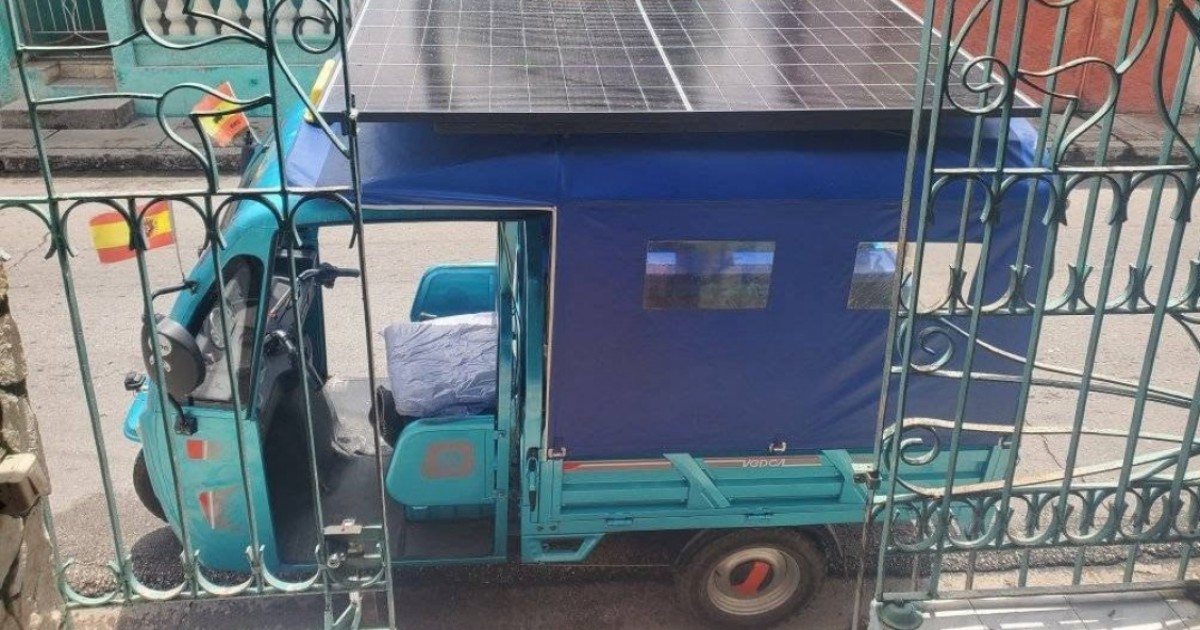
Chinese electric tricycles, many of which are equipped with handmade solar panels, have become the only somewhat available means of transportation for many Cubans, according to a report by the AP agency that depicts the collapse of mobility on the Island.
With the disappearance of fuel, the cars that for years defined the urban landscape of Havana have almost completely vanished, and now Chinese-manufactured vehicles—brands like Zonsen and Jinpeng, in addition to the locally assembled brand Vedca—are now on the roads.
«This is what is driving people, the micro, small, and medium enterprises, food... Everything here is being moved by tricycles,» declared to the AP Liecer de la Cruz, owner of one of these vehicles.
The reason is the almost total absence of oil. Cuba needs eight fuel ships per month to operate normally, but since December, only two have arrived on the Island. The Minister of Energy, Vicente de la O Levy, admitted it on May 14: "We have no fuel, no diesel, only associated gas."
In light of this void, Cubans have turned to their ingenuity: installing solar panels on the roofs of tricycles to also navigate power outages, which hinder battery recharging.
The engineer Carlos Álvarez, 29 years old and owner of a workshop in Havana, installs three to four panels each week and receives more orders every day.
"I have a client who says that his battery hasn't charged for 15 days. He works until 1 PM and then leaves it in the sun. In the end, Cuba is like an eternal summer, and even though it’s winter, there’s still intense sunlight, so it really helps a lot," he explained.
Installing a panel can cost around 500 dollars, although other self-employed workers charge up to 800 dollars with materials included.
In May, the story of young Yadán Pablo Espinosa, 21 years old, came to light. He set up a small home factory in Arroyo Naranjo where he makes supports for panels, capable of generating up to 2,600 watts during peak sunlight hours. Together with his father, three brothers, and a friend, they had already outfitted more than 15 vehicles without any state support.
Tricycles cost between 2,000 and 4,000 dollars on local online sales platforms, prices that are out of reach for most: the state minimum wage is about 17.5 dollars a month. Many are purchased in Panama and sent by relatives abroad.
The paradox that Díaz-Canel's regime cannot hide is that it promoted electric tricycles as a solution to the transportation collapse, yet the power grid does not guarantee battery recharging. On July 5th, a record electrical deficit of 2,230 MW was recorded, and the system has experienced seven total collapses in 18 months.
For this reason, solar panels have become a "necessary" option for many transporters.
However, the prices of the service remain prohibitive for the average Cuban who relies on a salary or pension.
In Matanzas, the rates for tricycles doubled overnight on June 10, reaching 300 pesos per trip, just three months after the Minister of Transport announced that even dialysis patients had to cover their own transportation costs in these vehicles.
Filed under: