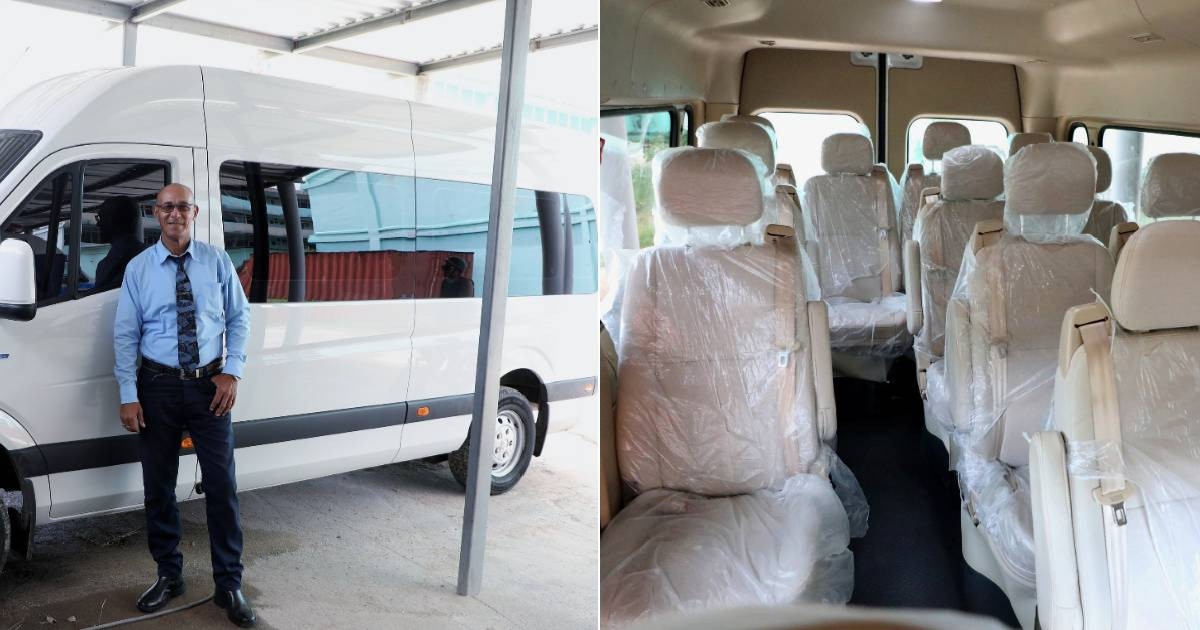
The Public Bus Company of Isla de la Juventud has begun renting electric vehicles to individuals, businesses, and organizations amid a transportation crisis characterized by fuel shortages, reduced routes, and prolonged blackouts.
Pablo Martínez Pérez, director of the entity, reported to the station Radio Caribe that five electric tricycles, two cargo microbuses, a large van, and a 14-seat bus with air conditioning have arrived in the municipality.
The vehicles will have different uses. The minibuses are already involved in transporting bread, while the larger bus will be available for rent to the public, especially on weekends.
The van, for its part, can be hired for small relocations or to transport appliances, detailed a report from the official newspaper Victoria.
The same means are also used by Public Health to transport doctors to different communities on Tuesdays and Thursdays, where they provide specialized care for the elderly and children.
The rental is arranged directly at the Public Bus Company, located in front of the main stop in Nueva Gerona, and the cost depends on the distance traveled, although the source did not provide figures regarding this.
The new modality arrives, however, as public transportation on the Island of Youth is facing a critical situation. Since February, the main land routes have been dependent on fuel availability, while the service to Cocodrilo has been reduced to a weekly frequency.
The maritime outlook offers no relief either. At the end of May, the local government issued an urgent call on social media asking state enterprises, non-state actors, and the general public for an electric motor or the necessary wire to wind it, in order to repair the ferry Perseverancia and restore maritime transport between Nueva Gerona and Batabanó.
Meanwhile, the Ministry of Transportation has reduced maritime service to one trip per week since June 20.
The energy crisis has worsened mobility challenges. In May, the island recorded 18 hours of power outages daily, but in July, residents had access to only two hours of electricity a day.
The deterioration is part of a national crisis. In January, the government acknowledged that public transport only met 42% of the planned goals.
In July, rail operations decreased by 74%, while in Camagüey state transport dropped from serving 350,000 passengers daily to only 15,000.
In this context, the Minister of Transport, Eduardo Rodríguez Dávila, presented new measures for the sector this week, including the removal of the limit on purchasing six vehicles in five years and the authorization for non-state entities to assemble electric vehicles.
The proposal sparked ironic reactions among Cubans, who even questioned what electricity could power those vehicles.
The doubt is particularly relevant in the Isle of Youth, where new media rely precisely on the scarce electricity.
Thus, the availability of electric vehicles for rent emerges as a new mobility alternative in an area where the fundamental issue remains having access to transportation and the energy to make it run.
Related videos:
Filed under: