The Cuban poet Jorje Luis «Veleta» Mederos published this week the poem "Sociedad Protectora": a text of deep irony and pain that captures the emotional rift between Cubans who remain on the island and those who emigrated to Florida.
The poem, published on his Facebook account employs the metaphor of an animal protection society to describe the relationship between the Cuban diaspora in the United States and their loved ones on the Island. From the very first verse, the author establishes the emotional geography of the text: "The Cuban Protective Society resides in Florida. / I have friends / who through the force of habit / have eyes like an ATM."
The image of the ATM encapsulates that ambiguity with brutal precision: there is money, there are remittances, but there is no gaze. The poem immediately draws the dividing line between the two worlds: "Those on this side call this life. / Those on the other side, like frantic ants, / carry what they can against essential hunger."
Veleta Mederos, born in Santa Clara in 1963 and a member of the literary group El Club del Poste, does not make accusations lightly. He acknowledges the efforts of those who send aid, but points out that this effort does not stem from love: "The Society for the Protection of Cubans is not driven by love, / they dwell in a discursive sadness against guayaberas, / against children who have now become devoted grandchildren, / against the little green and yellow lies / and the long trucks of stale unhappiness."
The poem moves toward one of its most harrowing images: that of the Cuban who remains as a species on the brink of extinction. “Fortunately for them / those over here are dwindling / because the true Cuban is an endemic species / that reproduces little in captivity,” he writes, directly alluding to the mass exodus that has emptied the island.
The metaphor of the zoo unfolds starkly as it describes the Cubans on the island as categorized animals: "Others portray the domesticated and sick animal / that they hang in their homes with some neatness: / there are the fat ones / - who are the alpha males - / and the other kind, gaunt and famished, / hopeless night owls who almost never bite."
The text also distinguishes within the diaspora itself: “Some associates / simply collaborate but never visit, / they cannot stand the eyes of ‘take me with you’.” It also makes space for those who observe from the outside without understanding: “The citizens of the world pass by the gate, / they watch the protected and understand nothing. / Others caress them / and throw leftover shells from lunch.”
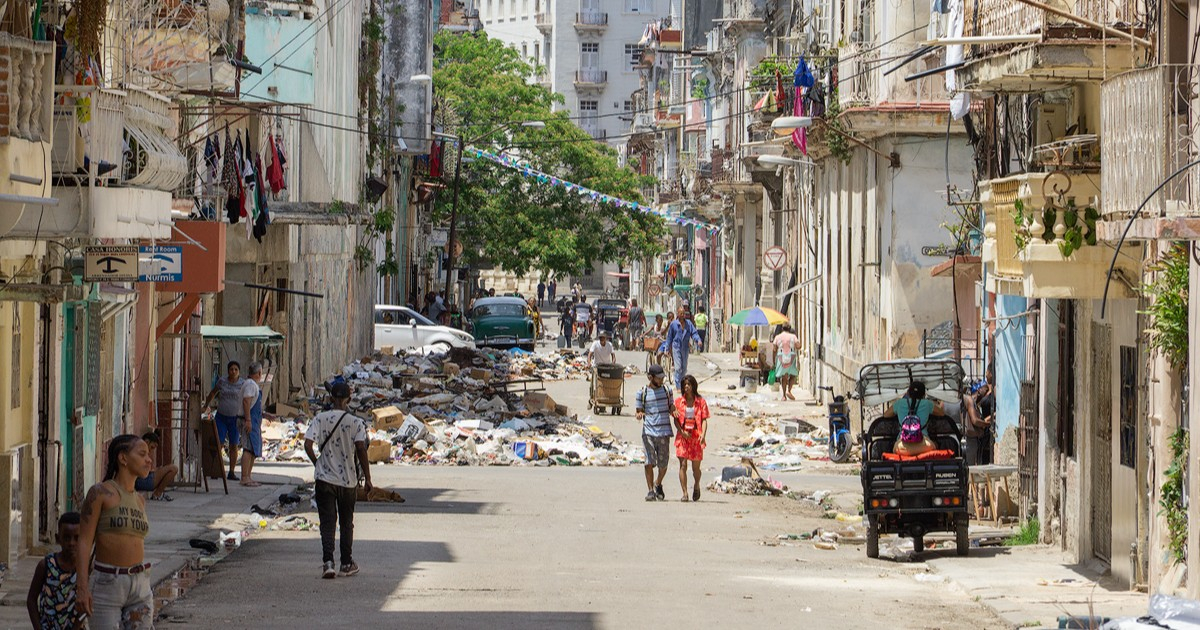
The poem is published in the context of the worst humanitarian crisis Cuba has faced in decades. According to the Food Monitor Program, 33.9% of Cuban households had at least one member who went to bed hungry in the past month, and 94.9% lost access to food purchases to some extent. Blackouts exceed 20 hours a day in many areas.
In light of this situation, the Cuban diaspora in Florida—approximately 1.8 million people, with nearly a million in Miami-Dade—continues to be the primary economic support for families on the island. It is estimated that over 90% of the remittances received by Cuba come from the United States, and Cubans in Miami send an average of $2,165 per year to their families. However, formal channels have weakened: Western Union suspended its services in February 2025, and as of January 2026, a federal tax applies to certain cash remittances.
"Sociedad Protectora" is part of a series of protest poems that Veleta Mederos has published throughout 2026, including "A country where poets escape" and "I don't want my country to be bombed", texts that document the social collapse in Cuba from within.
The poem concludes with an image that intertwines resignation and persistence: "Those from the Protective Society of Cubans have long memories / and do not tire, / of being God's ear in the face of disaster."
Related videos:
Filed under: