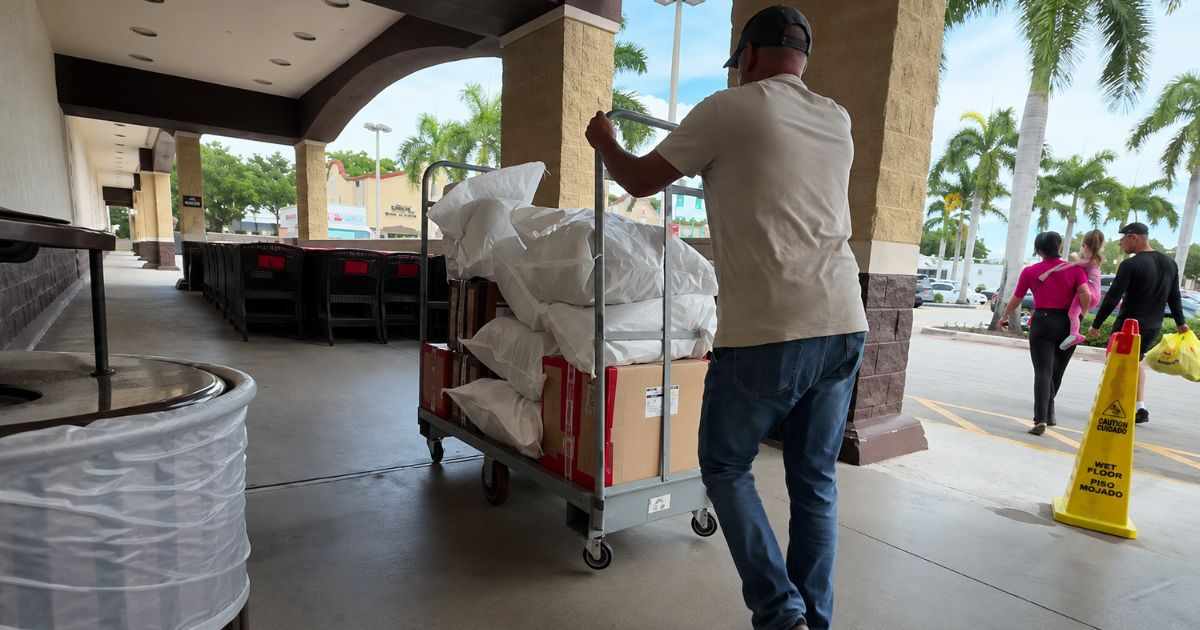
The endless blackouts in Cuba are increasingly shifting a significant portion of the burden of the electrical crisis to relatives living in South Florida, where some claim to spend thousands of dollars on power stations, solar panels, shipments, and installations in an effort to ensure basic electricity for their loved ones on the island.
A report from Telemundo 51 collected testimonies from exiled Cubans who described the rising cost of addressing an energy crisis from Miami that forces them to seek increasingly expensive alternatives.
"The blackouts not only leave millions of Cubans in the dark, but they are also draining the pockets of their relatives here in South Florida," summarized Alexis Boentes, a reporter for that television station.
One of the most widespread solutions is portable power stations, commonly known in Cuba as "EcoFlow," although not all the equipment used is of that brand.
In Cuba, portable power stations from the brands "Bluetti" and "Jackery" are also popular, although equipment from other companies is available as well. The price will always depend on the features, including the duration of the charge and the devices that can be connected.
One of the interviewees estimated that a station of that kind can cost around 1,000 dollars or even much more.
The problem is that the duration of the power outages complicates even the charging of those batteries.
"You used to charge it for two hours and then manage eight hours of use, for example. But now there’s no electricity. How are you going to charge it? Now they have to send that and send the solar panels," explained another Cuban interviewed by the channel.
Adding the panels further increases the bill. One of the exiles estimated that a set consisting of a panel and a portable station costs "a thousand and something dollars," while another mentioned systems whose prices can reach 3,500, 5,000, or 7,000 dollars, depending on the equipment and its features.
These expenses include the transportation to Cuba and the installation. According to one of the testimonies, setting up the system once on the island can cost between 200 and 300 dollars, depending on its capacity and the number of panels installed.
The interviewees explained that there are also businesses in Cuba that allow relatives to pay from the United States for a complete system, including solar panels, batteries, and inverters. However, at certain times, it may be more convenient to buy the equipment in Florida and send it when it is scarce on the island.
The electricity crisis has even changed the contents of the packages that are sent from Miami.
Cuban families in Florida have included rechargeable batteries, portable stations, solar panels, and even cooking stoves in shipments that were traditionally focused on food, medicines, and essential products.
In the case of solar systems, Telemundo 51 pointed out that the Cuban government itself sells equipment of Chinese origin. The most affordable kit offered by Correos de Cuba, with a capacity of 5 kW, costs 2,530,000 pesos and does not include installation services.
Behind the numbers lie much more everyday needs. One of the interviewees explained that their goal was to cover at least some basic necessities in their mother's home, including the ability to turn on the television so she could watch her soap operas.
Asked about how much money it ultimately costs to "survive" the blackouts from abroad, another Cuban acknowledged that it's difficult to keep track: "I believe that no one keeps that account, and whoever does will never send anything again for the rest of their life."
The report concluded by noting that, amid the collapse of the electrical system, Cuban authorities are promoting the purchase and shipping of solar panels from abroad, while much of the cost of finding alternatives to power outages ultimately falls on families both on the island and abroad.
The disbursement to support family members in Cuba is not limited to electricity. A Cuban residing abroad recently showed a purchase of 308 dollars in basic products intended for her family, an amount that still did not include the cost of sending the package.
Another recent case showcased a Cuban woman in the United States spending 91 dollars at Dollar Tree on hygiene products, cleaning supplies, kitchen items, and school supplies to bring to her mother and grandmother in Cuba.
Related videos:
Filed under: