The Cuban economist Pedro Monreal published a devastating analysis this Saturday regarding the package of 176 economic measures approved by the National Assembly in June 2026, stating that its supposedly liberalizing approach "faded in less than two months", following the quick return to price caps and "reference prices" in several provinces.
On his Facebook page "The State as Such," Monreal summarized the balance with an uncompromising phrase: "176 measures and one single achievement: proving that they learned nothing."
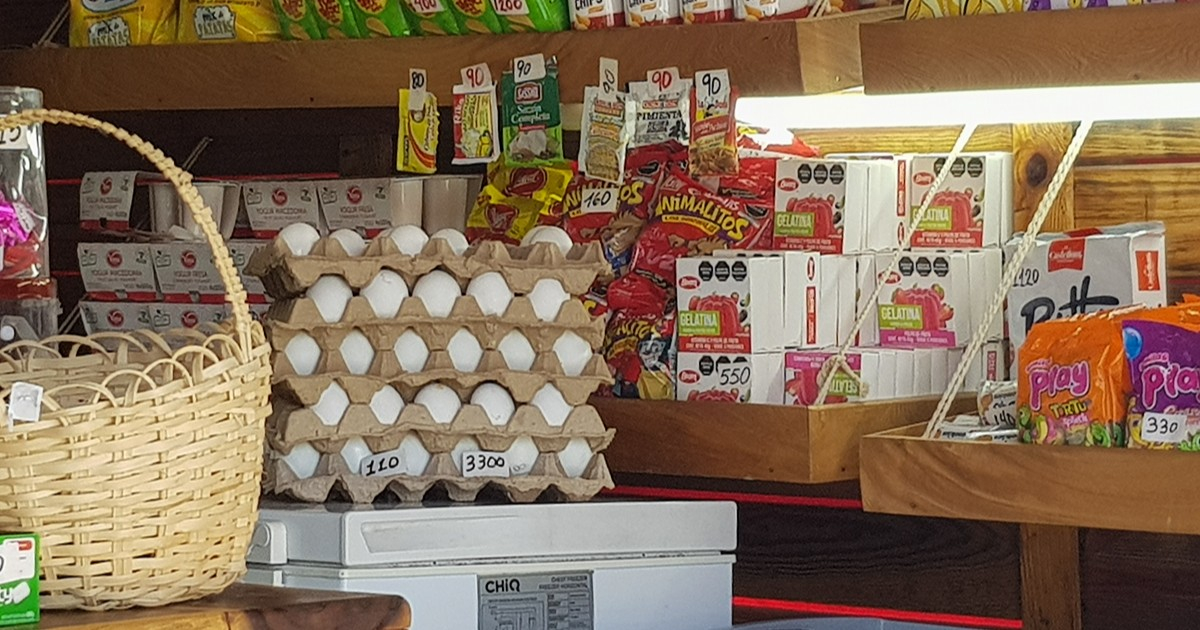
The immediate trigger was the wave of provincial controls reimplemented in the first days of August, just weeks after the national government had lifted similar restrictions. Villa Clara set maximum prices on August 7 through Agreement No. 127 of the Provincial Council of the People's Power: eggs at 110 pesos each, oil at 2,500 pesos per liter, and powdered milk at 3,465 pesos per kilogram. On the same day, San Luis, in Santiago de Cuba, established "reference prices" with oil priced at 2,200 pesos and eggs at 120 pesos, while Guantánamo and Holguín had done the same days earlier.
The paradox is that these price caps were already being violated from the start: in Placetas, almost simultaneously with the announcement from Villa Clara, oil was being sold for 4,000 pesos per bottle and eggs for between 150 and 160 pesos each. Cuban internet users reacted with skepticism: “I’ll believe it when I see it,” wrote one user; another noted, “There’s a big gap between words and actions; we’ll see if it’s fulfilled not only in San Luis but throughout Santiago de Cuba.”
For Monreal, the setback is not a surprise but rather a logical consequence of a design flaw. "The rapid return to price caps or 'reference prices' confirms a failure in sequencing and supply diagnosis," he wrote, arguing that the regime liberalized prices without first addressing the structural rigidity of supply: "Prices were liberalized without having previously reduced the structural rigidity of supply stemming from depressed domestic production and shortages of inputs and foreign currency. The predictable result was an inflationary spike with devastating effects on citizens' well-being, forcing a reversal and reproducing the same cycle observed since 2021."
The increase is evident: the price of oil rose from about 1,500 pesos in April to exceed 4,000 pesos in August, with peaks of up to 7,000 pesos per liter. This occurs with a minimum wage of 3,210 pesos monthly compared to an estimated basic basket cost of around 96,000 pesos per month, creating a gap of about 30 times. Official inflation reached 18.27% year-on-year in June 2026, according to the National Office of Statistics and Information.
The economist draws a parallel with the failure of the Ordering Task of 2021, but to emphasize that the current situation is even more serious in terms of planning: «The previous failure with the 'ordering' prices at least had an explicit and quantified design for correcting relative prices. Now there is not even public evidence of a prior quantified design of relative prices from the package of 176 measures». That reform generated an inflation rate of 77.3% in 2021, far above the 40% projected by the regime.
Monreal clarifies that the step back does not mean that liberalization is unnecessary, but rather that the approach was incorrect: "The change in course does not invalidate the need to move away from price liberalization, but it once again highlights that doing so abruptly and without sufficient productive cushion or social protection creates more distortion than solution."
In his view, the responsibility lies with the power structures. "What happened can be interpreted as an indicator of technical weaknesses in the design and implementation of economic policy, particularly the difficulties faced by the Political Bureau of the PCC, the Council of Ministers, the Council of State, and the National Assembly in adequately internalizing clear lessons," he noted. An internet user summed it up bluntly: "They created the problem by freeing prices and establishing free supply and demand."
Monreal concluded his analysis with a warning about the institutional consequences of this shift: "I don't know if those institutions are aware of the negative effect this could have on the credibility of the entire package of 176 measures."
Related videos:
Filed under: