The state agency ACN published a triumphalist note this Saturday, celebrating that 4,567 people in the province of Granma received water service or improvements in supply during the first half of 2026, presenting this data as a remarkable achievement worth celebrating just days ahead of the 64th anniversary of the National Institute of Hydraulic Resources (INRH).
The regime, staying true to its habit of turning the minimal into an epic narrative, proudly details that 2,946 people began receiving the supply due to executed investments, while another 1,621 saw their provisions "improved" through maintenance work on pipelines and distribution networks. All of this, according to engineer Robisnel Maceo Ramos, director of investments at the territorial delegation of Hydraulic Resources, came at a cost of "83 million 809 thousand pesos."
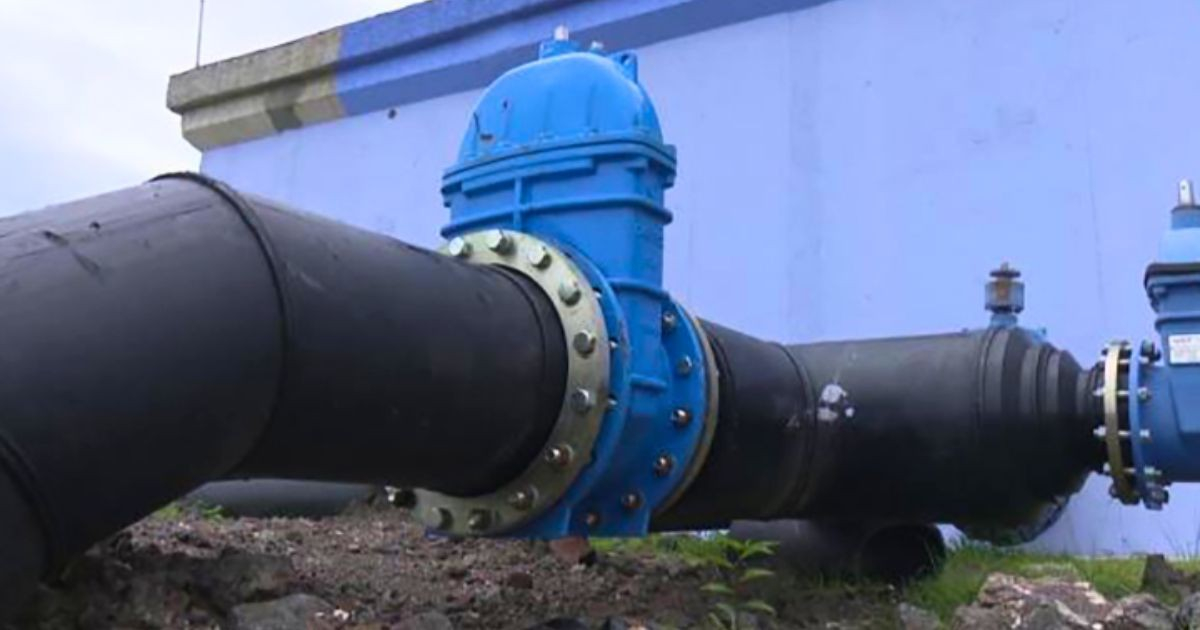
The works involved the installation of 1.38 kilometers of main pipeline and 5.31 kilometers of distribution pipes, enough to supply water to the rural communities of Los Ranchos, in Buey Arriba, and Antonio Maceo, in Bayamo, which until then had relied on water trucks. This is an advancement that, in any country with functional infrastructure, would be considered simply routine maintenance.
The problem —which the ACN report elegantly omits for propaganda purposes— is that Granma has 749,289 inhabitants, according to data from the National Office of Statistics and Information as of the end of 2024. Benefiting 4,567 people represents only 0.6% of the provincial population. The other 99.4%, a large portion of whom are affected by the lack of stable supply, is left out of the triumphant narrative.
And that’s just Granma. On a national scale, approximately 2.7 million Cubans suffer from water scarcity daily, according to data from the INRH cited in May 2026, and other millions receive the service intermittently. In Havana alone, the number of affected individuals rose from 200,000 in April to 376,055 in May and to over 500,000 in July.
The same province that today celebrates its new pipes had a scenario in December 2025 that better encapsulates the reality: elderly people from Río Cauto drawing water directly from the Cauto River or from a lagoon to survive, after more than a month without potable water supply.
The crisis has structural causes that even the regime's officials have reluctantly acknowledged. Eighty-seven percent of the water supply system relies on the electrical grid, which turns every power outage into an immediate water crisis. Less than half of the 480 essential pumping stations in the country are equipped with circuits protected against power cuts. Additionally, the system operates with only a minimal fraction of the required fuel, and it is estimated that 40% of the pumping equipment is in poor condition.
Meanwhile, in Havana, desperation has overflowed resignation. Residents of Mantilla blocked the Calzada de Managua on July 5 after more than two months without water, with temperatures exceeding 30 degrees. A resident described the situation candidly: "88°F. It has been over two months since water has flowed into Mantilla. A small tank of well water costs 2,500 pesos; a truckload, 40,000." In San Miguel del Padrón, residents even fought over a bucket of water when only one truck was sent for the entire area.
The Cuban Observatory of Conflicts recorded 107 street protests in June 2026, an absolute historical record, many of which were directly related to water scarcity. The crisis reached such a point that the regime had to mobilize trucks from the Revolutionary Armed Forces to supply areas of the capital.
The ACN note concludes with a dedication that encapsulates the regime's logic: “These results are dedicated by their protagonists to celebrate the 64th anniversary, on August 10th, of the creation of the National Institute of Water Resources, by the directive of Fidel Castro Ruz.” Sixty-four years after its founding, the INRH celebrates having installed pipes for 0.6% of a province while millions of Cubans continue to live without water.
Related videos:
Filed under: